 Today in the calendars of both sides of the Roman Rite is the Feast of St. Catherine of Alexandria, virgin, martyr. As a matter of fact, she is celebrated by just about all Christians (who have any doctrine and history).
In the 2005 Martyrologium Romanum we find this entry:
Sanctae Catharinae, quam virginem fuisse Alexandrinam et martyrem nrratur, ingenii acumine et sapientia non minus quam animi robore refertam. Eius corpus in celebri coenobio monte Sina pia colitur veneratione.
It is said that angels bore her body to Mt. Sinai, where Moses received the Law.
In an interesting coincidence, it is also today the feast of St. Moses, a priest and martyr in Rome in 251. It is also the feast of Peter of Alexandria, a bishop and martyr in 311. I’m just sayin’.
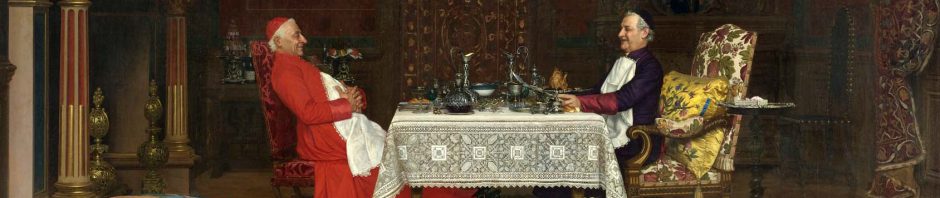
Catherine of Alexandria is depicted usually with a palm, since she is a martyr, and a spiky but broken wheel, the instrument with which she was threatened before she broke it with a touch. She was eventually beheaded. She is also often depicted from medieval time onward as the subject of a “mystical marriage” with the Christ Child who is in the act of placing a ring on her finger. Another Catherine who is depicted this way is Catherine of Siena, recognizable in her Dominican habit. There are zillions of painting across several centuries of this popular theme for both saints. The painting I embedded, above, show both saints at the same time, which is rare.
“Mystical marriage” is a traditional Christian way of describing the soul’s total union with Christ. It does not refer to a literal marriage, but to a spiritual relationship in which God becomes the primary love, source of identity, and goal of the believer’s life. The imagery comes especially from Scripture: the prophets speak of God as Israel’s spouse, and the New Testament presents Christ as the Bridegroom and the Church as His Bride. In this context, mystical marriage expresses the culmination of a growing relationship with God, moving from faith and conversion to deep intimacy, trust, and self-surrender.
The soul is generally thought of in Christian spiritual writing as being feminine, in both sexes. St. Bernard of Clairvaux wrote, “Christus est sponsus animae…Christ is the Bridegroom of the soul” (Sermons on the Song of Songs).
Spiritual writers use the term “mystical marriage” to indicate a mature stage of prayer in which the soul experiences a stable sense of God’s presence and belonging. St. Teresa of Ávila described it as the point at which “the soul becomes one with God,” noting that this union produces humility, charity, and perseverance rather than emotional excitement (Interior Castle, VII). The imagery emphasizes commitment rather than feeling: just as marriage involves fidelity, so mystical marriage highlights lifelong dedication to God’s will. It also underscores exclusivity—placing God above every other attachment. In Christian tradition, this concept has been applied to consecrated virgins, saints like Catherine of Alexandria, and all believers who seek complete communion with Christ, the true Bridegroom.
Catherine of Alexandria is also one of the Fourteen Helpers, saints to whom people have over the centuries turn most often for intercession. Recourse to the Vierzehnheiligen was an especially popular tradition in German speaking lands.
Here is Catherine’s rather poetic Collect in the older, traditional Roman Rite:
Deus, qui dedísti legem Móysi in summitáte montis Sínai, et in eódem loco per sanctos Angelos tuos corpus beátæ Catharínæ Vírginis et Mártyris tuæ mirabíliter collocásti: præsta, quaesumus; ut, ejus méritis et intercessióne, ad montem, qui Christus est, perveníre valeámus:…
BONUS:
A favorite in the Boston Museum has our saint in her mystical marriage. But we have have St. Margaret beating the Devil with a hammer.

BONUS BONUS
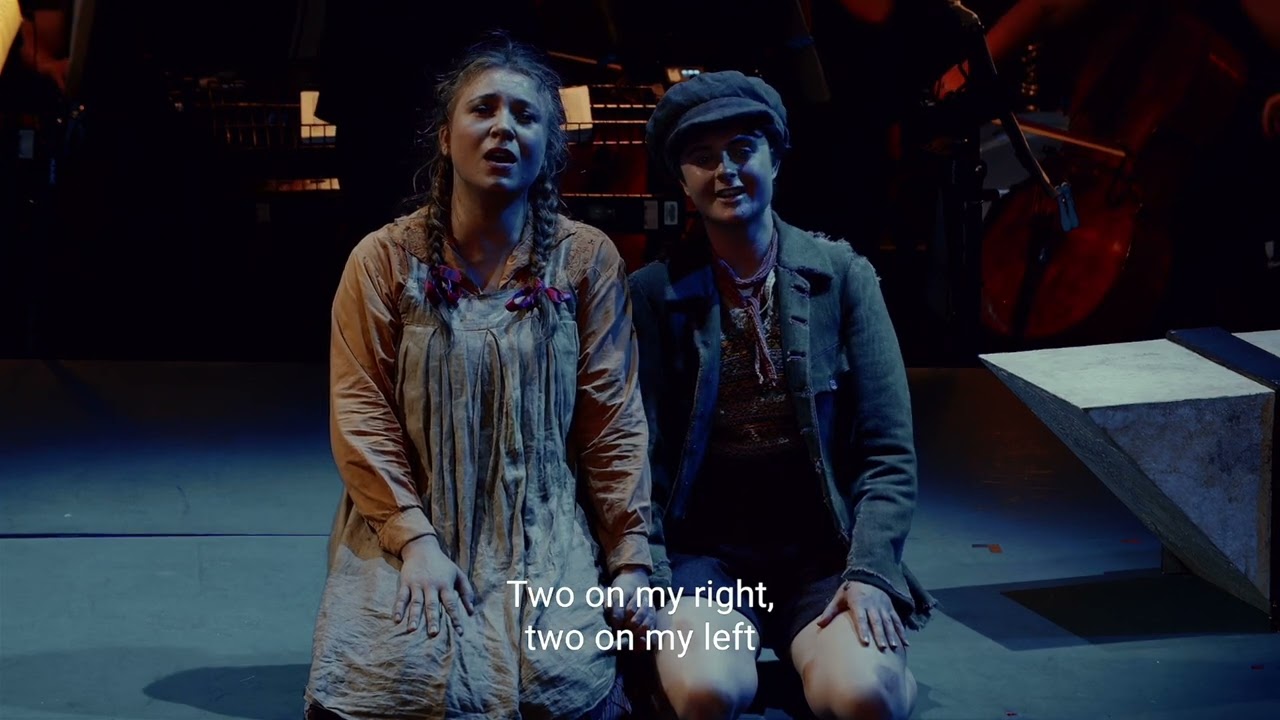
Speaking of Margaret and the Fourteen Helper Saints… in the opera Hansel and Gretel by Engelbert Humperdinck the children sing their “Evening Prayer”… to the 14 saints.
When at night I go to sleep,
Fourteen angels watch do keep,
Two my head are guarding,
Two my feet are guiding;
Two upon my right hand,
Two upon my left hand.
Two who warmly cover
Two who o’er me hover,
Two to whom ’tis given
To guide my steps to heaven.





 Loading ...

























I think somewhere along the way I heard of the 14 helpers. Today I certainly can use their assistance and thank you Father for writing about them.
re: “The soul is generally thought of in Christian spiritual writing as being feminine, in both sexes. St. Bernard of Clairvaux wrote, ‘Christus est sponsus animae…Christ is the Bridegroom of the soul’ (Sermons on the Song of Songs).” In my opinion, if the Catholic Church wants to attract men, then (outside of advanced courses in theology, spiritual direction for those who already committed mystics, and of course blogs such as this one) that line of thought should never be mentioned.
P.S. meant to write “who are already committed mystics”
The piece from Hänsel und Gretel left me with a lump in my throat, very intense yet subtle. Very well done.
The Hansel and Gretel opera really is an amazing combination of glorious music and a surprisingly Catholic libretto. If you can find a good, traditional staging of the opera, it is well worth your time and money. But be aware there are many bizarre, modern, and downright disturbing stagings of it out there.