
Thursday was Christmas.
Today, along with it being the Sunday in the Octave, it is Childermas, the Feast of the Holy Innocents.
The “Coventry Carol”, a lullaby of mothers to doomed children, dates to the 16th century. It was part of a Mystery Play, “The Pageant of the Shearmen and Tailors”, about chapter two of the Gospel of Matthew.
The carol is about the Massacre of the Holy Innocents.
Lully, lulla, thou little tiny child,
By by, lully lullay, thou little tiny child,
By by, lully lullay.
O sisters too, How may we do
For to preserve this day
This poor youngling,
For whom we do sing,
By by, lully lullay?
Lully, lulla, thou little tiny child,
By by, lully lullay, thou little tiny child,
By by, lully lullay.
Herod, the King, In his raging,
Charged he hath this day
His men of might,
In his own sight,
All young children to slay.
Lully, lulla, thou little tiny child,
By by, lully lullay, thou little tiny child,
By by, lully lullay.
That woe is me, Poor child for thee!
And ever morn and day,
For thy parting
Nor say nor sing
By by, lully lullay!
We could sing it on every street corner.
The carol came to greater popularity after the BBC broadcast it at Christmas of 1940, after the Bombing of Coventry: it was sung in the ruins of the bombed Cathedral.
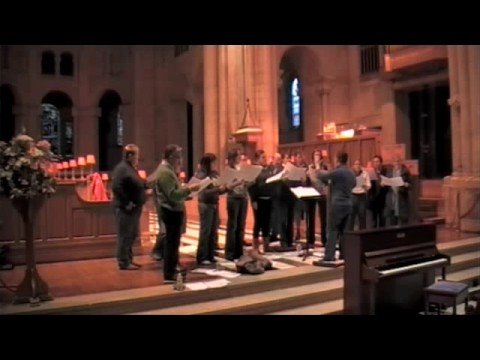
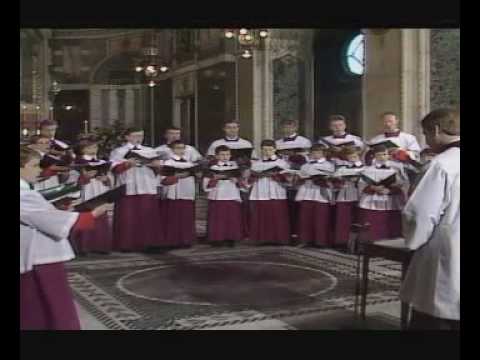
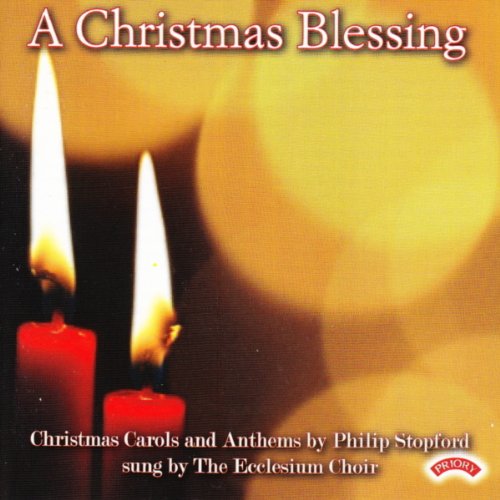
Here’s a modern reworking of Lully Lulla Lullay by Philip Stopford which might quite simply make you choke up and then, at the descant about 3:30, completely lose it.

 There is sometimes attributed (wrongly) to St. Augustine a quote about the Holy Innocents with some beautiful imagery. Here it is… mind you, attributed to the Doctor of Grace:
These then, whom Herod’s cruelty tore as sucklings from their mothers’ bosom, are justly hailed as “infant martyr flowers”; they were the Church’s first blossoms, matured by the frost of persecution during the cold winter of unbelief.
Lovely, no? Augustine didn’t say that. It was Caesarius of Arles who preached:
Quos herodis impietas lactantes matrum uberibus abstraxit; qui iure dicuntur martyrum flores, quos in medio frigore infidelitatis exortos velud primas erumpentes ecclesiae gemmas quaedam persecutionis pruina decoxit. [s. 222, 2 in CCL 104]
Literally: Whom the impiety of Herod dragged from their mothers’ breasts; who rightly are called the flowers of the martyrs, whom, having sprung up in the midst of the cold of infidelity, bursting forth as the Church’s first jewels, a certain frost of persecution wasted.
or
Whom the ungodliness of Herod dragged as nursing babies from their mothers’ breasts; who rightly are called the flowers of martyrs, whom the frost of persecution cooked up, grown up in the midst of the cold, bursting forth as the first buds of the Church.
 Some interesting things are going on in the Latin. First, you need to know that gemma isn’t just “gem”, but can also be “bud, blossom”. In Latin there are two related verbs, lacto, lactare, “to contain milk, to give suck”, and lacteo, lactere, “to suck milk, to be a suckling”. However, in all periods they swap meanings. We could use one English verb for both, “to nurse”. This is also why we for the famous line “out of the mouth of infants and of sucklings” both “ex ore infantium et lactentium” and “ex ore lactantium”.
By the way, if you like this drilling into Latin, try Latin Synonyms, with Their Different Significations, and Examples Taken from the Best Latin Authors, by M. Jean-Baptiste Gardin Dumesnil, translated into English, with additions and corrections, by the Rev. J. M. Gosset. US HERE – UK HERE
Decoquo is “to waste” or “to reduce by boiling”. I found an interesting reference in Suetonius how Nero made a icy-cold drink decoction, a decocta. Pliny uses decoctum as a medicinal drink. Note the juxtaposition of the heat indicated in decoquo and the cold of frost. The cold heat of persecution brought forth flowers before their day.
Here is the Collect from the 1962 Missale Romanum:
Deus, cuius hodierna die praeconium Innocentes Martyres non loquendo, sed moriendo confessi sunt: omnia in nobis vitiorum mala mortifica; ut fidem tuam, quam lingua nostra loquitur, etiam moribus vita fateatur.
O God, whose public heralding the Innocent Martyrs professed this very day not by speaking but by dying; mortify in us every ill of vices; so that (our) life might confess Your Faith, which we speak with our tongue, also by (our) morals.
Look at the not-so-subtle change made to the Collect by the cutters and pasters who glued together the Novus Ordo:
Deus, cuius hodierna die praeconium
Innocentes Martyres non loquendo,
sed moriendo confessi sunt:
da, quaesumus, ut fidem tuam,
quam lingua nostra loquitur
etiam moribus vita fateatur.
Can you spell “bowdlerize”?
LITERAL VERSION:
O God, whose public heralding the Innocent Martyrs
professed this very day not by speaking but by dying;
grant, we implore, that (our) life might confess Your Faith,
which our tongue declares,
also by (our) morals.
That lingua nostra could, I suppose, be ablative, but it is probably the nominative subject of loquitur. I originally swerved that into “which we speak with our tongue”. There is a strong temptation to reconstruct these clauses when rendering it into English.
NEW CORRECTED VERSION:
O God, whom the Holy Innocents confessed
and proclaimed on this day,
not by speaking but by dying,
grant, we pray,
that the faith in you which we confess with our lips
may also speak through our manner of life.
Did the translator not get that fateor is deponent? The subject is vita, no? Accusative fidem is the object, not the subject.
What a mess.
St. Thomas Aquinas dealt with the question of how the Innocents could be considered martyrs if they didn’t yet have use of their free will so as to be able to choose death in favor of Christ and if they were not baptized.
The Angelic Doctor answered that God permitted their slaughter for their own good and that their slaying brought them the justification and salvation that would also come from baptism.
This was a “baptism of blood”. In their deaths they were truly martyrs. And they were indeed for Christ, since Herod, fulfilling the prophecy of Jeremiah 31:15, killed them from ill-will for the new-born Christ.
Did you like the Stopford version?






 Loading ...

























Stopford’s version is breathtaking. Try this one with a group of youth singing it in the Illinois capital rotunda:
https://www.youtube.com/watch?v=5dCfD_GwZJc
Yes, I like the Stopford version used in your podcast.
A very Happy Christmas, Father Z.
Of course before the Bugnini reforms, yesterday, Sunday, was kept as Holy Innocents, which took precedence. Today is St Thomas of Canterbury, kept as a feast, not a commemoration, and tomorrow, the next free day, is the transferred Sunday infra Octava.
All much richer…!
Baptism was not necessary until after Our Lords Death and Resurrection.
Heaven was closed. The Holy Innocents went to Limbo like every other soul.
They were Martyrs and taken to Heaven after Our Lords Death when He descended into hell and Judged all who were there.
Before mass yesterday (Sunday) our choir sang both the traditional and the Stopford versions. Talk about choking up, I almost lost it twice.
The carol is so beautiful.
I am so very touched by the illustration of the terrified mother holding her baby, with her hand to his mouth, hiding from Herod’s thugs. And I am always moved by the sad, haunting “Coventry Carol”. Knowing it was aired by the BBC during the Blitz on Coventry Cathedral is even more shattering.
Thank you for sharing this, Father. We need to pray for *all* mothers and children who are terror victims, whether it is by war, dictatorship, or crime. And remember the sacrifice of these children and mothers who bore Herod’s cruelty as our dear Jesus escaped with Mary and Joseph in order to fulfill God’s Will.
Hopeful and optimistic prayers for a peaceful New Year worldwide.
It’s always struck me as a story that seems unlikely. Killing every male child in a kingdom seems like a great way to not be king any more, and I am not aware of an account outside of Matthew. I’m not attacking your faith in the story, but it is one of the stranger events in the Gospels.
Do some research on what sort of guy Herod was.
Herod didn’t have every male child in his kingdom killed. Whom he did have killed was every male child from a specific (small) area, Bethlehem and its immediate surroundings, within his kingdom who was up to 2 years of age.
If those had had as many inhabitants as the city of Bethlehem does now – roughly 30000 – and if we assume for the present time that one birth-year constitute one eightieth of the population, Herod’s murder would now amount to 30000*(2/80)/2 = 375 boys. But then, Bethlehem is so comparatively big now because a) there simply are much more men alive than back then, b) the city has become prominent due to our Lord’s birth there and the corresponding pilgrimages. There were much less people then; there were much less young boys then.
Thus: By the logic of the story as presented in the Gospel, Herod killed a dozen or so boys.
A thing which is quite likely to have been omitted in the outside-of-Matthew sources (those who haven’t been lost). But also, a thing entirely consistent with the character of Herod as presented by these same sources. He killed his own sons and designated successors apparently more or less for the mere fear of them taking his kingdom away.
St. Luke doesn’t say that all the toddler boys in all the kingdom were killed.
Lk. 2:16 says “in Bethlehem and in its vicinity” (en Bethleem kai en pasin tois horiois autes), and that it was “all the boys” who were “two years old and under.”
Horion is a boundary, city limits; and for big cities, it’s the suburbs. Bethlehem wasn’t terribly big, so its “suburbs” would be a couple or ten of straggling houses outside town.
In 2017, Bethlehem as a modern city had a population of 28000 some people. In Jesus’ time, population estimates range from 300 to 1000 people.
So if you had, say, 100-200 family groups in Bethlehem, and you had maybe 30-100 families with baby to toddler kids, and about half of the kids were girls….
Herod would be ordering the killing of somewhere from 15 to 50 male babies and toddlers. Which would be horribly terrible, but also doable. Especially if you took a bunch of women and children captive while the men were working in the fields.
Some scholars estimate that as few as six boys would have fulfilled the criteria, if you went with some of the lower population estimates.
Also it’s true that Macrobius, who was a pagan Roman writer from the 400’s, wrote in his Saturnalia that Herod killed the Innocents and that news of the event came to Rome. In fact, he said that was the occasion of the famous quip by Augustus that it was better to be Herod’s pig (hus) than his son (huios).
“Cum audisset inter pueros quos in Syria Herodes rex Iudaeorum intra bimatum iussit interfici filium quoque eius occisum, ait: Melius est Herodis porcum esse quam filium.” (Saturnalia, II, 4, 11)
He had already killed two other sons; the time of his (horrendous) death coincides with the order of a third son’s execution. (In Josephus, “The Wars of the Jews,” Book 1, Ch. 33)
Herod killed his wife, brother-in-law, a mother-in-law, three of his sons a host of others. Killing peasant babies in Bethlehem and surrounding villages probably resulted in shrugs in public or private expressions of horror in most of the kingdom.
You all make good points, but the tradition of the church (particularly the Orthodox Church, which I realize isn’t yours!) numbers the martyrs in the tens of thousands, even though, as you ask point out, that’s isn’t reconciled with the text of Matthew.
And Josephus is the main source for the character sketch of Antipas. He’s no, so failing to mention mass murder of infants when he catalogs a litany of sins, some not actually true, is odd for him. I’m not an outlier; most Scripture scholars doubt the historicity here.
I sincerely mean this: Your explanations are really helpful to understanding how an educated, rational Christian believer could deal with this story. I appreciate the alternate view, thanks.