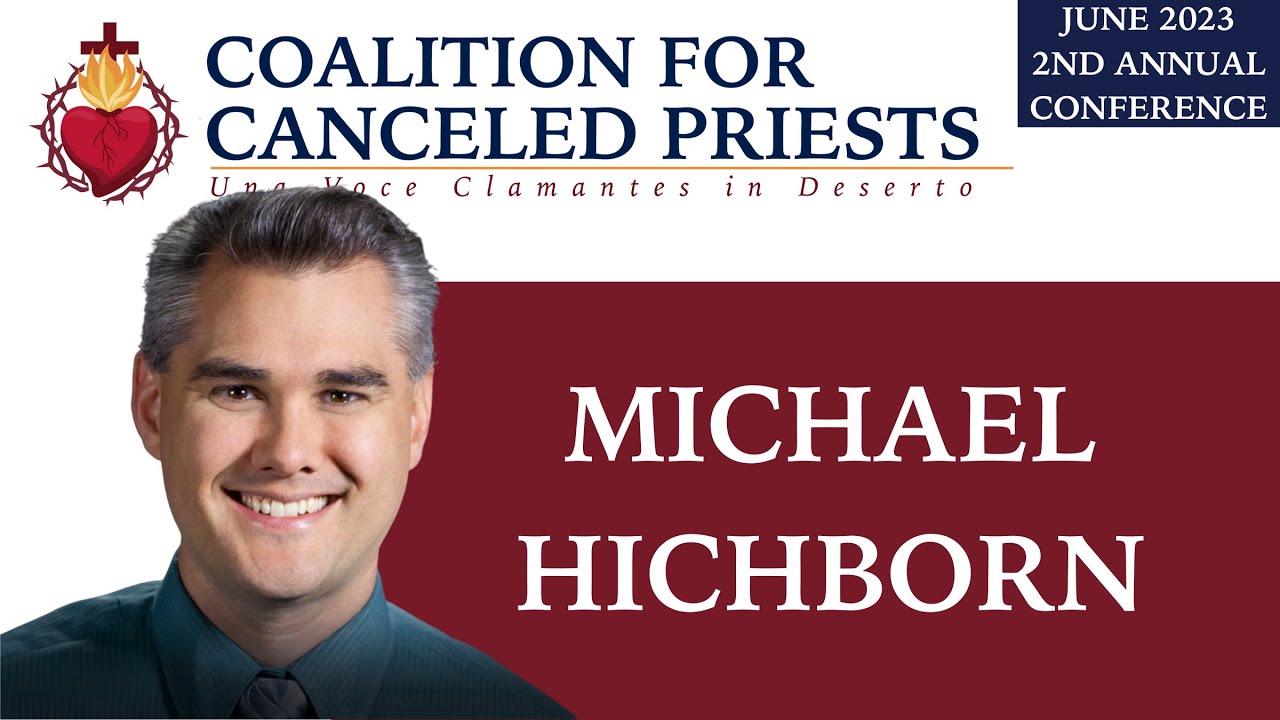
 Longtime readers here know of my love of poetry. Hence, from the beginning this talk by Michael Hitchborn at the Coalition FOR Canceled Priests grabbed my attention, for he began with William Butler Yeats and his most famous work.
He then revealed that Yeats was into, basically, Satanism (I had zero idea!) and that his most famous work closely resembles a vision by the heretic Jesuit (tautology?) Pierre Teilhard de Chardin in China which he recounts, clearly a temptation and subsequent possession by the Enemy. Key: Spiritus Mundi… spirit of the earth/world.
At this point, my attention was grabbed… by the neck.





 Loading ...
























While theosophy is, in fact, “satanism,” I think the terms “gnosticism, orientalist syncretism, hermeticism,” and “freemasonry” are a little more explanatory. It was all these things, blended in with darwinist and hegelian theories of man’s origin and purpose. People often have no idea how influential this movement was. Ever wondered were the ideology of the Third Reich came from? Straight out of theosophy.
And while it never occured to me before, given the theosophistical movement’s obsession with blending darwinism, hegelianism, and pseudo-mysticism, I would not at all be suprised to find that it excersized an influence on Teilhard de Chardin.
Another speaker at the conference declared that Pope Francis is an anti-Pope. So far not a word from the Coalition condemning it or distancing themselves from the remarks.
How many visions did de Chardin have!? Does anyone have textual references they can refer me to?
I can never find one when I’m looking for them, or remember them when I’m trying to. I vaguely remember reading one where he was in the wilderness crying “sacerdote, sacerdote” and I thought it was from Fr. Z’s blog that I had come across it, but I can’t find it.
Chardin was a quiet attendant at Vatican II.
Correct me because I’m wrong (how do you like that?) but, heretical still? I do remember that Benedict XVI, during his pontificate and cardinalate, made some rehabilitative statements about Dr Teilhard de Chardin. And I do know the theology of the Omega Point is explicitly used in Laudato Si’, but perhaps you consider Francis heretical? I read often enough here to know, putting it mildly, you’re not a fan.
Also, so far as I know Dr Teilhard de Chardin never rebelled against the authority or discipline of the church. One can be a heretic and a loyal practicing Catholic? I guess here I’m asking about the difference in the delict of heresy vs. apostasy in your tradition.
I have read a bit of Teilhard de Chardin. I find him grandiose and baffling. The idea of evolution moving toward an end point in God is perhaps beautiful to some but at odds with the basic idea of the modern Darwinian evolutionary synthesis, viz. that things happen at random and then the useful adaptations are selected for, or put another way that evolution has a push but not a pull. He mixes scientific and religious terms with imprecision that would frustrate either a scientist or a theologian. I found “Mass on the World” (I think that’s the title) a very pretty work of art that was an expression of spirituality intelligible to the artist but very widely open to the interpretation of the reader. Fair?
As for Yeats: Man, but that guy was strange. Don’t go believing in ghosts and ghouls, you’ll find them in the weirdness of the thoughts your search entails. I think it’s Nietzsche—definitely a Christian heretic—who said that “a person who battles monsters should be careful not to thereby become a monster.” (paraphrase). Yeats wasn’t a monster in his personal conduct, but he was quite definitely a kook. It is more than bit odd that there’s a straight line between his theosophistry, Hinduism, and his patriotic work and the establishment of the DeValera democratic Catholic theocracy. Still, if you can’t nevertheless enjoy “The Lake Isle of Innisfree” or “Sailing to Byzantium” then there’s something sick with your soul. To me he’s the ideal person to illustrate an ad hominem fallacy.
Terrifying. Lord of the World type stuff.
@PostCatholic
If he, or his interpreters weave around this:
“If anyone says that finite things, both corporal and spiritual, or at any rate, spiritual, emanated from the divine substance; or that the divine essence, by the manifestation and evolution of itself becomes all things or, finally, that God is a universal or indefinite being which by self determination establishes the totality of things distinct in genera, species and individuals:
let him be anathema.”
And this:
“If anyone says that it is possible that at some time, given the advancement of knowledge, a sense may be assigned to the dogmas propounded by the church which is different from that which the church has understood and understands:
let him be anathema.”
Two pronouncements of the First Vatican Council. (Those are the official translations from the Vatican’s website.) I think his work would, in fact, be pointless jibberjabber if an attempt to square them with the teaching of the Church were to be made. But pointless drivel has been all the rage for the last while.
I always found Yeats’ ‘The Second Coming’ chilling . . . now it’s nauseating.
My mom, God rest her soul, was given a book by Teilhard de Chardin by a Catholic priest who taught at our local seminary.
My mom was a brilliant woman, but not very analytical, and totally trusting when it came to priests and the hierarchy. She bought into Teilhard de Chardin hook, line and sinker. She then wanted me to read this book. I was a teenager at the time.
Other than some memories of an evolutionary point out in the beyond somewhere, an impression of a cosmic Christ, and a jumble of philosophical ideas, I was underwhelmed.
Years later, I read of his possession by this spirit, which I interpreted as evil, and concluded that I had been mistaken to have been unimpressed with the man. I should have been alarmed.
I have located a textual reference for the video (~11:00). I found the vision/prayer experience appended by de Chardin himself to his essay “The Heart of Matter”. It is entitled “The Spiritual Power of Matter” (pg 67 on archive.org) and seems be a reflection on the book of Kings’ account of Elijah and the fiery chariot. While it is a very unsettling reflection on the scriptures, de Chardin notes several pages previous (pg 61) that he wrote this while he was in Jersey in the summer of 1919, and a quick check notes that he had been discharged from the military in the spring of 1919 and did not travel to China until 1923. I cannot locate anything about his being in the Mongolian desert in 1919.
This amateur research of mine leaves me with the same unanswered questions and a few more: what vision is Hichborn referring to occurring in Mongolia? How many visions did de Chardin have? Was there this other vision I recall about de Chardin himself (not Elijah) being named a priest by a mysterious spirit in the wilderness?