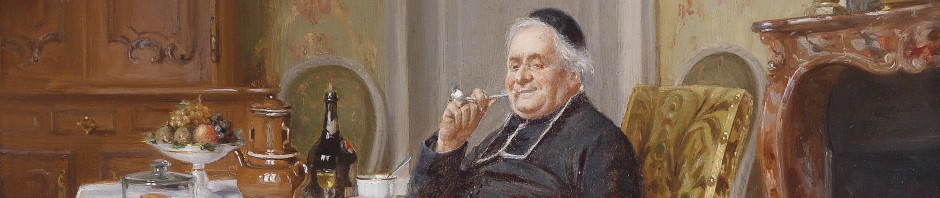

This used to be my barber in Rome. Many American seminarians and priests go there.
QUAERITUR: On the right, above the number 26 for the street address, there is a small plaque with “2299”. Can anyone explain what that is all about? They are all over the place (with different numbers) in the centro.
Pope appoints pro-TLM Oratorian as Bishop of Corpus Christi, Texas: https://t.co/birTofpHHp https://t.co/zASduOo6zP pic.twitter.com/Ybdk1ZsGdz
— Damian Thompson (@holysmoke) December 1, 2025
Please remember me when shopping online and use my affiliate links. US HERE – WHY? This helps to pay for health insurance, utilities, groceries, etc.. At no extra cost, you provide help for which I am grateful.
White to move and mate in 4.
[NB: I’ll hold comments with solutions ’till the next day so there won’t be “spoilers” for others.]
But first… have a beer and help some traditional monks in Norcia!


Finally, this seems appropriate.






 Loading ...
























2299 is the building’s civic number, which often refers to a registered business that occupies — or occupied — the premises; in this case a former bank.
Rich: Back that up, if you can. But no… that’s not it.
It’s the count from the Great Ant Census of 1748. 2299 was the exact quantity of ants found upon inspect of the premises that day.
Somebody had spilled an entire box of canoli the day before, so yeah. Bad timing.
The numbers are remnants of the gas lights installed by the Società Anglo-Romana per l’Illuminazione di Roma col Gas to replace the City’s olive oil lamps in the mid 19th century, when Pope Pius IX ended Pope Gregory XVI’s prohibition. The lamps were identified on the closest buildings, and the plaques remained after the lights were replaced.
Here is some additional info:
https://www.rerumromanarum.com/2017/07/la-numerazione-dei-vecchi-lampioni-gas.html
Online sources say the additional numbers on the buildings are from mid-19th century gas lights. Each gas light had a unique number to identify it, and the number was placed on the nearest building. The lights were later changed to electric lights, but the old numbers are still around. My online search led to an Italian blog post about them: https://www.rerumromanarum.com/2017/07/la-numerazione-dei-vecchi-lampioni-gas.html
Blame Elon.
(I ran a Grok query of the image.)
https://grok.com/share/c2hhcmQtNQ_21fdaaec-a514-49c9-9cec-96d5ced402af
The four-digit number is the old gas light identification number for that particular building or corner, isn’t it?
White to move and mate in 4
1) Qxf7+ Kxf7 (forced)
2) Bh5+ Kf8 (or Kg8)
3) Re8+ Rxe8 (forced)
4) Rxe8 mate
2) Bh5+ Kg8
3) Re8+ Rxe8 (forced)
4) Rxe8 mate
Grok says the following:
The number 2299 that you see carved, painted, or attached to many buildings in Rome (and elsewhere in Italy) is not a year or a historical reference. It is a tax or property registration code used by the Italian state.What it actually means:2299 is the code assigned to the Agenzia delle Entrate (the Italian Revenue Agency) for a specific type of property tax inscription.
More precisely, it refers to the “Trascrizione 2299” — a formal registration in the public real-estate registry (Conservatoria dei Registri Immobiliari) that proves the building has been declared to the land registry (Catasto) and is subject to property taxes (especially the old ICI/IMU taxes).
When a building is legally recognized and entered into the cadastral system (often after new construction, major renovations, or regularization of previously undeclared properties), the notary or the land registry office adds this reference number to the deed.
Owners or condominium administrators then physically put the number 2299 (sometimes followed by other digits, e.g., 2299/12345) on the building’s entrance plaque or wall so that tax authorities, postal services, and emergency services can easily identify the property in the official records.
Why you see it everywhere in Rome:In the last 20–30 years, Italy ran several major building amnesty/regularization programs (condoni edilizi) that allowed millions of properties built without full permits (very common in the postwar period) to be legalized.
After each amnesty, hundreds of thousands of buildings in Rome and across Italy received their official cadastral registration, and the standard transcription number used in many cases was in the 2299 series.
That’s why entire neighborhoods (especially peripheral or formerly illegal ones) suddenly got plaques with “2299” on them.
my speculation – and it is no more than that – is that it is a catalogue number for historic properties.
The four-digit numbers on the buildings are location codes for old gas street-lamps.
The Boston Symphony Orchestra plays a program where they play live the music to accompany Bugs Bunny cartoons. They say a generation of us know Classical music thanks to Bugs Bunny.
Some desperate googling suggests that small number plaque is a vestigial gas lamp identifier.
To quote Geoffrey (my ChatGPT’s given name):
In Rome, numbers like 2299 on small oval or round plaques are building inventory numbers used by the municipal authorities (Comune di Roma). They are not street addresses. Instead, they are part of an internal civic system for cataloguing every building in the historic center.
These numbers are used for:
Municipal records (ownership, taxation, maintenance)
Heritage and preservation files
Emergency services reference
Utility and inspection tracking
They function somewhat like a parcel or cadastral number in other countries, but visibly marked on the façade.
The actual street address is the small rectangular plaque showing 25 and 26 next to the two doors. Those correspond to Via del Banco di Santo Spirito.
2299, by contrast, is part of a different numbering system and doesn’t relate to navigation or mail.
Because central Rome is a protected zone with layers of registered properties, the city uses this system to track restoration, zoning, and utilities in buildings that often predate the unification of Italy.
I am led to believe these are “gaslamp numbers”. Which if true is quite interesting!
https://www.rerumromanarum.com/2017/07/la-numerazione-dei-vecchi-lampioni-gas.html
Ahh, The Rabbit of Seville… an all-time classic! Many of those WB cartoons were really a very high form of art, the Overture wasn’t simply “background music”, they wrote and animated an entire screenplay to match the music! How many of us learned some of the best-known classical pieces – or at least their best-known parts – by watching these as children? Like almost everything else in our culture these truly entertaining shorts were replaced in the 60’s and 70’s by “simplified” cartoons for the kiddies, more “relevant” and often with a more explicit didactic theme… sound like anything else that happened during those years? FAIL!
Dear Father Z,
Perhaps this is helpful. Looks like it was the old lighting system.
https://www.rerumromanarum.com/2017/07/la-numerazione-dei-vecchi-lampioni-gas.html
Blessings,
EDM
Some have proposed that the number corresponds to a gaslamp that was in the vicinity of the number plate, back when Rome instituted gas streetlamps in the 19th century: https://www.rerumromanarum.com/2017/07/la-numerazione-dei-vecchi-lampioni-gas.html. Plausible, I think?
Quite a few of you worked on the plaque question! Great!
These are the markers for old gaslights which no longer exist. Although it must be said that there is still a lot of gaslighting going on.
So which is it, a system for tracking gaslights, or some weird building code related to cataloguing buildings for civic and/or tax purposes?
I’m more inclined to believe the gaslight claim, because many of those sources predate the spread of AI chatbots. If that it true, the responses quoting the AI chatbots above are both extremely wrong, and quite concerning.
“gaslighting”
Reader’s STAR of the DAY
I pray for Bishop Aviles. I live in this diocese. Hopefully he will makes efforts to bring back the TLM.