 From a reader…
QUAERITUR:
You usually give your readership an annual reminder for the blessing of wine on St. John’s Day.
The Rituale says “Benedicere… hunc calicem vini et CUJUSLIBET POTUS”- so presumably any hard beverage could be blessed with that blessing? Whiskey would be acceptable right?
Right! Whiskey is “another beverage”.
I hope that you will get organized for this great day and wonderful blessing. First, contact your priest and make sure he is one board. To get him on board, it might be a good idea to to assure him that you will be leaving behind a goodly portion of the large quantity of the “other beverage” you want blessed:
“Hey Father! I have a little too much Laguvulin 16 right now. Could I leave some for you after you bless it? I’d be much obliged.”
That sort of thing.
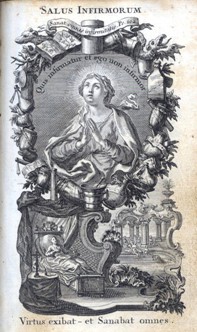
How did this blessing develop? There was an attempt on the life of St. John the Evangelist by poisoning. He blessed the cup and the poison crawled out in the form of a serpent. You often see St. John depicted this way in art.
Here are a couple texts.
BLESSING OF WINE
on the Feast of St. John, Apostle and EvangelistAt the end of the principal Mass on the feast of St. John, Apostle and Evangelist, after the last Gospel, the priest, retaining all vestments except the maniple, blesses wine brought by the people. This is done in memory and in honor of St. John, who drank without any ill effects the poisoned wine offered to him by his enemies.
P: Our help is in the name of the Lord.
All: Who made heaven and earth.
P: The Lord be with you.
All: May He also be with you.
Let us pray.
If it please you, Lord God, bless + and consecrate + this vessel of wine (or any other beverage) by the power of your right hand; and grant that, through the merits of St. John, apostle and evangelist, all your faithful who drink of it may find it a help and a protection. As the blessed John drank the poisoned potion without any ill effects, so may all who today drink the blessed wine in his honor be delivered from poisoning and similar harmful things. And as they offer themselves body and soul to you, may they obtain pardon of all their sins; through Christ our Lord.All: Amen.
Lord, bless + this creature drink, so that it may be a health- giving medicine to all who use it; and grant by your grace that all who taste of it may enjoy bodily and spiritual health in calling on your holy name; through Christ our Lord.All: Amen.
May the blessing of almighty God, Father, Son, + and Holy Spirit, come on this wine (or any other beverage) and remain always.All: Amen.
It is sprinkled with holy water. If the blessing is given privately outside of Mass, the priest is vested in surplice and stole and performs the ceremony as given above.4. ANOTHER FORM FOR BLESSING WINE
on the Feast of St. John, Apostle and EvangelistAt the end of Mass, after the last Gospel, the following is said:
Psalm 22
(for this psalm see Rite for Baptism of Children)After the psalm: Lord, have mercy. Christ, have mercy. Lord, have mercy. Our Father (the rest inaudibly until:)
P: And lead us not into temptation.
All: But deliver us from evil.
P: Save your servants.
All: Who trust in you, my God.
P: Lord, send them aid from your holy place.
All: And watch over them from Sion.
P: Let the enemy have no power over them.
All: And the son of iniquity be powerless to harm them.
P: Then if they drink anything deadly.
All: It will not harm them.
P: Lord, heed my prayer.
All: And let my cry be heard by you.
P: The Lord be with you.
All: May He also be with you.
Let us pray.
Holy Lord, almighty Father, everlasting God, who willed that your Son, co-eternal and consubstantial with you, come down from heaven and in the fulness of time be made flesh for a time of the blessed Virgin Mary, in order to seek the lost and wayward sheep and carry it on His shoulders to the sheepfold, and to heal the man fallen among robbers of his wounds by pouring in oil and wine; may you bless + and sanctify + this wine which you have vintaged for man’s drink. Let all who taste or drink of it on this holy feastday have health of body and soul; by your grace let it be a solace to the man who is on a journey and bring him safely to his destination; through Christ our Lord.All: Amen.
Let us pray.
Lord Jesus Christ, who spoke of yourself as the true vine and the apostles as the branches, and who willed to plant a chosen vineyard of all who love you, bless + this wine and empower it with your blessing; so that all who taste or drink of it may, through the intercession of your beloved disciple John, apostle and evangelist, be spared every deadly and poisonous affliction and enjoy bodily and spiritual well-being. We ask this of you who live and reign forever and ever.All: Amen.
Let us pray.
God, who in creating the world brought forth for mankind bread as food and wine as drink, bread to nourish the body and wine to cheer the heart; who conferred on blessed John, your beloved disciple, such great favor that not only did he himself escape the poisoned potion, but could restore life by your power to others who were dead from poison; grant to all who drink this wine spiritual gladness and everlasting life; through Christ our Lord.All: Amen.
It is sprinkled with holy water.
By the way, St. John the Evangelist is recognized as a martyr, not because he was actually killed but for his willingness to be martyred while the Romans were actively working on killing him. He was miraculously preserved form harm when they put him into a vat of boiling oil. They were too afraid to try anything else, so Domitian exiled him to Patmos. There is a tiny church by the Porta Latina (that I’ve never been in) called San Giovanni in Oleo. The Feast Day of St. John’s “Martyrdom” is called St. John at the Latin Gate.






 Loading ...
























I was puzzled by one of the prayers in the second blessing saying: “… in the fulness of time (the coeternal Word was) made flesh *for a time * of the blessed Virgin Mary …”. Although he lived this earthly life only for a time, surely the Eternal Word lives and reigns for ever in his glorified flesh as God made man? Or is there something I’ve misread?
@Loquitur:
That is a good catch.
The Latin says:
… et de sacratissima Virgine Maria in hoc tempore plenitudinis incarnari temporaliter voluisti, …
perhaps a more literal English rendition:
… and willed that in this, the fulness of time, (Thy Coeternal Son) be temporally incarnated from the Most Sacred Virgin Mary, …
This has the advantage of not accidentally implying a time limit on the Incarnation.
IMHO
The reference to “this the fulness of time” speaks to this day in the Octave of the Nativity which is the fulfillment of all the prophets through the ages and, as part of the Octave, it is the fulfillment of the very feast of the Nativity.
The adverbial “temporaliter” refers to the mode of the Incarnation as actually taking place in time, as opposed to the mode it had in the creative plan of God from all Eternity
I don’t think I am too far off here…
@Fr. Kelly: Thank-you, Father, that makes sense. So; temporally not temporarily.