OLDIE PODCAzT 127: The Eve of St. Agnes and a Bleak Midwinter

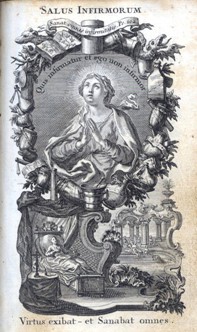
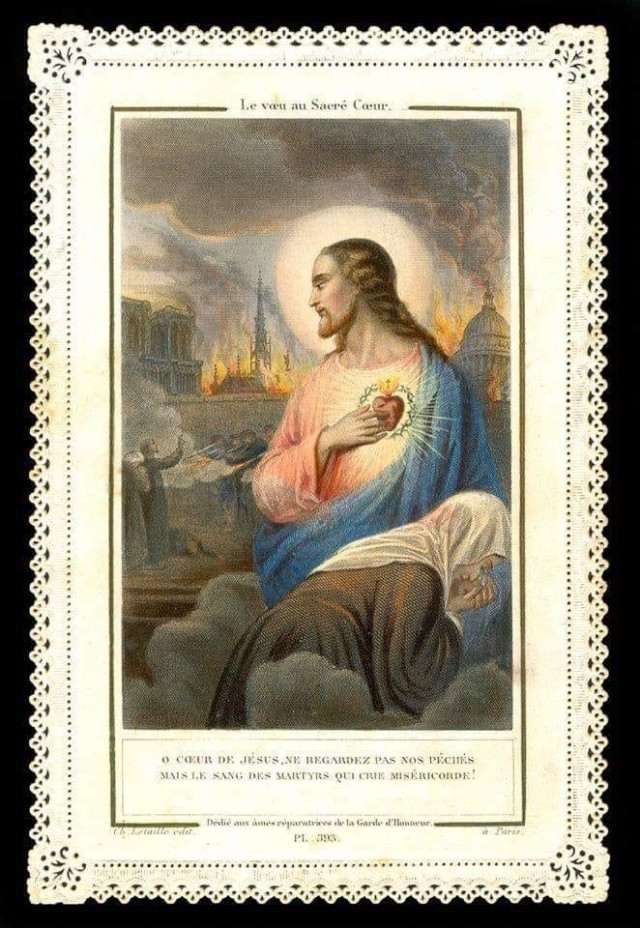
A friend reminded me that today is the Eve of St. Agnes, along with being the “birthday” of the Roman martyrs Marcellus, Prisca, Fabian, and Sebastian.

Years ago – good grief 2012 – when I was reading poetry in podcasts at someone’s behest I recorded the famous poem by Keats.

HERE

If you have have a few minutes you might check it out.

A younger voice and back in the day and more people still had the patience to comment.  I believe attention spans have been getting shorter and shorter.   2012… happier days in the Church before the dark years began.

Long lost voices in the old combox, too, like “Supertradmum” and “Henry Edwards”… RIP.  There was also a weird feminist whiner.

Posted in Classic Posts, PODCAzT, Poetry |
Comments Off on OLDIE PODCAzT 127: The Eve of St. Agnes and a Bleak Midwinter

PODCAzT 187 – Voices of the Fathers 02 – The Martyrdom of St. Cyprian

I was recently going through some old books and found a slim volume entitled The Osterley Selection from the Latin Fathers, edited by Joseph Crehan of Heythrop College, was compiled chiefly for seminarians, especially late vocations, at Campion College, Osterley, a Jesuit formation house in the Archdiocese of Westminster that closed in 2004. The 1949 preface praises the great classical authors—Caesar, Cicero, Livy, Virgil—yet insists that Christian writing shows a different kind of beauty. Pagans, it says, wrote with studied grace; Christians with passionate conviction. The volume includes selections from Ambrose and Augustine, Tertullian, Vincent of Lérins, Jerome, and others.

It occurred to me that I might offer a podcast of the first reading and see how it goes.   Some of you get Patristic readings in the office of readings in the Liturgy of the Hours but do you hear them?  That’s another question.  There are 42 brief readings in the book by authors whom you will more than likely recognize.    I propose to read an English translation, make some comments and read the Latin.

Today we hear from the Acts of the Martyrdom of St. Cyprian of Carthage

St. Cyprian was bishop of Carthage from 248 to 258. He had survived the persecution of Decius by going on the run until the death of that emperor in 251. When after some years’ respite a new persecution broke out in 257, under Valerian, he was arrested and sent into exile. The year following, he was brought back to Carthage and tried on September 14th, 258. The scene of his martyrdom was, as we are told by the deacon Pontius in his We of Cyprian, a valley surrounded by wooded hills on the estate of Sextus. Some of the spectators climbed trees when they found that the size of the crowd or the distance kept them from a good view.

St. Cyprian of Carthage stands as one of the most lucid episcopal witnesses of the third century, a man whose theology was forged in persecution and whose blood sealed his teaching.  In Cyprian, doctrine, discipline, and martyrdom converge in a single, luminous testimony.  J. N. D. Kelly, on Cyprian’s authority and legacy:

“No Latin Father before Augustine exercised so decisive an influence on Western ecclesiology as Cyprian.”


Since the embedded player could be improved, here’s the link: HERE

The last Voices Of The Fathers about The Scillitan Martyrs is HERE

Posted in Patristiblogging, PODCAzT, Voices of the Fathers | Tagged ,
1 Comment

Daily Rome Shot 1528


Today’s Wordle: 5

Welcome Registrant:

Granny62

Please remember me when shopping online and use my affiliate links.  US HEREWHY?  This helps to pay for health insurance (massively hiked for this new year of surprises), utilities, groceries, etc..  At no extra cost, you provide help for which I am grateful.

Meanwhile…

And… GO NAVY! BEAT ARMY!

And at my home parish in St. Paul… *sigh*…

White to move and mate in 4.

NB: I’ll hold comments with solutions ’till the next day so there won’t be “spoilers” for others.

Posted in SESSIUNCULA |
16 Comments

Your Sunday Sermon Notes – 2nd Sunday after Epiphany (N.O.: 2nd Ordinary) 2026

Too many people today are without good, strong preaching, to the detriment of all. Share the good stuff.

Was there a GOOD point made in the sermon you heard at your Mass of obligation for this Sunday, 2nd Sunday after Epiphany and in the Novus Ordo the 2nd Sunday in Ordinary Time.

Tell us about attendance especially for the Traditional Latin Mass.

Any local changes or (hopefully good) news?

A taste of what I offered at 1 Peter 5 this week:

[…]

Within the Church herself, trials are not absent. Many of the faithful experience deprivation in matters that touch the heart of worship. The image of the empty wine jars at Cana has become a poignant symbol. For those who desire the Traditional Latin Mass, the Eucharistic banquet may feel diminished or distant. Access may be limited, reduced, or removed altogether.  In recent days we saw how the Prefect of Divine Worship distributed an anti-tradition essay to cardinals gathered for a consistory.  It was a banal, on-the-spot product which, when carefully examined, is more manipulative than truly persuasive.  Yet it is yet another sign that, if certain people still have their way, the persecution will continue.

[…]


Posted in Sermons |
7 Comments

WDTPRS: a “liturgical unicorn” – 2nd Sunday after Epiphany (N.O.: 2nd Ordinary)

Media lies and political collaboration

Mass psychosis formation

Suppression of freedoms

Snuggling with Communism

Open persecution of traditional Catholics

Anarchy in the streets

Active promotion of homosexualism

Cancel culture in the Church

Obsession with process

Prelates of pornotheology celebrated, promoted, retained

I can’t think of a time when it was more important to beg God for mercy and aid, now.

In the post-Conciliar calendar, it’s again the Time called “Ordinary”, which is “ordered” not “unexceptional”.  We might say also, “sequential”.

In the traditional calendar of the Vetus Ordo, this is the “Time through the year”, divided into time after Epiphany and time after Pentecost. However, this terminology, “Tempus per annum … time through the year”, remained also in the Novus Ordo calendar.

Ordinary Time embraces the sacral cycle of Lent and Eastertide like bookends. It stretches from the adoration of the heavenly infant King by earthly kings to the Solemnity of Christ the King who will come as Judge to separate the tares from the wheat and usher in the unending reign of peace.

This Sunday is what I call a “liturgical unicorn”.  It is rare.  The Collects are the same in the Vetus Ordo and in the Novus, and, in one year only, the Gospel is the same (the wedding at Cana).

This is Sunday’s Collect, for the Second Sunday (VO) after Epiphany / (NO) of Ordinary Time:

Omnipotens sempiterne Deus,
qui caelestia simul et terrena moderaris, supplicationibus populi tui clementer exaudi,
et pacem tuam nostris concede temporibus
.

We often ask when we pray in Latin that God will pay attention, usually by “hearing” us. Exaudio signifies “listen to” in the sense of “perceive clearly.” The imperative exaudi is more urgent than a simple audi (the imperative of audio, not the car). Think of the beginning of one of our Litanies: “Christe audi nos… Christe exaudi nos…” often translated as “Christ hear us… Christ graciously hear us.”

For the ancient Romans a supplicatio was a solemn religious ceremony in thanksgiving for a victory or prayer in the face of danger. It is related to supplex, an adjective for the position of a beggar, on bended knees or prostration.  The root of supplex implies bending, folding.

Tempus obviously means “time”. It also means “the appointed time, the right season, an opportunity (Greek kairos)”. Tempus gives us “temporal”, that is, worldly or earthly things, material things, as opposed to sacred, eternal or spiritual. Plural tempora can also mean the “temples” of our heads, as well as “the times”, our “state of affairs”.

In that “our times” try to hear simultaneously, “our temporal affairs, everything that’s going on”.  (Cf., also the list at the top.)

Moreover, given the attitude of supplication, which is urgent, and the open appeal for mercy, I think we can insert “troubled” with “times”

LITERAL RENDERING:

Almighty eternal God,
who at the same time do govern things heavenly and earthly,
mercifully hearken to the supplications of Your people,
and grant Your peace in our troubled times.

Lest we forget…

OBSOLETE ICEL (1973):
Father of heaven and earth,
hear our prayers, and show us the way
to peace in the world
.

Really?

CURRENT ICEL (2011):

Almighty ever-living God, who govern all things,
both in heaven and on earth,
mercifully hear the pleading of your people
and bestow your peace on our times.

We beg God, omnipotent sempiternal disposer of all things, for peace in our temporal affairs here and now, not just later in heaven. We do not want just any peace. We want the peace which comes from Him.

Christ said:

“Peace I leave with you: my peace I give unto you: not as the world giveth, do I give unto you. Let not your heart be troubled: nor let it be afraid” (John 14:27 DR).

Christians are confident. Christ will give us His peace. He said so.

But He won’t force peace on us.

The temporal peace the world offers and the peace that God bestows are different, though they can be harmonized when the temporal is subordinated to the heavenly.

The goods (and ills) of this world are passing and fragile, always susceptible to loss.

The goods of heaven are enduring and dependable.

No finite, passing, created thing or person can provide lasting joy or eternal peace: they will be lost through theft and wear, time and death.

Our wealth, family, health, appearance and reputation can be lost in the blink of an eye.  Believe me!

To put a creature in God’s place is foolhardy idolatry and a sin.

Love God, above all. Practice making His will your own.

In the Paradiso of the Divine Comedy, Dante meets Piccarda.  Dante asks her whether souls in Heaven are envious of souls who are higher in Heaven.  She responds that happiness comes from conforming to God’s will, which is a person’s highest good.  In effect, she couldn’t be happier because she is where God’s wants her to be.  In very words in the Divine Comedy,

“……..In His will is our peace:
that is the sea whereto all creatures fare
fashioned by Nature or the hand of God.” (Par 3.85, trans. by Esolen – HERE).

Treat yourself to reading Dante with Anthony Esolen’s translation.  HERE

God knew each one of us outside of time, before the creation of both the visible and invisible universe. He called us into existence at a precise moment in His eternal plan. He gives us all something to do in His plan together with the talents and graces to do it. When we cooperate with Him, submit our wills to His, make His plan for us our own, God then makes us strong enough to carry it out.

God knows our needs better than we do.

Also, we are the team he chose to be here – not at another time – right now.

Turn confidently to Him in prayer. Ask Him for the graces, and with them the peace, which He alone can give.

Sin shatters His peace. Peace can be regained in the Sacrament of Penance. Go to confession.

To endure the shaking of the barque down to its keel, we have to be squared away with God or we will loose it completely.

We ask God to bless us in this new year of salvation. Let us beg Him to give aid to all who suffer.

Let us beg Him to give aid to all who cause suffering, especially in the Church.  Mercy, Lord, for them, and graces to make changes pleasing to you… or put them aside.

With bent knees and with foreheads to the ground, bodies and wills both bent in supplication, beg His graces and His peace.
Posted in Christmas and Epiphany, WDTPRS |
8 Comments

“Let us run with this thought experiment for a moment.”

Peter Kwasniewski invites a mind experiment.

Let us run with this thought experiment for a moment. Imagine the Divine Liturgy of Saint John Chrysostom as our starting point. Now, take away most of the litanies; substitute a newly-composed anaphora (with only the words of consecration remaining the same); change the troparia, kontakia, prokeimena, and readings; greatly reduce the priestly prayers, incensations, and signs of reverence; and while we’re at it, hand cup and spoon to the laity, so they can tuck in like grown-ups. [By the way, I recently published at NLM two satirical posts that presented, in detail, such a “reform” of the Divine Liturgy of St. John Chrysostom: see here and here.]

Would anyone in his right mind say that this is still the Byzantine Divine Liturgy in any meaningful sense of the term?

Sure, it might be “valid,” but it would be a different rite, a different liturgy.

Just for good measure, let’s say we also remove the iconostasis, turn the priest around, take away some of his vestments and substitute ugly ones, and replace all the common tones of the ordinary chants with new melodies reminiscent of Broadway show tunes and anti-Vietnam folk songs. Now we’d have not only a different rite but a totally different experience. It is not the same phenomenon; it is not the same idea (in Newman’s sense of the word “idea”); it is not the expres­sion of the same worldview; indeed, it is not the same religion, if we take the word in the strict meaning of the virtue by which we give honor to God through external words, actions, and signs.

We are our rites.

Change the rites and, over time, the content of what people who attend those rites will change.

Once their belief changes, their behavior will change.


Posted in Liturgy Science Theatre 3000, Save The Liturgy - Save The World | Tagged
14 Comments

We’re saved! At LAST we will learn how to do “walking together” together

We’re saved!

At LAST we learn what “walking together” involves.  It is “conversation in the Spirit!”  There’s an app for it, too!

NB: UISG is the International Union of Superiors General, a global organization for superiors general of Catholic women religious.  These are in general aligned more with the “nuns on a (short) bus” rather than the nuns of Gower Abbey, if you get my drift.


Posted in SESSIUNCULA, Women Religious, You must be joking! | Tagged
26 Comments

Daily Rome Shot 1527

Today’s Wordle: Fail!

Welcome Registrant:

TLMinAZ

Please remember me when shopping online and use my affiliate links.  US HEREWHY?  This helps to pay for health insurance (massively hiked for this new year of surprises), utilities, groceries, etc..  At no extra cost, you provide help for which I am grateful.

Meanwhile…

White to move and mate in ONE.

NB: I’ll hold comments with solutions ’till the next day so there won’t be “spoilers” for others.

And because it is Friday…

And…

Posted in SESSIUNCULA |
8 Comments

Daily Rome Shot 1526

Today’s Wordle: 4

Please remember me when shopping online and use my affiliate links.  US HEREWHY?  This helps to pay for health insurance, utilities, groceries, etc..  At no extra cost, you provide help for which I am grateful.

White to move. Find the best TACTIC for white to win. HINT: Sometimes it’s a long German word.

NB: I’ll hold comments with solutions ’till the next day so there won’t be “spoilers” for others.

Easy…

Hey Fathers!  How about a clerical Guayabera shirt?

Posted in SESSIUNCULA |
7 Comments

14 January – Happy Feast of the Ass!

Today, 14 January, is the Feast of the Ass, Asses… the Festum Assinorum (in Latin, plural… inclusive!).

No, I am not talking about whom you think I’m talking about.  And, no, it’s not a special Jesuit feast.

The feast which became popular in France, could have stemmed from the so-called “feast of fools”.  It may tendrils into biblical donkeys, or the integration of the ass into the nativity narrative.  It could have been in part inspired by a sermon of pseudo-Augustine.

The day included the tradition of a parading a couple of kids (not goats) on an ass (not a Jesuit) right into the church, next to the pulpit during the sermon.  The congregation would respond with loud “hee haws”.

Who said that the Middle Ages were dreary?

In any event, it was celebrated for a long time and then faded out.

Here are possible greeting cards.

One for your parish priests….

Dear Fr. ___

There is a rather long entry about this at Wikipedia.  It includes a liturgical note:

At Beauvais the Ass may have continued his minor role of enlivening the long procession of Prophets. On the January 14, however, he discharged an important function in that city’s festivities. On the feast of the Flight into Egypt the most beautiful girl in the town, with a pretty child in her arms, was placed on a richly draped ass, and conducted with religious gravity to St. Stephen’s Church. The Ass (possibly a wooden figure) was stationed at the right of the altar, and the Mass was begun. After the Introit a Latin prose was sung.

The first stanza and its French refrain may serve as a specimen of the nine that follow:

Orientis partibus
Adventavit Asinus
Pulcher et fortissimus
Sarcinis aptissimus.
Hez, Sire Asnes, car chantez,
Belle bouche rechignez,
Vous aurez du foin assez
Et de l’avoine a plantez.

(From the Eastern lands the Ass is come, beautiful and very brave, well fitted to bear burdens. Up! Sir Ass, and sing. Open your pretty mouth. Hay will be yours in plenty, and oats in abundance.)

Mass was continued, and at its end, apparently without awakening the least consciousness of its impropriety, the following direction (in Latin) was observed:

In fine Missae sacerdos, versus ad populum, vice ‘Ite, Missa est’, ter hinhannabit: populus vero, vice ‘Deo Gratias’, ter respondebit, ‘Hinham, hinham, hinham.’

(At the end of Mass, the priest, having turned to the people, in lieu of saying the ‘Ite missa est’, will bray thrice; the people instead of replying ‘Deo Gratias’ say, ‘Hinham, hinham, hinham.’)

Here’s a treat for the Feast of the Ass.

Judging from the lyrics, this seems to be the festive installation of the “bishop” …who’s seems, appropriately, to be an ass. Cliche today, perhaps, but still fun. You can’t embed that one, so go HERE   1:18 – “Habemus Episcopum!”

Here is something more extensive.

YouTube thumbnailYouTube icon

Have you sent a greeting card to someone?

BTW… there is a musical setting. HERE

Posted in Lighter fare, SESSIUNCULA |
4 Comments