Rome 24/10 – Day 20 & 21: Hammer of Freemasons

The beautiful blue Roman sky was today illuminated at 07:28.  It will darken considerably after 18:21.   The Ave Maria is now in the 18:30 cycle in the Roman Curia, if they did anything over there.

Thank you, Lord, for this day.

This day is also the Feast of St. Gaspar del Bufalo (+1837), known as the “Hammer of Freemasons”.   A great title.

I have interest in St. Gaspar as one of my Roman patrons because I exercised ministry as a seminarian and then deacon at the basilica in Rome where he helped to found devotion to and the Confraternity of the Most Precious Blood at San Nicola in Carcere.   He had a tense relationship with the state (Napoleon’s police were after him). Masons tried multiple times to assassinate him… as they do. His answer to the French commissar asking him to sign his submission to emperor should be the motto of every pope and bishop requested to yield to the world:

“I can’t, I musn’t, I don’t want to.”

That’s how a Roman priest says ‘No’ when he wants to be talkative.”

It’s better in Italian.

‘Non posso, non debbo, non voglio!’

I wonder if Pius VII’s “Non debemus, non possumus, non volumus” didn’t come from St. Gaspar.  I’ll bet it did.

These days it’s more like, “Volumus! Possumus! Debetote etiam vos!”   Anything to appease the secular realm.

St Gaspar’s tomb is in the little S. Maria in Trivio, tucked away behind where the flashy Trevi Fountain.  His bronze tomb has no barrier and the hand of the image of the saint is extended outward so that you can grasp it.  It is quite moving.

St. Gaspar had ways that really could irritate, as many saints.  For example, he could sense satanic objects and would charge into peoples homes to seize and destroy them no matter how well hidden.  When he was young, he grew up across the mighty Church of the Gesù where his father was a cook at the Altieri palace.  When Gaspar was very young he had a malady of the eyes that threatened blindness.  He was cured through the intercession of St. Francis Xavier, whose arm is in the Gesù.  As a priest of Rome he was critical of the Papal States which got him into hot water.  The Pope had confidence in him, and asked him to engage in charitable works.

St. Gaspar, Hammer of Freemasons, pray for us.

My 1st class relic of St. Gaspar.

Speaking of the Most Precious Blood, I had occasion yesterday to ask Christ to wash with His Precious Blood the guy in the street – again – outside of where I was saying Mass all of a Sunday evening.   The same really bad musician this time had – I am not making this up – a banjo, instead of a guitar.  He was decidedly not a better banjo player than a guitar player.  The suspicious side of my character suspects that this was not an accident, especially given how it went last week.  As you may recall, I had asked the holy angels to quiet him while I said Mass.  As I passed him later he said, “The demon doesn’t like you.” (Al demonio non piace!).   In any event, I started Mass and he quieted down for a while, just to start up again right at the consecration.  I paused and renewed my plea and he calmed down again and was mostly quite for the rest of Mass.   Passing him by this time I heard a mumble, but nothing I could make out.

Yesterday I was out to lunch at a wonderful place near The Parish™.  Starting with tongue and pizza bianca with a wonderful herby green schmear and homemade mayo.  This we shared around.

Grama’s meatballs. The place is known for recipes that the owners grandmother made.

I had braised mutton. I spoke to the chef about it at length. It was in a marinade the day before. Some juniper and clove and wine. About 5 hours to braise, the last hour with a bay leaf and rosemary. It melted.

The side altar of Our Lady of Sorrows with The Parish™’s fine Crucifix.

What else can I tell you?

Today I am doing laundry. Also, I just got off the phone with the goldsmith’s shop. They are working on my paten (again). Aldo says it should be ready on Thursday or Friday. I’m betting Monday. Beati qui non expectant… and all that.

In churchy news… I don’t have much good to say about the walking together about walking togetherity going on over the river. This, however, is encouraging.

Also, Fr. Z follows Fr. V.

I had a nice note from the Summit Dominicans, the “soap sisters”, who make lots of other things as well including candles. They send candles for my chapel. Sister wrote to tell me that they earmarked a couple sets of ADVENT candles for me! Very sweet of them. I always think of them and say an Ave when I light my Advent wreath.

Advent isn’t that far off. Perhaps you should think about candles?

And this, just because I love St. Joan of Arc.

In chessy news … HERE

(White to move and mate in 2)

Posted in SESSIUNCULA |
1 Comment

Your Sunday Sermon Notes – 22nd Sunday after Pentecost (N.O.: 29th) 2024

Too many people today are without good, strong preaching, to the detriment of all. Share the good stuff.

Was there a GOOD point made in the sermon you heard at your Mass of obligation for this 22nd Sunday after Pentecost, or the 29th Sunday of Ordinary Time?

Tell us about attendance especially for the Traditional Latin Mass.

Any local changes or (hopefully good) news?

A couple thoughts about the sign of the cross: HERE  A taste…

[…]

In response to the trap question the Lord asked for a coin.  Not just any coin, but a nómisma toû kénsou, a “tribute coin”.  They gave him one, a denarion, a Roman silver coin commonly used also as a laborer’s day wage.  This coin, we learn from Christ’s interrogation (“Whose are this image and the inscription?” v. 20) bore the image of the Emperor Augustus’ adopted son Tiberius, then reigning (AD 14-37) and the Latin lettering: TI[berius] CAESAR DIVI AUG[usti] F[ilius] AUGUSTUS … Tiberius Caesar Augustus, son of the divine Augustus.”  Augustus, “deified” after his death (AD 14) by acclamation, was titled also as “divi filius” as adopted son of the officially deified Gaius Julius Caesar (in 42 BC).

The coin given to the Son of God said that Tiberius was the “son of god”, Augustus).  Even if the coin was older, from the time Augustus, it would have had DIVI F on it.

[…]

Posted in SESSIUNCULA |
2 Comments

EMERGENCY BLOG (aka “Auxiliary Bridge”)

EMERGENCY BLOG (aka “Auxiliary Bridge”)

https://zuhlsdorf.computer/

There are “504” pages coming up again. This has happened before. Something is wrong on the backend. I’ll cross post a bit for now.

Rome 24/10 – Day 20 & 21: Hammer of Freemasons

Your Sunday Sermon Notes – 22nd Sunday after Pentecost (N.O.: 29th) 2024

https://zuhlsdorf.computer/2024/10/20/upcoming-sacrilege-in-atlanta-and-communion-in-the-hand-musings/

Posted in SESSIUNCULA |
Comments Off on EMERGENCY BLOG (aka “Auxiliary Bridge”)

Upcoming sacrilege in Atlanta and Communion in the hand. Musings.

LifeSite reports that some foolish group in Atlanta will hold a “black Mass” during which a sacred Host will be desecrated.

The Archbishop of Atlanta has called for acts of penance, adoration and reparation. “Some” Catholic churches will have Mass to counter the sacrilege.  Two were named, one of them Byzantine and, therefore, not of the Archdiocese of Atlanta.   I hope there are more than two.

The bulletin of the Epiphany of Our Lord Byzantine Catholic Church in Roswell says (emphasis added):

“Jesus Christ cannot be harmed by any action of theirs, but we are responsible for allowing the Eucharist to be stolen and desecrated”….

It might be that those perpetrators of an extremely imprudent act have a Host because someone broke into a church and stole one or more.  It might be that they have a priest on their rolls who supplies them.

It might be that one of their number causally walked out of church with one because of Communion in the hand.

Byzantines don’t have Communion in the hand.

Yes, we Latins are responsible.   Steps should be taken always to safeguard the Hosts in our tabernacles and in their distribution at Communion.

If something is deemed important enough, then at least adequate if not superlative care will be taken.

Moreover, if we have correctly read the notices about the recent survey concerning faith if the Eucharist, the respondents themselves pointed to Communion in the hand as having been a factor in the Eucharistic faith.  They recommend that, to help restore reverence and faith in the Eucharist that Communion in the hand – and extraordinary ministers of Communion – be phased out.

Is this hard?   Given the stakes?


Posted in Liturgy Science Theatre 3000, Our Catholic Identity, Save The Liturgy - Save The World, The Drill, The future and our choices |
6 Comments

Rome 24/10 – Day 19: Review of the “Ave Maria Bell”

It was cloudy this morning so I didn’t see the rising of the sun at 07:25.  It is also cloudy this afternoon, which bodes not well for a sighting of the setting at 18:24.   The Ave Maria is ringing at Ss. Trinità at the solar time, rather than in the Roman Curia cycle of 18:45.

I was asked again about the Ave Maria Bell.  The question is “What is the Ave Maria Bell?”    I wrote about that in greater detail HERE.

In short, the Ave Maria Bells signals the end of the “religious” day and the beginning of “religious” night.  It is rung in the ball park of 30 minutes after sunset.  Usually the Ave Maria was rung in a way not dissimilar to how the Angelus is rung…  3x… 4x…5x… 1x.

If the Ave Maria rings at, say, 19:00h (7PM), then 18:00h (6PM) would be the 23rd hour of the day and 19:00 would be the 1st hour of the new day’s “evening and morning”.   In Roman churches, Vespers were usually sung about an hour before the Ave Maria Bell.  Hence, in the example above, at about 18:00 at the 23rd hour.

It’s all tied into a different way of calculating the hours of the day.  It also ties into the old Six Hour Clocks, you can still see around Rome.  The Six Hour Clock influenced the recitation of the Angelus at 06:00 – 12:00 – 18:00.

In the Roman Curia, Cardinals who were Prefects (the offices of the Congregations had/have throne rooms, btw) and other “pezzi grossi” around the place would receive visits for an hour after the Ave Maria. An hour after the Ave Maria was rung to signal the change of religious days, another bell was struck to denote the 1st hour of the new day.

The Ave Maria could follow the sun, and ring precisely one half hour after sunset.   So, following the sun strictly, the solar Ave Maria would ring at 18:54.   To simplify this for the Curia – ’cause who had watches, right? – they adopted 15 minute cycles.  We are in the 18:45 cycle now.  Actually we are in the 17:45 cycle, which lasts from 13-22 October.  BUT… there’s the “ora legale” here, the European “daylight savings” in force which moved the hour hand forward.   On Sunday 27 October “ora legale” is over and we will turn our clocks back to normal.  On that day we will be in the Curial Ave Maria cycle of 17:30 (22 Oct – 4 Nov).

Had enough yet about the Ave Maria Bell?   ‘Cause there is also a tie in with military practice of beating the “retreat” at the end of the day, in French “Retraite”, the day’s bookend to “Reveille”, for changing sentries and raising and lowering the colors.  On US Naval installations, for example, “colors” sounds at sunset.  This practice, while practical, originally flowed from the call to recite the Angelus, the Ave Maria, during the Crusades.

That said… today I sent out a “premium content” video to my Roman Donors to whom I am so grateful.

For them and for this day, thank you, Lord.

Self-explanatory.

Well… not quite.  In Rome there is a custom, especially among the young, to seek out maritozzi in the wee hours.  These sweet critters probably go back to ancient Rome. The name “martizzo” derives from the Latin word for “husband”. Men would bring these to prospective brides who would then call the giver “maritozzo”. The creative pastry conveyor might hide something inside, like a ring… just to break a tooth, I suppose. Or maybe to curry favor? No curry in these, however.

There’s always something more, right?

On the way to Mass before sunrise.

In churchy news… my text group has been musing about Mastro Titta.  Maybe its all the “walking together” that spurred this, I don’t know.

A bunch of damn fool women attempted “ordination” to the priesthood (perhaps it would have worked for Moloch’s clergy) on a boat – that again! – on the Tiber River which runs through Rome.

Get this from the France 24 site:

Dressed in a white robe with a rainbow stole, the 68-year-old Frenchwoman acknowledged her ordination was unauthorised by the Vatican, where a month-long summit on the future of the Church concludes next week.

No matter, said Rocher, who is transgender.

Transgender… so… wait… it was really a MAN being “ordained”?  With some women?

It just gets stranger.

In any event, there was only a woman pretending to be a bishop there, so nothing happened except something profoundly embarrassing.

And that boat on the river thing.   They think because they are on a river they are somehow outside of any ecclesiastically governed location.  Stupid.

Mastro Titta would have made a comment were he available.  Alas, he passed away in 1869.

This is sort of churchy, in that it shows something of the zeitgeist of the Left (also inside the Church):

The smaller one?  I’ll wager there were several times the number of people at the other rally.

And…

In chessy news…

(White to mate in 2)

Posted in SESSIUNCULA |
6 Comments

WDTPRS – 29th Ordinary Sunday (Novus Ordo): It’s about the children. Wherein Fr. Z rants.

A little rant, before launching into this comment on a prayer for Mass, which called to mind a beautiful piece of art with a special theme.

At the “Walking Together about Walking Togetherity” and in papal audiences there is increasing support – at least by inuendo – of same-sex couples, which is effectively a betrayal of God who made man male and female and a tacit repudiation of the clear perennial teaching of the Church.

God made us in His image and likeness, individuated in bodies which are male or female.  He did so for good reasons.   Usurping those reasons and twisting them is a direct slap to the face of God.

There are so many efforts today to make sterile that which is fecund.

For example, the very concept of “child” is under attack, the most perverse of which are those drag-queen events.   The objective seems to be an elimination of the age of consent.  Then there’s the pressure exerted on them to change their sex.  How sick and weird is that!

It’s as if there is total, unrestricted war is being waged on innocence.  The perverse can’t stand innocence, which is a living rebuke.

I saw an interview in which some one said about airline travel that the people who run these airlines and choose the “entertainment” must hate children.   Kids are on airplanes, and next to them someone is watching a scene which is pornographic or has unnatural acts or has the most realistic kinds of splattering violence.   It’s as if they hate children… or they are on board with the twisting of their purity.  For what?

Ultimate sterility, the Devil’s ultimate victory.

Sterility means no more beautiful souls to multiply the glory of God.

Magnificat Dominum!

The Collect for this Sunday in the Novus Ordo, the 29th Ordinary Sunday, was in the the ancient Gelasian Sacramentary among the prayers for the 5th Sunday after Easter.  Those of you who participate in celebrations of Holy Mass according to the 1962 Missale Romanum will hear this Collect on the Sunday after Ascension.

Omnipotens sempiterne Deus, fac nos tibi semper et devotam gerere voluntatem, et maiestati tuae sincero corde servire.

We have to cook and pry this open and dig the marrow out of the ossobuco bone.

The complex verb gero means basically “to bear, wear, carry, have”.  In the supplement to the great Lewis & Short Latin Dictionary, Souter’s A Glossary of Later Latin, we find that after the 3rd century A.D. gero can be “to celebrate a festival”.  This is confirmed in Blaise’s dictionary of liturgical Latin vocabulary; gero is “celebrate”.  In a construction with a dative pronoun (such as tibi) and morem (from mos as in the infamous exclamation O tempora! O mores!) it can mean “perform someone’s will.”  I think today’s tibi…gerere substitutes devotam voluntatem for morem.

That servio (“serve”) is one of those verbs constructed with the dative case, as in “to be useful for, be of service to”.

In our Latin prayers maiestas is usually synonymous with gloria.  Fathers of the Church St. Hilary of Poitiers (+368) and St. Ambrose of Milan (+397), and also early liturgical texts, use this concept of “glory” or “majesty” for more than simple fame or splendor of appearance.  A liturgical Latin gloria can be the equivalent of biblical Greek doxa and Hebrew kabod.   Doxa was translated into Latin also with the words like maiestas and claritas, which in some contexts become forms of address (“Your Majesty”).  This “glory” or “majesty” is a divine characteristic.  God will share His gloria with us in heaven. We will be transformed by it, made more radiant as the images of God we are meant to be.

Our contact with God in the sacraments and liturgical worship advances the transformation which will continue in the Beatific Vision.  “And we all, with unveiled face, beholding the glory of the Lord, are being changed into his likeness from one degree of glory to another (a claritate in claritatem); for this comes from the Lord who is the Spirit” (2 Cor 3:18).

LITERAL RENDERING:

Almighty eternal God, cause us always both to bear towards You a devout faith, and to serve Your majesty with a sincere heart.

CURRENT ICEL (2011):

Almighty ever-living God, grant that we may always conform our will to yours and serve your majesty in sincerity of heart.

When God wished to speak with Moses, His Presence would descend on the meeting tent as a cloud (Hebrew shekhinah) and fill the tent. Moses’ face would shine so radiantly from his encounters with God that he had to cover it with a veil (cf. Exodus 34).

The shekhinah remains with us architecturally in our churches… in some places at least.  Even more than the burning presence lamp, a baldachin or a veil covering the tabernacle is the sign of the Lord’s Presence.

When we enter the holy precincts of a church, our encounter with the Lord in mystery must continue the transformation which began with baptism.

Commit yourselves to be well-prepared to meet the Lord in your parish church.  Be properly disposed in body through your fast, in spirit through confession.

Today’s Collect always brings to my mind a fresco by Piero della Francesca (+1492) in little Monterchi near Arezzo. “La Madonna del Parto” shows Mary great with Child, a subject rare in Renaissance painting.

The fresco, this wondrous depiction of life, was painted originally, ironically, for a cemetery chapel.

One meaning of the Latin verb gero is “to be pregnant” as in gerere partum

In the fresco, twin angels in Renaissance garb delicately lift tent-like draperies on each side to reveal Mary standing with eyes meditatively cast down, one hand placed on her hip for support, her other hand upon her unborn Child.

The drapery and the angels invoke the image of a baldachin and the veil of a tabernacle.  It calls to mind the tent in the wilderness where the Ark with the tablets and its golden angels were preserved, wherein Moses spoke to God so that his face reflected God’s majesty.

Mary, too, is Ark of the Real Presence, the Tabernacle in which Christ reposed.  She, like the tent of the Ark, was overshadowed.

Our Sunday Collect reminds us also to look to Mary, the Mother of God and Mother of the Church, our Mother.  She is the perfect example of the service to others that flows from loving her Son, bearing the faith, serving God’s transforming glory.

Posted in WDTPRS, Wherein Fr. Z Rants |
4 Comments

DIEBUS SALTEM DOMINICIS – 22nd Sunday after Pentecost: “Jesus paid the tax for our sins with the coin of His face.”

Something from 2022 for the 22nd Sunday after Pentecost.   It is yet relevant.


A while ago, I ran into a claim that in the near future devotion to the Holy Face of Jesus would be more and more important.

Think about how our ecclesial shepherds have, through neglect and even expressions of contempt, downplayed and eroded the pious devotional practices of the faithful.  Hence, I am inclined to think that any good, traditional Catholic devotion would be better than the wide-spread near-zero we’ve got going now.

That said, we cannot go wrong with contemplation of the Holy Face of the Lord, held up before us sometimes as a portrait, sometimes as a lens, sometimes as a mirror.

In our 1980’s seminary we were inflicted with the deadly musings of Edward Schillebeeckx in his then-recent The Church With a Human Face: A New and Expanded Theology of Ministry.  The heretic priest – he eventually quit – who taught the course which was supposed to be on Holy Orders and Eucharist (but was instead about “ministry and symbol”) used this trash.  While most of us seminarians… well, some… yearned for a formation about a Church resplendent with the face of Christ for her people, we were being told to obscure, nay rather, efface that transcendent face with the merely earthly.

There’s nothing wrong with stressing the real needs of breathing and living human beings in the Church and the care she has for them.  That’s not what this seminary agenda was about.  It was a total, systematic disfigurement of the Church’s teaching on the priesthood and Eucharist.  We could say it was a radical “defacing”.   À la Rahner, sacraments only celebrate pre-existing realities.  There’s no “transubstantiation”.  When an “ordained minister” says the words of “institution” (not consecration) bread and wine become a symbol of the unity of the community gathered in that place at that moment.  À la Schillebeeckx, priests – sorry, scratch that, ministers are called forth from the community. When the community’s “face” changes, they fade back into the community for another to emerge.

My apologies. We were instructed back then not to use the “p-word”, and instead refer to ordained and non-ordained ministers.  We are all ministers, you see.

And now we are all “walking together”.  See how this progresses?

Sadly, as these heretics in the seminary crucified Christ daily in the classroom and in the chapel and in their very quarters, I often had in mind the passage in Isaiah 52:

“His appearance was so marred, beyond human semblance, and his form beyond that of the sons of men”.

This, dear reader, is the pattern we see again and again in the Church.  If Christ suffered His defacing, so must Holy Mother Church and, with Christ, many of her priests.

It isn’t a coincidence that, today, priests of a certain type are being de-faced, cancelled.

We need now to have before our eyes even painful images of the Holy Face of Christ, not only in our both beautiful and battered neighbor, but especially in the Church in the world.

Perhaps the Gospel for this Sunday can help us face up to this need.

Today’s Gospel comes from Matthew 22, which describes the Lord’s final days in Jerusalem.  The previous chapter saw His triumphant Palm Sunday entrance.  Holy Week follows, during which hostility from the high and mighty mounted and mounted against our Lord.

At this point in Matthew, we’ve just heard the parable of the Wedding Banquet, which Holy Church presented during Mass a few weeks ago.  Hard on the heels of that eschatological lesson, a group of Pharisees and Herodians oiled their way up to Jesus with flattering words to lay a trap for Him.  They asked, “Is it lawful to pay taxes to Caesar, or not?” (v. 17).  Keep in mind that at his “trial” a few days later Christ would be falsely accused of forbidding people from paying the tribute (Luke 21:2).

It is helpful to know that, in those times, the Jews had to pay two tributes, or taxes, one to the Romans and another to the Temple.  Taxation, tribute, was a sensitive issue.  Should the Lord have responded affirmatively, the Jews could have seen Him as a Roman collaborator, much as they would the hated Jewish tax collectors.  Had he answered in the negative, they could have accused him of sowing sedition against Rome.  Either way, a “yes” or a “no”, meant trouble.  Christ saw past their unctuous flattery and knew their wicked motive for asking.  He requested to see the “nomisma tou kensou”, the tribute coin, a denarius, the famous standard “day wage”, sometimes translated as “a penny” as in the KJV.  There’s been some inflation since the KJV.

The Lord counters the question with a question of His own (vv. 20-22).

Jesus said to them, “Whose likeness and inscription is this?” They said, “Caesar’s.” Then he said to them, “Render therefore to Caesar the things that are Caesar’s, and to God the things that are God’s.”  When they heard it, they marveled; and they left him and went away.

Again, context helps us to break open this nourishing bread of the Word.  The Gospel says Christ underscored not only the image on the coin, but the inscription.  His enemies responded “Caesar’s” and not some other great figure whose coins were in circulation.  It is most likely that the coin in question was a silver denarius of the adoptive son of Augustus, the Emperor Tiberius (+AD 37), which bore the image of Tiberius on the obverse with the inscription “Ti[berivs] Caesar Divi Avg[vsti] F[ilivs] Avgvstvs … “Caesar Augustus Tiberius, son of the Divine Augustus”.  In essence, “Tiberius, son of god”, for Augustus had been declared to be “divine”, like his adoptive father Julius before him.

It was a faceoff between the Son of God and the son of god, the ultimate worldly glorification of a mere mortal and the acknowledgement of the one true and living God.

Christ asked the Pharisees, “Whose likeness… is this?”  In the Greek he asks about the eikon which gives us the English “icon”.  Our Biblically oriented minds direct us back to the ancient Greek of the Old Testament, the Septuagint, and Genesis 1:27 where the same word eikon describes the creation of man in God’s image.

Putting aside controversy over Christian cooperation with or resistance to secular authority, “the state”, which over the centuries has been rooted in part in this encounter of Christ and the Pharisees, we are presented with what Paul later frames in terms of putting off the earthly man and putting on Christ, in whose image we are.  The more we are like Him in word and deed and inner orientation, the more we are good images of Him.

St. Ambrose of Milan (+397) wrote in his Commentary on Luke (9.34):

“Questioned concerning the penny, [Christ] asks about the image, for there is one image of God, another image of the world.  Therefore, the Apostle, also, admonishes us, ‘As we have borne the image of the earthly, let us bear also the image of the heavenly.’  Christ does not have the image of Caesar, because He is the image of God.”

In other words, the coin and its image of the Emperor with the false “son of god” stands for the world and its allurements.  We must detach ourselves from that image to see after the truer image.  In De officiis, the great Bishop of Milan says of the incident of the coin:

“You are laying aside the image of the eternal Emperor and setting up within yourself the image of death. Instead, cast out the image of the devil from the kingdom of your soul, and raise up the image of Christ.  This is the image that should shine in you, that should be resplendent in your kingdom, or your soul, the one which effaces all the images of evil vices.”

The Second Vatican Council’s document Gaudium et spes is not without its puzzles and its legitimate critics.  However, in the Christological section 22, we find, and please have patience with the extended quote:

The truth is that only in the mystery of the incarnate Word does the mystery of man take on light. For Adam, the first man, was a figure of Him Who was to come, namely Christ the Lord. Christ, the final Adam, by the revelation of the mystery of the Father and His love, fully reveals man to man himself and makes his supreme calling clear. …

He Who is “the image of the invisible God” (Col. 1:15), is Himself the perfect man. To the sons of Adam He restores the divine likeness which had been disfigured from the first sin onward. …

As an innocent lamb He merited for us life by the free shedding of His own blood. In Him God reconciled us to Himself and among ourselves; from bondage to the devil and sin He delivered us, so that each one of us can say with the Apostle: The Son of God “loved me and gave Himself up for me” (Gal. 2:20). By suffering for us He not only provided us with an example for our imitation, He blazed a trail, and if we follow it, life and death are made holy and take on a new meaning.

Christ, in whose image we are made, reveals man more fully to himself.  By gazing at Christ, risen and glorious, battered and defaced beyond recognition of man, we find ourselves revealed.

Jesus paid the tax for our sins with the coin of His face.

Shall we, in this time of dreadful and anxious need for our clearly struggling Church, turn away our faces?   We must look our challenges square in the face, remembering that concealed within them are the perennial enemies of our soul: the world, the flesh and the Devil.

Now is the time to pay tribute to the King, whom a week ago we celebrated as such in our traditionally oriented churches and chapels.

If not in churches, if it gets to that point, then on rocks in the forest and in people’s homes.

Posted in Linking Back, Liturgy Science Theatre 3000 |
3 Comments

Rome 24/10 – Day 18: Fabrics and finger food

07:24 was the time of sun rise.

18:26 will be the time of sunset

18:45 should be the time of the Ave Maria bell.

It is the feast of St. Luke, Patron Saint of Artists.

There are 75 days left in the year and the moon is full.  We can’t see it, but it’s there.

Not sure about that.

I spotted that on my way to Gammarelli to meet a priest friend who was settling on fabrics and designs for vestments for his parish.   They should be really interesting and attractive.

However, last year I saw a white and silver vestment that has had my attention ever since.  I had the guys get out the fabrics.   Grey shantung lining… or perhaps simple grey cotton.

Dunno.   I have a couple of nice white, but nothing whatsoever like this.

What’s my friend working on?  Something “gothic” and in an English style, which often involves sharply contrasting colours.  (See what I did there?)

I think the black “dadi” work better.  But the blue in the photo below is truer to life and the red in the photo above is truer.

And here is the “form” they used to use to make zucchetto’s for Benedict XVI.

Also spotted a quite “Roman” chalice in a classic design but with modern and mostly non precious materials.  The base is solid.  I think it must be chrome plated brass, because of the weight.  I’m good in this department for sure.

With a friend for cocktails before supper.  Which drink is mine?

Out for Japanese with two distinguished Catholic writers whom you would instantly know.

The sushi was pretty good, though its construction was a little loose.

It’s good to change up your pallet once in a while.

Please remember me when shopping online and use my affiliate links.  US HERE – UK HERE  WHY?  This helps to pay for health insurance (massively hiked for this new year of surprises), utilities, groceries, etc..  At no extra cost, you provide help for which I am grateful.

In churchy news… I read that the body of participants at “walking together about walking togetherity” strongly pushed back against giving bishops conferences doctrinal autonomy. Can you imagine what a galactically stupid move that would be?

Speaking of Catholic hardware…

Great pic of a great Cardinal…

In chessy news… HERE

(White to mate in 3)

Posted in SESSIUNCULA |
1 Comment

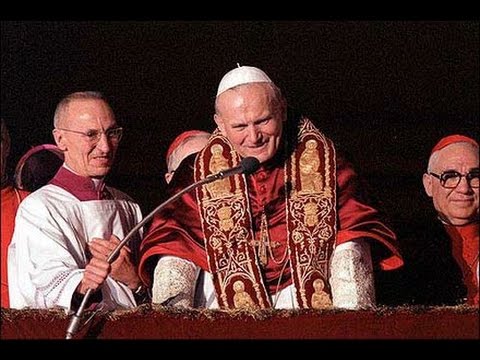
17 Oct 1978: Pope John Paul II

YouTube thumbnailYouTube icon

Posted in Saints: Stories & Symbols | Tagged
4 Comments

This has the earmarks of the beginning of a great SCI-FI piece…

This has the earmarks of the beginning of a great SCI-FI piece…

Posted in Just Too Cool, Look! Up in the sky! | Tagged
2 Comments