
I’ve got a Secret… from the Votive Mass for the Sick

Lately I have almost every day been adding orations from the Votive Mass “pro infirmis” during my celebration of Holy Mass.  The orations from that Mass are poignant.  Here is the Secret:

Deus, cuius nutibus vitae nostrae momenta decurrunt: suscipe preces et hostias famuli tui, pro quo (famulae tuae, pro qua) aegrotante misericordiam tuam imploramus; ut, de cuius periculo metuimus, de eius salute laetermur. Per Dominum.

Latin nutûs is a “nod” or else “command”.  The image is that it as every thing which occurs, occurs because God wills it with an omniscient and omnipotent nod the head.  Momentum can can a brief period of time, but another meaning is “a particle sufficient to turn the scales”. Decurro is from de + curro (to run), hence, “run through, down, out”.  I have in my minds eye the picture of a clepsydra or an hour-glass with sand running through, each grain willed to exist and to slip away with a nod of God’s head.   Multiply by … everything that exists but especially the lives of every living person.

O God, by whose noddings the moments of our lives run their course, accept the prayers and sacrifices of Your servant for whom in illness we are begging Your mercy, so that we may rejoice about the safety of the one for whose danger we were afraid.

This is what Bl. Ildefonso Schuster has to say about the formulary for Masses for the Sick.  My emphases:

A man’s last hour is solemn and decisive. Upon that moment depends not only his eternity but the very efficacy of the Saviour’s Passion, of the sacraments received by the dying man throughout his lifetime, of a treasure of divine graces and love bestowed on a wretched creature. Jesus stands beside the deathbed, for the salvation of that soul is the fruit of redemption and the Sacred Heart yearns to win it. The Church, filled with the spirit of Christ, cannot be indifferent when the last hours of the wayfarer in this land of exile have arrived, and she does all that is in her power to co-operate with the divine Redeemer, in saving the souls of the dying, by the ritual de visitatione infirmorum, by establishing pious confraternities for a holy death under the patronage of St Joseph, by indulgenced prayers, and by Masses offered for those about to die. Of all the poor and needy who have a right to our compassion, the souls of the dying are surely those who are in the most dangerous state, even more so than the souls in Purgatory. The latter are sure of their eternal salvation, whereas the souls of the dying, by reason of the assaults of Satan, are in the greatest danger. This is one of the reasons why the divine mercy, besides the many spiritual remedies offered by the Church to the sick, was pleased to institute a special sacrament to ensure their eternal salvation in that last awful moment, and to enable them to die peacefully in the arms of God. The sacrament of Penance is the sacrament of spiritual regeneration, and that of Extreme Unction is the final purification and perfection of the Christian.

There is an important difference between the sacraments of Penance and Anointing.   Penance, or Reconciliation, is, like Baptism, a “sacrament of the dead” while Anointing and all the others are “sacraments of the living”.   That is to say that “sacraments of the living must be received when you are spiritually alive in the state of grace.  Baptism and Penance are received when you are spiritually dead in original or mortal sin.

Make a habit of praying for and helping those who are ailing, especially as the human options we can offer have run their course and only divine grace remains.

Make a habit of examining your conscience and going to confession.

GO TO CONFESSION.

Posted in Four Last Things, GO TO CONFESSION, Liturgy Science Theatre 3000, Our Catholic Identity, Save The Liturgy - Save The World | Tagged
2 Comments

Daily Rome Shot 1118 – Fr. Z’s Konyha

Many thanks to LD, JS, DR, CH, and SB who “bought me a beer” on International Buy A Priest A Beer Day! Much obliged.

Welcome registrants:

Matthias 0
victord

White to move and mate in 3.

NB: I’ll hold comments with solutions ’till the next day so there won’t be “spoilers” for others.

In chessy news the 45th Chess Olympiad is underway in Budapest with 193 teams in the Open section and 181 in the women’s section.  Some 2000 players are involved.

11-22 September.  The opening ceremony was last night.  Hungarian Chess legend Judith Polgar brough in the torch.

In honor of the Olympics being in Budapest, I made Hungarian food last night and, wow, am I glad I did. What to make was a toss up, but I chose Székely style Gulyás.

Some prep.   Onion, green bell pepper, garlic, tomato, pork in chunks, the edge of a bag of sauerkraut.

Diced bacon as a starter.

After the onion, comes the pepper.

And garlic.

The recipe said that, after a few minutes, I should add the pork but cook it until the pink was going, but not quite. Along the way I was grinding in black pepper.

Five tablespoons of sweet paprika.

This is an important moment. Mix the paprika through and then take it off the heat for a little bit. Paprika does not like sudden intense heat. Let it sit and get used to things.

In go the tomatoes and caraway.

At this point, the mixture is covered, barely, with water, it is covered, and it is simmered for 90 minutes.  Note the bay leaves.  Note the larger chunk of tomato which I remembered I had in the fridge.  It all dissolves.

When it has simmered for the allotted time, in went the sauerkraut (alas not shown). It was cooked for just a couple minutes and then it was adjusted with a little salt.

SPECTACULAR! FINOM!  The recipe was for four portions. I ate two. I decided not to go with carbs, such as nokedli or spätzle.   Next time, I think I’ll use smaller pieces of pork, although these were very tender.

This was Székely Gulyás, from the region near Romania.  There is a fellow in our chess club from there, so I chose that style.  The Székelys claim descendency from Attila’s Huns and they defended the East against the Ottomans.    There are many variations of gulyás as you can imagine, swapping out this or that meat, potatoes or noodles for sauerkraut, less thick or more thick.

Next I am considering either Pörkölt or Paprikás Csirke.   Both will get made.  I just wonder which first.  The Olympics will go on for a while so I really should pace myself or my skin might turn red.   Also, I need to get some cucumbers for Uborkasaláta.

My diet has been supremely boring for weeks.  This really spiced me up.

Beer or wine made by Benedictines (both) would have been great with this.


Posted in Fr. Z's Kitchen | Tagged
7 Comments

“The young are more to be pitied, since they know not of what they have been deprived.”

How fresh the Fathers of the Church can be in our own times.   No wonder Pope Benedict wrote that we need to recover the perspective and methods of the Fathers.

Let’s not imagine that we are the only ones who have dealt with crises in the Church, even though what we are going through now is probably worse than those of the past, even the Arian controversy.

Here is something I recently spotted at the site of the Laudator from the great Eastern Doctor and Cappadocian Father St. Basil the Great of Caesarea (+378).   This is from Letter 90 (trans. Deferrari) in the time of the Arian crisis:

The evils which afflict us are well known, even if we do not now mention them, for long since have they been re-echoed through the whole world. The teachings of the Fathers are scorned; the apostolic traditions are set at naught; the fabrications of innovators are in force in the churches; these men, moreover, train themselves in rhetorical quibbling and not in theology; the wisdom of the world takes first place to itself, having thrust aside the glory of the Cross. The shepherds are driven away, and in their places are introduced troublesome wolves who tear asunder the flock of Christ. The houses of prayer are bereft of those wont to assemble therein; the solitudes are filled with those who weep. The elders weep, comparing the past with the present; the young are more to be pitied, since they know not of what they have been deprived.

The young are rediscovering what they have have been cheated out of.  That’s one reason why particular wolves are ravening in certain dioceses.   They will do anything to keep the young away from what has been handed down and, instead, lock them into the “fabrications of innovators”.


Posted in Patristiblogging, Pò sì jiù, The future and our choices | Tagged
12 Comments

Prayers for Bp. Slattery, Emeritus of Tulsa – Prayers Requested – ACTION ITEM!

You might remember that when the Archbishop of DC refused to allow Card. Castrillon to say a Pontifical Mass at the Shrine in DC, Bp. Slattery of Tulsa stepped into the breach and gave a MIGHTY sermon.  HERE
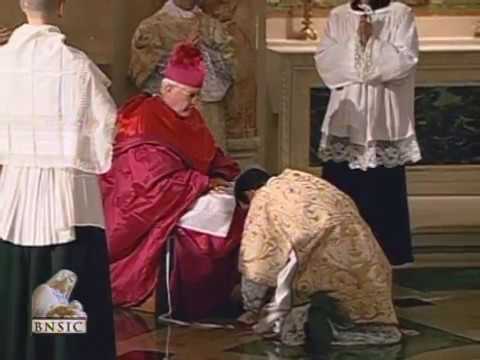
I received a note that Bp. Slattery is not doing well and may be nearing his final time with us in the Church Militant. Please stop and say a decade of the Rosary for him – now – or a whole Rosary if you are able.

The video of that unforgettable Mass.

YouTube thumbnailYouTube icon

Posted in Urgent Prayer Requests | Tagged
7 Comments

Daily Rome Shot 1117 – Piove!

The other day there was a big storm in Rome with lots of lightning.

The view from the steps of my adoptive parish, Ss. Trinità dei Pelegrini.


Welcome registrant:

beardown5240

Please remember me when shopping online and use my affiliate links.  US HERE – UK HERE  WHY?  This helps to pay for health insurance (massively hiked for this new year of surprises), utilities, groceries, etc..  At no extra cost, you provide help for which I am grateful.

I haven’t started in earnest to raise funds for October and part of November in Rome. However some of you have already sent donations in anticipation using “wavy flag” or, even better, Zelle or snail mail (no fees). I’m trying carefully to note you all down in my prayers and Mass lists. Thanks already to

VF, JL, MR, DVDH, DC, LG, MMcM, MH, SB, PG, HL, MM, SAS, JL, EW, AN, WW, GG, MK, DH, MP, AC,

Right now I am looking at a new book published by Angelico Press, which is doing yeoman’s work for the Lord and the Church.

Between Rome and Rebellion: A History of Catholic Traditionalism with Special Attention to France

by Yves Chiron and John Pepino (translator). Originally in French on 2022.

US HERE – UK HERE

This is not a “breezy” book.  The author, who has written also on Paul VI, has looked deeply into what “traditionalism” and – the perennial accusation – “integralism” are.  This more a French thing than American or English, I think.  But it is real.  Saying that people who simply love the traditional Roman Rite are “integralists” are, to my mind, the liturgical equivalent of a lib calling someone who doesn’t cringe and conform a “racist trans phobe”.   The first chapter on “From ‘Integrism’ to Romanity” has left me gasping a bit at the thorough coverage of the whos whats wheres whens, etc.

Since France has figured at the core of the renewal of Tradition, in a way that these USA have not, this is an important historical chronicle.

Scripta manent.

White to move and mate in 2.

NB: I’ll hold comments with solutions ’till the next day so there won’t be “spoilers” for others.

In chessy news, something has happened in my brain. When I work with game analysis in the monthly issue of Chess Life or in book I am beginning to visualize positions for several moves after, say, a diagram. Often after a diagram you will get the notation of a few moves with a parenthetical, “better would have been… etc.”. I’m starting to be able to wade into that notation. I don’t know it is affecting my game yet. One thing I’ve noticed about how I used to learn languages. I’d get to a point and then plateau. Then I would stumble around like a moron who had never heard of the language in question. Then, suddenly, things would start to fall into place. I wonder if the analogy of shuffling cards makes any sense. Division, then total chaos, then new order. I know I am getting old and my mind isn’t what it used to be. So I have to find new angles and methods to learn these things. Can I improve my visual memory at this point in my life? That is a key to the success of most chess players beyond analytical skills.

Meanwhile I just read that in Budapest a 9-yr old defeated three Grand Masters in one event. He is the youngest ever 2200 ELO.

And the Chess Olympics are staring up in Budapest. I’ve been casually working on Hungarian for a while. I’d really like to visit there.

Real-estate for Life… if you are moving or need to work with property, check them out. The agents donate part of their fee to pro-life causes. And don’t forget the sisters. Their shop is great for gifts and they can use the support.

Finally, I am taking some intentions. HERE

Play
Posted in SESSIUNCULA |
2 Comments

ACTION ITEM! 9 September – International Buy A Priest A Beer Day!

NB: Scroll down for the Latin and English texts for the Blessing of Beer.

You don’t want to miss this.  It’s too important.  And this has been a really tough year for priests, all things considered.

Show a little love.  Give a little TLC.

Saturday 9 September 2024 is

International Buy A Priest A Beer Day!

Beer is so much more than just a great breakfast drink.  It’s a sign of cordial support and good cheer.

Zicke zacke, zicke zacke, hoi, hoi, hoi!

You will want to obtain and deliver beer to your priests.  I share the terrific Norcia Beer with the guys here.  (Do visit their site.)

Should any of you want to provide the undersigned (aka Father Z) with a beer one time, try this.

monks_beer_donate

Click!

Or Venmo…

Use your phone’s camera!

Orrrrrr…. wavvy flag and I will drink it (or wine) in Rome!

There’s also Zelle and WISE.

Card. Ratzinger thinks you should subscribe!

Also, there is a blessing for beer in the old Rituale Romanum which a priest can impart.

When you bring beer to the priest, bring this prayer along and ask him to bless it and all the beer you bought for yourself!

V. Adjutorium nostrum in nomine Domini.
R. Qui fecit caelum et terram.
V. Dominus vobiscum.
R. Et cum spiritu tuo.

Oremus.

Benedic +, Domine, creaturam istam cerevisiae, quam ex adipe frumenti producere dignatus es: ut sit remedium salutare humano generi, et praesta per invocationem nominis tui sancti; ut, quicumque ex ea biberint, sanitatem corpus et animae tutelam percipiant. Per Christum Dominum nostrum.

R. Amen.

Or else…

V. Our help is in the name of the Lord.
R. Who made heaven and earth.

V. The Lord be with you.
R. And with thy spirit.

Let us pray.

Bless, + O Lord, this creature beer, which thou hast deigned to produce from the fat of grain: that it may be a salutary remedy to the human race, and grant through the invocation of thy holy name; that, whoever shall drink it, may gain health in body and peace in soul. Through Christ our Lord.

R. Amen.

And it is sprinkled with holy water…. carefully.

Posted in Classic Posts, Lighter fare |
1 Comment

Daily Rome Shot 1116 – BLACK VESTMENT PROJECT

You might remember that I started a Black Vestment Project for my adoptive parish in Rome, Ss. Trinità dei Pelegrini.  Seven matching black Roman sets (one with my stemma).  Some of you readers almost instantly contributed.  Thank you.

Today I received photos of the cutting of the fabric.

I am told that they will be ready by mid-October, which means that they will be ready when I am back in Rome, which means that they will be ready for All Souls and November.

Brick by brick.

Also, I am able to take a few more Mass intentions.  HERE

Welcome new registrant:

cl

Yesterday in Paris in the Speed Chess Championship Magnus methodically eviscerated “Puer” (aka Alireza) 23½-7½, which gave me deep satisfaction.

The Olympics are coming up.

White to move and mate in 4.

NB: I’ll hold comments with solutions ’till the next day so there won’t be “spoilers” for others.

Please remember me when shopping online and use my affiliate links.  US HERE – UK HERE  WHY?  This helps to pay for health insurance (massively hiked for this new year of surprises), utilities, groceries, etc..  At no extra cost, you provide help for which I am grateful.

Posted in SESSIUNCULA |
2 Comments

8 September – Feast of the Nativity of the Blessed Virgin Mary – “The dawn foretelling the day”

From The Sacramentary by Bl. Ildefonso Schuster:

As Eve, our first Mother, arose from the side of Adam, dazzling with life and innocence, so Mary came forth, bright and immaculate from the heart of the eternal Word, who, by the cooperation of the Holy Spirit, as the Liturgy teaches us, was pleased to form that body and soul which were to be, one day, his Tabernacle and altar. This is the sublime meaning of the feast of the Birthday of the Blessed Virgin Mary. It is the dawn foretelling the day which already breaks behind the eternal hills, the mystic rod which rises from the venerable root of Jesse; the stream which springs from Paradise; it is the symbolical fleece which is stretched on our dry earth to catch the miraculous dew. This is the new Eve, that is to say the life and the Mother of all the living, who is born to-day for those to whom the first Eve became the Mother of sin and death.

Today’s feast, the Nativity of Mary, is older than the Feast of the Immaculate Conception, which was precisely nine months ago.  I’ve always been puzzled that in the Vetus Ordo the Nativity of Mary is a feast of lesser weight (2nd class) than the Nativity of John the Baptist (1st class).

nativity of mary smStop for a moment.  Consider what our eternal prospects were before the birth not only of Our Lord, but also before the birth of His Mother, from whom He took our human nature, the Blessed Virgin Mary.

Ponder the state of slavery to sin in which we were bound and, after death, the strong possibility of everlasting separation from God.

Given what our prospects were, celebrating the birth of our fallen humanity’s solitary boast is a really good idea.

Holy Church, in celebrating liturgically her holy birth for a long time, ultimately reasoned back to Mary’s holy conception. As St. Thomas Aquinas argued,

“The Church celebrates the feast of our Lady’s Nativity. Now the Church does not celebrate feasts except of those who are holy. Therefore, even in her birth the Blessed Virgin was holy. Therefore, she was sanctified in the womb.” (STh III, q. 27, a. 1)

Lex Orandi Lex CredendiAs we worship, so do we believe.

As we believe, so do we worship.

Change our worship you change belief, and vice versa.

We are our rites.

The ancient Roman observance of the Feast started around the time of Pope Honorius I (+638), though it was celebrated earlier in the Greek East.  The station church for the feast was, of course, St. Mary Major and the Collect church was St. Adrian in the Roman Forum, which was originally the Curia or Senate House built by Julius Caesar.  In the 13th c. 18 images of Mary from the different diaconal tituli (early parishes) were carried in procession.  The Pope would change from shoes to slippers for the procession to St. Mary Major.  He took off his slippers at the threshold of the basilica and as the Te Deum was sung his feet were washed with warm water before the Mass began.

As Blessed Ildefonso says:

Mary became Mother of the Divine Word Incarnate for the sake of sinful man.  Will she not be to us also a loving Mother?

Posted in Liturgy Science Theatre 3000, Our Solitary Boast |
7 Comments

Daily Rome Shot 1115

Photo from The World’s Best Sacristan™

In chessy news, in the Paris Spped Chess Championship semifinals , the match we’ve been waiting for.  Not Hikaru v. Puer (Puer won). But Magnus Carlsen v. Hans Niemann.  HERE Apart from the bad blood, tension and Niemann’s bluster and trash talk, Magnus cleaned the floor with him.  And it probably would have been even worse if Magnus hadn’t lost some interest in pounding Niemann into the floor. Niemann several times made extended whiny technical protests which dragged the match waaaaaay longer than it should have been… in front of a live audience too, thus annoying their entire world.  That’s what Hans is champ of: being annoying.   There is an extended interview of Hans Niemann by Levy Rozmen (aka Gotham Chess – super popular chess content creator on YouTube – 5.35 MILLION subscribers!)  Here’s the link to the interview – HERE.  It is not dull.  It gives a real insight into Niemann.  Next, Niemann v. Hikaru for 3rd.  HERE There’s even worse rapport between them.  Hans has really attacked Hikaru.  Hikaru slaughtered Hans.  Sunday is Puer (aka Alireza) v. Magnus for the enchilada.

Please remember me when shopping online and use my affiliate links.  US HERE – UK HERE  WHY?  This helps to pay for health insurance (massively hiked for this new year of surprises), utilities, groceries, etc..  At no extra cost, you provide help for which I am grateful.

White to move.  Find the zwischenzug (intermezzo):

NB: I’ll hold comments with solutions ’till the next day so there won’t be “spoilers” for others.

Posted in SESSIUNCULA |
3 Comments

Consubstantial with His Father. Consubstantial with His Mother.

My 1st class relic of St. Leo the Great

From today’s Matins. Magnificent….

Sacraméntum reconcilatiónis nostræ, ante témpora ætérna dispósitum, nullæ implébant figúræ; quia nondum supervénerat Spíritus Sanctus in Vírginem nec virtus Altíssimi obumbráverat ei, ut, et intra intemeráta víscera, ædificánte sibi Sapiéntia domum, Verbum caro fíeret, et, forma Dei ac forma servi in unam conveniénte persónam, Creátor témporum nascerétur in témpore, et, per quem facta sunt ómnia, ipse inter ómnia gignerétur. Nisi enim novus homo, factus in similitúdinem carnis peccáti, nostram suscíperet vetustátem, et, consubstantiális Patri, consubstantiális esse dignarétur et matri, naturámque sibi nostram solus a peccáto liber uníret; sub iugo diáboli generáliter tenerétur humána captívas.

I sought out the longer passage from Letter 31 to Pulcheria. She was the younger sister of the Emperor Thedosius, who played a major role in ruling the Empire. She was also involved in the success of sounds, Catholic doctrine concerning Christ at the Council of Calcedon in 451.  The Latin above is in italics below.

But it is of no avail to say that our Lord, the Son of the blessed Virgin Mary, was true and perfect man, if He is not believed to be Man of that stock which is attributed to Him in the Gospel. For Matthew says, “The book of the generation of Jesus Christ, the son of David, the son of Abraham:” and follows the order of His human origin, so as to bring the lines of His ancestry down to Joseph to whom the Lord’s mother was espoused. Whereas Luke going backwards step by step traces His succession to the first of the human race himself, to show that the first Adam and the last Adam were of the same nature. No doubt the Almighty Son of God could have appeared for the purpose of teaching, and justifying men in exactly the same way that He appeared both to patriarchs and prophets in the semblance of flesh; for instance, when He engaged in a struggle, and entered into conversation (with Jacob), or when He refused not hospitable entertainment, and even partook of the food set before Him. But these appearances were indications of that Man whose reality it was announced by mystic predictions would be assumed from the stock of preceding patriarchs. And the fulfilment of the mystery of our atonement, which was ordained from all eternity, was not assisted by any figures because the Holy Spirit had not yet come upon the Virgin, and the power of the Most High had not over-shadowed her: so that “Wisdom building herself a house” within her undefiled body, “the Word became flesh;” and the form of God and the form of a slave coming together into one person, the Creator of times was born in time; and He Himself through whom all things were made, was brought forth in the midst of all things. For if the New Man had not been made in the likeness of sinful flesh, and taken on Him our old nature, and being consubstantial with the Father, had deigned to be consubstantial with His mother also, and being alone free from sin, had united our nature to Him the whole human race would be held in bondage beneath the Devil’s yoke, and we should not be able to make use of the Conqueror’s victory, if it had been won outside our nature.

But from Christ’s marvelous sharing of the two natures, the mystery of regeneration shone upon us that through the self-same spirit, through whom Christ was conceived and born, we too, who were born through the desire of the flesh, might be born again from a spiritual source: and consequently, the Evangelist speaks of believers as those “who were born not of bloods, nor of the will of the flesh, nor of the will of man, but of God.” And of this unutterable grace no one is a partaker, nor can be reckoned among the adopted sons of God, who excludes from his faith that which is the chief means of our salvation.

In that last paragraph, I note with interest Leo’s use of the Prologue of John, which I and other priests recite at the end of (almost) every Mass in the Vetus Ordo.  Such readings apply more layers upon already acquired layers for what we hear in the Last Gospel as we speak it.  Over the years, it accumulates and it is all “in there”.


Posted in Liturgy Science Theatre 3000, Patristiblogging | Tagged
8 Comments
























