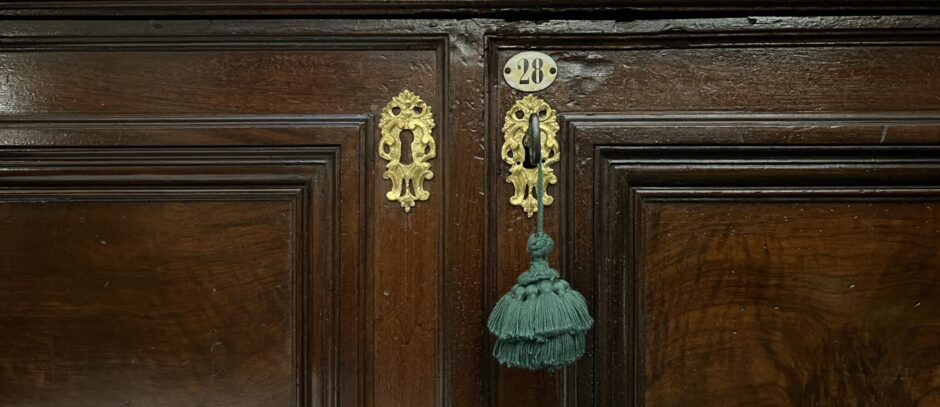
Daily Rome Shot 1101 – more than just Ventoux and a mini rant

Hint: Something in there inspired an elegy.

Please remember me when shopping online and use my affiliate links.  US HERE – UK HERE  WHY?  This helps to pay for health insurance (massively hiked for this new year of surprises), utilities, groceries, etc..  At no extra cost, you provide help for which I am grateful.

My thanks to MV for the book from my wishlist about “in between moves” – the dreaded Zwischenzug – in chess.

I’ve been looking forward to it for a long time. I have a couple of puzzle books, but they are to simple for my level (so far). This is a “comprehensive guide”. Yesterday in OTB (over the board) with the club, in my first game of the day I was little fuzzy and got myself into trouble with black right out of the opening with an extremely aggressive but sometimes impatient player. He mounted a savage kingside attack and I was on the ropes until I saw a tactic. Knowing him, I hanged a pawn and he pounced. My next move was a Zwischenzug! I checked his King with a bishop which at the same time discovered an attack on his doomed Queen from my own lurking Queen on the other side of the board. His will broken, he resigned on the spot. The dreaded Zwischenzug.

Meanwhile in St. Louis, the Sinquefield Cup is on. Yesterday in Round 2 my guy Wesley So drew with Fabi. All five games were draws. “Puer” is, hopefully not for long, the leader.

White to play and mate in 4.

NB: I’ll hold comments with solutions ’till the next day so there won’t be “spoilers” for others.

The site that handles the wines of the traditional Benedictine monks of Le Barroux – Earth Labora – also has wines from Sicily and Bordeaux and Piedmonte (including a set with Barolo di Serralunga, Barbera d’Alba, and Langhe Nebbiolo). Shop the wines and help the monks.

Saturdays are often my “make and mend” days. However, after watching a little of the DNC last night, I felt the need to wash clothes and bedding and everything else that might have been in sight or sound of the evil night rites perpetrated in Chicago. I couldn’t bear it and shut it off before their Moloch infested headliners ascended to dissemble the assembled. I was reminded of the “worshippers” in Michael O’Brian’s only Sci-Fi work (so far), Voyage To Alpha Centauri. US HERE – UK HERE

As I have written before, I suspect that O’Brien is a bit of a mystic.  His books have been useful to me in deciphering the signs of the times.

In the book, on their new planet they find a temple in which they find documents about satanic rites celebrated there.  Some of the travelers decide to reenact them.  O’Brien’s description is lurid.

Day 369: Green Day again. A year has passed since the previous exercise in elevating our cosmic sensitivities, or “interplanetary bio-consciousness” as it is called officially. There are few people onboard the Kosmos at present, so the green banners, scarves, and neckties were scarce here. Down on the planet, however, festivities were in full swing. On the panorama screen, I watched a few celebrations at various stations, dominated by an incompatible mixture of ecological cant and jargon and an any-excuse-for-a-party attitude, seasoned with mystical music. One particularly nauseating performance occurred in the temple itself. There, accompanied by the piped-in music of flutes and drums, a bevy of maidens danced around the black altar cube. They were dressed in diaphanous green gowns that left nothing to the imagination. Somewhat frenzied, nearly erotic, and definitely euphoric, the ten young women twirled and pranced and sang in praise of a cosmic “lord” who held fire in one hand and arrows in the other. Their choreography resembled a coil, winding and unwinding hypnotically as they chanted. At the head of the dance, leading it all, was the old Russian psychiatrist lady who had been so offended by me looking at her scar years ago. She was now without doubt far into her eighties, which was unfortunate, since her gown was the flimsiest of all, nearly transparent. With flailing arms, she repeatedly let fly full-throated cries rising from her arching abdomen, a crone-nymph on hallucinogens. As the event progressed, a soft, male voice-over informed the viewers of our need to reconnect to primitive “spirituality”, which entailed, apparently, a “rediscovery of the phallic” (thankfully not acted upon, at least not on screen, as far as I know, which isn’t saying much) and a “reintegration of light side and shadow side” for the sake of universal harmony. (Ay, caramba! I turned it off and went for a long walk.)

O’Brien, Michael D.. Voyage to Alpha Centauri: A Novel (Kindle Locations 8050-8065). . Kindle Edition.

The downfall of Numenor also comes to mind.

Is that what November 2024 is destined to be?  Consider the electorate, the power of the MSM, and wholly unscrupulous pols.

Posted in SESSIUNCULA |
8 Comments

Recommended reading from Crisis about CS Lewis and a saint

I warmly recommend today a pleasant and edifying reading of a piece at Crisis by Fr. George Rutler about how C.S. Lewis, through letters, became a friend of an Italian priest and, later, canonized saint, Fr Giovanni Calabria.

HERE


Posted in Saints: Stories & Symbols |
3 Comments

19 August – St. John Eudes wrote that BAD PRIESTS are “a most evident mark of God’s anger and the most terrible castigation He can inflict upon the world”

Today is the Feast of St. John Eudes, a great saint of the 17th c.  A great missionary. He was a promoter of devotion to the Most Sacred Heart of Jesus and spiritual writer. Canonized in 1920’s, he has a gigantic statue in a niche in Saint Peter’s Basilica.  He founded the “Eudist” fathers.

I have posted this from St. John Eudes before, from The Priest: His Dignity and Obligations – HERE

On bad priests…

Bad priests are a sign of God’s anger

The most evident mark of God’s anger and the most terrible castigation He can inflict upon the world are manifested when He permits His people to fall into the hands of clerics who are priests more in name than in deed, priests who practice the cruelty of ravening wolves rather than the charity and affection of devoted shepherds. Instead of nourishing those committed to their care, they rend and devour them brutally. Instead of leading their people to God, they drag Christian souls into hell in their train. Instead of being the salt of the earth and the light of the world, they are its innocuous poison and its murky darkness. St. Gregory the Great says that priests and pastors will stand condemned before God as the murderers of any souls lost through neglect or silence….

When God permits such things, it is a very positive proof that He is thoroughly angry with His people, and is visiting His most dreadful anger upon them. That is why He cries unceasingly to Christians, “Return, 0 ye revolting children . . . and I will give you pastors according to my own heart” (Jer. 3, 14-15). Thus, irregularities in the lives of priests constitute a scourge visited upon the people in consequence of sin.

A good priest…

He is an ever burning and shining light set in the candelabra of Mother Church, burning before God and shining before men: burning in his own love for God, shining by his charity for his fellow man; burning with the perfection of his inner life, shining by the perfection of his exterior deportment; burning in fervent prayer for his people, shining by his preaching of the word of God. The priest is a sun cheering the world by his presence and bearing. He brings heavenly blessings into every heart. He dispels the ignorance and darkness of error and radiates on every side bright beams of celestial light. He extinguishes sin and gives life and grace to the multitudes. He imparts new life to the weak, inflames the lukewarm, fires more ardently those who are aglow with the sacred flame of divine love. He is an angel purifying, illuminating and perfecting the souls that God has entrusted to him. He is a seraph sent by God to teach men the science of salvation which is concerned only with knowing and loving Almighty God and His Divine Son, Jesus Christ. The priest is an archangel and a prince of the heavenly militia, waging constant war against the devil who strives to drag countless souls into the depths of hell. He is the real father of the children of God, with a heart filled with love which is truly paternal. That love urges him to work unceasingly to nourish his flock with the bread U the sacred word and of the sacraments, to clothe the faithful with Christ and the Holy Ghost, to enrich them with celestial blessings and to secure for them every possible assistance in the salvation of their souls. …

He is a captain in the mighty army of God, always ready to battle for the glory of God and the defense of Holy Mother Church. He is ever prepared to lay siege to the world, the flesh and the devil. For him the conquest of kingdoms means only the salvation of souls for each soul is a kingdom more precious than all the empires of the world.

Please pray for priests.  Pray for me.

Always on the right sidebar.

Posted in Priests and Priesthood, SESSIUNCULA |
9 Comments

Daily Rome Shot 1100

Many thanks to CJM for moving from Continue To Give over to Zelle!

Please remember me when shopping online and use my affiliate links.  US HERE – UK HERE  WHY?  This helps to pay for health insurance (massively hiked for this new year of surprises), utilities, groceries, etc..  At no extra cost, you provide help for which I am grateful.

Nice people! Great service!

White to move and mate in 2.

NB: I’ll hold comments with solutions ’till the next day so there won’t be “spoilers” for others.

Interested in learning?  Try THIS.

Nice guayabera shirts including CLERICAL for the warm days.

Finally, in chessy news the Sinquefield Cup starts today in St. Louis.  Go Wesley!

Posted in SESSIUNCULA |
5 Comments

REMINDER: USA – Tour with a magnificent relic, the arm of the Apostle St. Jude

Just a reminder that, right now, there is a tour around these USA with a magnificent relic, the arm of the Apostle St. Jude, widely known as the patron of impossible causes.

There is a web site with a description and schedule.  HERE

I think right now he is in California, Santa Rosa.

There is also a link to a donation page.

Posted in Just Too Cool | Tagged
9 Comments

Your Sunday Sermon Notes – 13th Sunday after Pentecost (N.O.: 20th) 2024

Too many people today are without good, strong preaching, to the detriment of all. Share the good stuff.

Was there a GOOD point made in the sermon you heard at your Mass of obligation for this 13th Sunday after Pentecost, or the 20th Sunday of Ordinary Time?

Tell us about attendance especially for the Traditional Latin Mass.

Any local changes or (hopefully good) news?

A couple thoughts about the sign of the cross: HERE  A taste…

The Law in Leviticus 13:45-46 required that people with “leprosy” must wear torn clothing, live outside the camp, leave their hair unkept, cover the lower part of their face and cry our “Unclean! Unclean”.

This treatment hasn’t yet made its way into Holy See’s documents oppressing the faithful who desire the Traditional Latin Mass.  Time will tell.

The word in Hebrew for what is commonly translated as “leprosy”, tsara’ath, can mean a variety of things, skin diseases certainly, but also even mildew on the wall, mold on something.  As far as skin diseases are concerned, it could mean conditions people recover from such as contact dermatitis or shingles.  Hence, there were laws governing how people who did recover from tsara’ath could be ritually purified and returned to the community.  Those in the ancient world with true leprosy, Hanson’s Disease, generally didn’t recover.  Hence, their being cured was instantly recognizable as miraculous.

[…]

Posted in SESSIUNCULA |
6 Comments

WDTPRS – 13th Sunday after Pentecost: “E ‘n la sua volontade è nostra pace!”

Piccarda Philipp Veit DanteToday’s Collect for the 13th Sunday after Pentecost in the Vetus Ordo survived the redactors to live on in the Novus Ordo as the Collect for the 30th Sunday of Ordinary Time.

It is an ancient prayer, found in the Veronese and the Gelasian Sacramentary.

COLLECT (1962MR):

Omnipotens sempiterne Deus, da nobis fidei, spei et caritatis augmentum: et, ut mereamur assequi quod promittis, fac nos amare quod praecipis.

The verb assequor, according to our splendid tool the Lewis & Short Dictionary, means mainly “to follow one in order to come up to him, to pursue”, and by extension “to gain, obtain, procure.”

Have you noticed that sometimes in our prayers we call God aeterne or also sempiterne?

Our French dictionary of liturgical Latin Blaise/Dumas says aeternus and sempiternus are both “eternal”, that is, not “temporal” or that which endures only for a time.  But in the philosophy and theology (indistinguishable from each other in late antiquity) of the era when today’s prayer was composed, much thought was dedicated to figuring out time and God’s relationship to time.

If we want to get at what our ancient prayer really says, we must hear “eternity” and “sempiternity” as different concepts. 

First, eternity can be thought of as completely independent of time, entirely outside of time.  Another kind of eternity has no beginning or end.  Boethius (+c.526) gave shape to the thought of St. Augustine (+430) on time and distinguished eternity as the simple simultaneous possession of life by God.  It is not a drawn out process.  It is a simple possession.   Sempiternity, a term occurring in ancient Latin but only as a synonym of eternity, was famously redefined by Boethius as the “eternal now”.  It is “everlastingness”.

Indulge me, dear readers.  Occasionally one of you will write saying that I lose you in what seem to be nitpicking digressions.  Let me be clear: I’m not trying to be a psilological doryphore.  I drill into these texts to help people understand, after decades of banal prayers purged of content and color, that our language of liturgical prayer is rooted deeply in ancient pondering, man’s great questions before God and the cosmos.

The words themselves are treasures, carefully weighed and finely polished, handed down with centuries of love by our forefathers… to you.   Every syllable belongs to you.  Each exquisite term is your millennial patrimony.

LITERAL TRANSLATION:

Almighty everlasting God, grant us an increase of faith, hope and charity, and cause us to love what You command so that we may merit to obtain what You promise.

Let’s have a glance at the current English translation of the same prayer intended for the 30th Sunday of Ordinary Time:

CURRENT ICEL (2011 – 30th Sunday):

Almighty ever-living God, increase our faith, hope and charity, and make us love what you command, so that we may merit what you promise.

Pretty close to the WDTPRS version. As a contrast, here is the version from the old incarnation of

OBSOLETE ICEL (1973 of the 1970MR):

Almighty and ever-living God, strengthen our faith, hope, and love. May we do with loving hearts what you ask of us and come to share the life you promise.

See how the the old ICELese strips the prayer of the concepts “command”, reduced to a request, and “merit”, dissolved into a vague sharing?

In what the prayer really says, we ask God the Father for an increase of the theological virtues faith, hope and charity, given at baptism, with a view to what we merit after doing His will.

Let’s get out the theological drill and look into these concepts.

The German writer Josef Pieper (+1997) describes our supernatural life as having three main currents.

First, we have some knowledge of God surpassing what we can know about Him naturally because He reveals it to us (faith).  Second, we live by the patient expectation that what we learn and believe God promises will indeed be fulfilled (hope).  Third, there is an affirmative response of love of the God whom we come to know by faith as well as love for neighbor (charity).

Natural human virtues are acquired through education and discipline.  The three theological virtues faith, hope and charity are given to us by God.  They perfect and elevate everything virtuous which man can do naturally.  Considered one at a time, charity is the greatest of the three, followed by hope and then faith.  But they are all three intimately woven together.  St. Augustine (+430) says, “There is no love without hope, no hope without love, and neither love nor hope without faith” (enchir 8).

The goal of the virtuous life, as we read in the Catechism of the Catholic Church (1803), is to become like God.  Living the theological virtues concretely reveals in us the image of God and the grace He gives to His adopted children. “The practice of all the virtues is animated and inspired by charity, which ‘binds everything together in perfect harmony’” (CCC 1827).  Virtues must be gained, naturally on our own or supernaturally with God’s help.  They can also be lost.  That is entirely our own doing.  Today we pray for their increase in what God gave us in baptism and what we maintain when we are in the state of grace.

We also pray this Sunday to love what God commands.  In the natural spheres of our lives, doing what another commands is not always pleasant.  Our wills and passions rebel. We prefer to command rather than to be commanded.  It is easy, from the worldly point of view, to think that by being the one who commands we can find peace.

Without doubt each one of us desires peace and happiness.  We long to find the means to attain them.  When we attach our happiness to the created things of this world we are inevitably disappointed.  All created things, including people, can be lost.  They are all passing, not enduring, temporal not eternal.  Not even our most beloved spouses, children, or friends can be the foundation of lasting peace.   Even the fear of losing them lessens our peace in this life.  God alone provides the lasting peace we desire.  Because He alone is eternal and unchanging He is perfectly trustworthy.  We cannot lose God unless we ourselves reject Him.  God must be in command of our happiness.  Our peace must be entrusted to Him alone.

In Canto III of the Paradiso of Dante’s Divine Comedy the Poet is in the Heaven of the Moon. There he encounters the soul of Piccarda.  Dante queries her about the happiness of the blessed in Heaven.  He wants to know if somehow, even in Heaven, souls might be disappointed that they do not have a higher place in celestial realm. In response Piccarda utters one of the greatest phrases ever penned and or recited (l. 85):

In His will is our peace.
It is that sea to which all things move,
both what it creates and what nature makes…. 

We are all made in God’s image and likeness, made to act as God acts.  He reveals something of His will to us.  When we obey Him we act in accordance with the way He made us and what He intended for us.

All things that live and move and have their being must come to rest in God or forever be in conflict with themselves and the cosmos.  St. Augustine, who authored the unforgettable “our hearts are restless until they rest in Thee”, described us and our love as working like gravity, which in the thought of the ancients was a force within a thing that sought to go to its proper place of balance in relation to all other things.  “Amor meus pondus meum” (conf 13, 9, 10) said Augustine, “My love is my weight” drawing the restless soul to God, the only source of lasting peace.

E ‘n la sua volontade è nostra pace.  In His will is our peace.  His peace is His promise.

Our Collect prays that we may “love what You command”.  This is a prayer for happiness.

Posted in SESSIUNCULA |
Comments Off on WDTPRS – 13th Sunday after Pentecost: “E ‘n la sua volontade è nostra pace!”

Daily Rome Shot 1099

Photo by The Great Roman™

I note that this new book is back in stock!

On The Demonic by Archbp. Fulton J. Sheen.

US HERE – UK HERE (not yet)

The forward explains that, toward the end of his life, Sheen was ever more convinced that we are living in a demonic age and that we may be seeing the “first cells of the Anti-Christ”.

He wrote that he wanted to write a book about the demonic, but he passed away before he could accomplish it.   The editor of this book has gone through all of Sheen’s material and collated what he found about the topic.

The forward explains that, toward the end of his life, Sheen was ever more convinced that we are living in a demonic age and that we may be seeing the “first cells of the Anti-Christ”.

He wrote that he wanted to write a book about the demonic, but he passed away before he could accomplish it. The editor of this book has gone through all of Sheen’s material and collated what he found about the topic.

Please remember me when shopping online and use my affiliate links.  US HERE – UK HERE  WHY?  This helps to pay for health insurance (massively hiked for this new year of surprises), utilities, groceries, etc..  At no extra cost, you provide help for which I am grateful.

Posted in SESSIUNCULA |
Comments Off on Daily Rome Shot 1099

Daily Rome Shot 1098

Photo by The Great Roman™

Welcome registrant:

Ter

Please remember me when shopping online and use my affiliate links.  US HERE – UK HERE  WHY?  This helps to pay for health insurance (massively hiked for this new year of surprises), utilities, groceries, etc..  At no extra cost, you provide help for which I am grateful.

In chessy news:

Here’s an interview with Wesley about his games today. You’ll like what he says.

YouTube thumbnailYouTube icon

Meanwhile, I’m reading Brant Pitre’s new book.

US HERE – UK HERE

Jesus and Divine Christology

Generations of scholars have asserted, with little evidence other than their hermeneutic of suspicion, that Christ in His earthly life never made any claim to be divine.  Pitre tackles this point and demonstrates that Christ did, in fact, make divinity claims.  One strong point in favor of divinity claims is that the early Church started out with a “high” Christology.  Pitre has great expertise in the context of 1st c. Judaism and uses it to reexamine the issue.  This is not a “popular” book. Rather, it is more scholarly in approach and method, which would challenge quite a few readers (some clergy included, I think, and for more than one reason, given how they say Mass, preach, and neglect the confessional).

It is an important book.

Meanwhile,   black to more and mate in 4.

NB: I’ll hold comments with solutions ’till the next day so there won’t be “spoilers” for others.

Priestly chess players, drop me a line. HERE

I am a Chess.com affiliate.  Join and play.  Maybe we can get a group together.

Hey Fathers!  How about a clerical Guayabera shirt for the hot summer days?

Posted in SESSIUNCULA |
Comments Off on Daily Rome Shot 1098

Just so that you know…

I wonder what sort of people are in charge of this?

This is on the Vatican site today for the Feast of the Assumption.

I don’t like the semi-defiling of my site by his “art”, but I thought you should know what they are continued to post week after week after week after week, feast after feast.

Posted in What are they REALLY saying?, You must be joking! |
21 Comments