OLDIE PODCAzT 36: St. Augustine on John the Baptist; Ut queant laxis

Here is an old PODCAzT. Gosh my voice has changed.  2007!   Much happier times.


036 07-06-24 St. Augustine on John the Baptist; Ut queant laxis
https://zuhlsdorf.computer/podcazt/07_06_24.mp3
Our PODCAzT for this Solemnity of the Nativity of John the Baptist presents a selection from sermon (s. 288) preached by St. Augustine of Hippo (+430) in Carthage in 401. 

This is not the same selection as you find in the Office of Readings today (from s. 293).

Then we get into the wonderful hymn for Vespers as well as a very hot Rituale Romanum
blessing for the day.

  • Donate using VENMO

Posted in Linking Back, PODCAzT |
2 Comments

Items of interest and concern about the TLM.

Posted in SESSIUNCULA |
10 Comments

Daily Rome Shot 1058

White to move and mate in 3.

NB: I’ll hold comments with solutions ’till the next day so there won’t be “spoilers” for others.

Please remember me when shopping online and use my affiliate links.  US HERE – UK HERE  WHY?  This helps to pay for health insurance (massively hiked for this new year of surprises), utilities, groceries, etc..  At no extra cost, you provide help for which I am grateful.

3:16 isn’t just in John.

Posted in SESSIUNCULA |
3 Comments

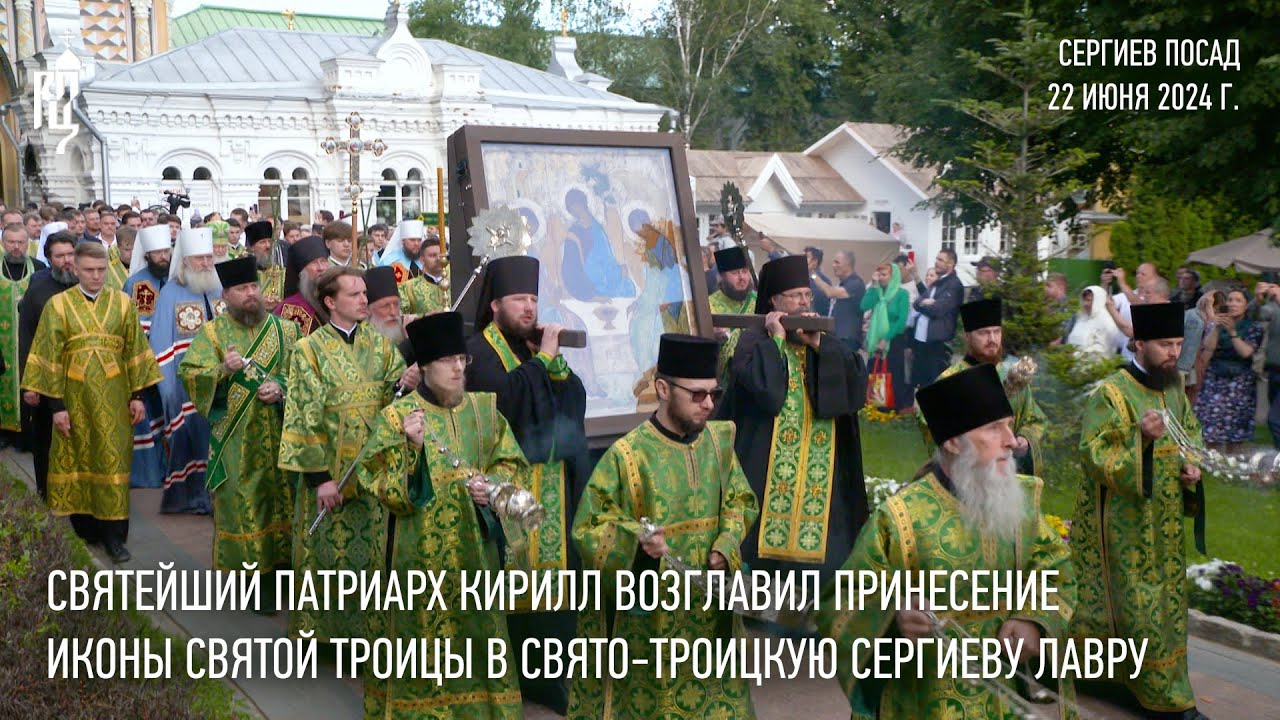
VIDEO: The icon of the Holy Trinity painted by Rublev returned to the Trinity Lavra of St. Sergius

It is Julian Calendar Pentecost. For their Pentecost, there was a special moment when Patriarch Kirill of Moscow led the meeting of the icon of the Holy and Life-Giving Trinity, painted by Andrei Rublev, in the Trinity Lavra of St. Sergius and the all-night vigil in the Trinity Cathedral of the monastery.

YouTube thumbnailYouTube icon

Posted in SESSIUNCULA |
3 Comments

23 June – Vigil of St. John – solstices and snails, bonfires and witch burnings

Mathis_Gothart_Grünewald John BaptistIt is nice to have as your Patron the great Baptist, for I get two feasts a year, his Nativity and his Beheading.

For the Vigil of St. John (today, as I write even thought it is the 5th Sunday after Pentecost, which bumps the Vigil) in the old Roman Ritual the priest would once bless bonfires!

And in Bavaria, witches are burned!  A priest friend who shares my feast sent me a spiffing photo (below – a little hard to see at this size, but I assure you, there is a witch in there).

If you have any unwanted witches (and don’t we all?), send them to Bavaria next year for a nice vacation.

In other places, cast-off or unneeded things are burned… in a way parallel, I suppose, to throwing things away at the other end of the year after the Winter Solstice.

In any event, the evening is about as long as the year can offer, so a great party could be had well into the night with much cooking in the open and revelry.  Have a nice bonfire!

The blessing for the bonfire is beautiful.  After the usual introduction, the priest blesses the fire saying:

Lord God, almighty Father, the light that never fails and the source of all light, sanctify + this new fire, and grant that after the darkness of this life we may come unsullied to you who are light eternal; through Christ our Lord. All: Amen.

At this point the fire is sprinkled with holy water and everyone sings the hymn Ut quaent laxis which is also the Vespers hymn for the Feast of St. John.

It is almost as if the fire, and our celebration, is baptized.

The reference to light and darkness surely harks to the fact of the Solstice, which was just observed. At this point the days get shorter in the Northern Hemisphere.  I looked at that HERE and HERE.

For the feast of St. John in June for centuries the Church has sung at Vespers the hymn beginning Ut queant laxis

If you want to hear Ut queant laxis sung “in the wild”, as it were, check the monks at Le Barroux.  Hard core.  Fantastic chant. HERE  Their sung hours are available live and on demand.

Those of you who are lovers of the movie The Sound of Music will instantly recognize this hymn as the source of the syllables used in solfège or solmization (the use of syllables instead of letters to denote the degrees of a musical scale). Both the ancient Chinese and Greeks had such a system.

The Benedictine monk Guido d’Arezzo (c. 990-1050) introduced the now familiar syllables ut re mi fa sol la for the tones of the hexachord c to a… or, more modally, the tonic, supertonic, mediant, etc. of a major scale. The Guidonian syllables derive from the hymn for the feast of St. John the Baptist:

UT queant laxis
REsonare fibris
MIra gestorum
FAmuli tuorum,
SOLve polluti
LAbii reatum,
Sancte Ioannes (SI).

The Guidonian Hand was often used as an instructive tool for music

After the medieval period (when music became less modal and more tonal) to complete the octave of the scale the other syllable was introduced (si – taken from S-ancte I-oannes, becomes “ti”) and the awkward ut was replaced sometime in the mid 17th c. with do (or also doh – not to be confused in any way with the Homeric Simpsonic epithet so adored by today’s youth, derived as it is from the 21st century’s new liturgical focal point – TV) and do came to be more or less fixed with C though in some cases do remains movable.

So, now you know where Doh, Re, Mi comes from!  Check out this oldie PODCAzT from 2007:

036 07-06-24 St. Augustine on John the Baptist; Ut queant laxis

It is also good to gather St. John’s Wort (Hypericum perforatum) on the feast.

“Wort” is from Old English wyrt (German Würze), which means “plant”, but is used mostly in compounds.  Since ancient times “singent’s wort” was known to relieve melancholy or depression, as does borage… which every garden should have.  It would be hung above doors, windows and sacred images (hence the hyper-icum “above image”) to keep witches and evil spirit away.

Burning those witches might have something to do with its effectiveness as well, now that I think about it.

Build a fire tonight, even if you can’t burn a witch, and sing something in honor of St. John!

Oh! And get some snails for tomorrow. It is a Roman custom to eat snails on the Feast of John the Baptist.

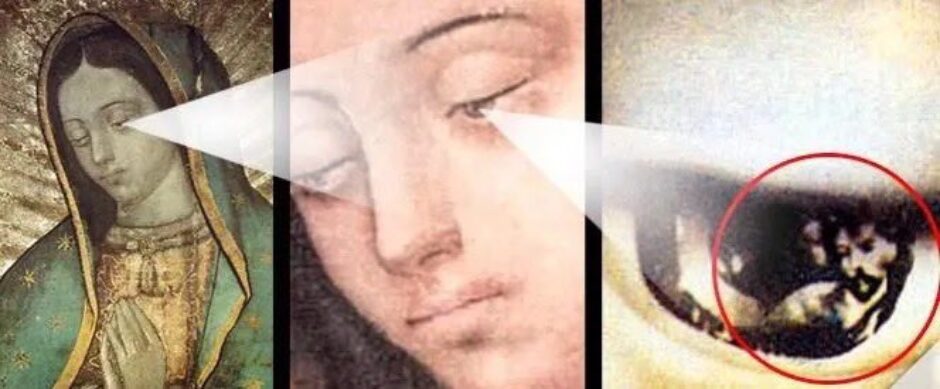
And, just in case it has been a while…
Posted in Classic Posts, Linking Back, Liturgy Science Theatre 3000, Look! Up in the sky!, Saints: Stories & Symbols, SESSIUNCULA |
1 Comment

Daily Rome Shot 1057

Interim, motus ad lusorem cum militibus albis pertinent. Scaccus mattus, scilicet mors regis, IV in motis veniat.

NB: Explicationes detineam oblatas in crastinum, ne vestrae interrumpantur commentationes.

Please remember me when shopping online and use my affiliate links.  US HERE – UK HERE  WHY?  This helps to pay for health insurance (massively hiked for this new year of surprises), utilities, groceries, etc..  At no extra cost, you provide help for which I am grateful.

Chessy news. Yesterday at OTB I played well, winning all my games. However, one game ended when my opponent made a significant blunder, such that he resigned. However, I suggested that we go back a couple moves and go at it from the previous position. At that point he rallied and beat me, though the victory was already mine. It was instructive, because then, being freer, we talked about our moves.

Interested in learning?  Try THIS.

Help the monks. Help yourselves.

Posted in SESSIUNCULA |
1 Comment

Your Sunday Sermon Notes – 5th Sunday after Pentecost (N.O.: 12th) 2024

Too many people today are without good, strong preaching, to the detriment of all. Share the good stuff.

Was there a GOOD point made in the sermon you heard at your Mass of obligation for this 5th Sunday after Pentecost, or the 12th Sunday of Ordinary Time?

Tell about attendance especially for the Traditional Latin Mass.

Any local changes or (hopefully good) news?

A couple thoughts about the sign of the cross: HERE  A taste…

[…]

The 20th century liturgical commentator Pius Parsch thought that the 2nd and 3rd Sundays after Pentecost showed God’s love inviting us (the Parable of the Supper) and His seeking us (Parable of the Lost Sheep).  On the 4th Sunday, God revealed in the calling of Peter and the Apostles the instruments of administering His love and the messengers inviting us.  The Good Shepherd has Fishers of Men.  On this 5th Sunday after Pentecost we move from a painting by the Church of God’s love for us, to an image of our love for our neighbor, which is a demonstration that we have recognized God’s love and providence.

Posted in SESSIUNCULA | Tagged
6 Comments

YOUR URGENT PRAYER REQUESTS: UPDATE on a prayer request

PLEASE use the sharing buttons! Thanks!

In your charity would you please take a moment look at the requests and to pray for the people about whom you read?

Continued from THESE.

Let’s remember all who are ill, who will die soon, who have died recently, who have lost their jobs, who are afraid.

I get many requests by email asking for prayers. Some are heart-achingly grave and urgent.

As long as my blog reaches so many readers in so many places, let’s give each other a hand. We should support each other in works of mercy.

If you have some prayer requests, feel free to post them below.

You have to be registered here to be able to post.

In your kindness continue prayers for my mother, who has been diagnosed with something grave and incurable.   Please pray for me.  Lot’s of decisions coming.

Some time ago, I asked for your prayers for a friend in Rome who is suffering from a terrible and life-threatening malady of the liver, which if I am not mistaken is a genetic problem. I had asked that you pray to Bl. Luigi Monti for a miraculous healing which would be complete, sudden and durative. I received this note today, which he sent to all the members of the Archconfraternity of the Most Holy Trinity.

Dear brothers and sisters, as many of you already know, I am still hospitalized after two months, and have been put on the list for a double transplant. Given my situation which is not improving, I have been put on the emergency list since last Thursday, which means that compatible organs could be found faster. Not rejecting nor distrusting these ordinary means which could be the will of the Lord, I still continue in the hope of having the grace of a complete, immediate, and permanent miraculous cure. I thank those of you who have already invoked the intercession of Blessed Luigi Monti and Pius IX; divine providence has decided not to grant these prayers, but in any case I am not wary. I was brought a novena prayer and a relic of Blessed Gerardo Sasso, founder of the Knights of Malta. I would like to beg our Lord and Our Lady again for the grace of a miracle, this time through the intercession of Blessed Gerard. I thank those of you who would like to join this novena, which I will begin tomorrow 24 June, the feast of Saint John the Baptist, main patron of the order of Malta as well as my name day, and end on 2 July, the feast of the Visitation of the Madonna. I hope that she and her Son will visit me at the end of this novena together with Blessed Gerard, to bring me the grace I ask for. I thank those who read this message.

He sent images of this holy card. The translation is below.

PRAYER FOR THE INTERCESSION OF BLESSED GERARD

O God, who chose Blessed Gerard to care for the sick and pilgrims in the Holy Land and wanted him as Founder of the Order of St. John of Jerusalem, and chose him as an example of Christian charity towards the poor and the suffering; grant kindly that, following his example, I may see Christ your Son in the sick and the poor.
Holy Father, I beg you, if this is according to your will, that Blessed Gerard be numbered among your Saints, and that with his intercession grant me the grace that I ask of you.

3 Glory be to the Father.

Posted in Urgent Prayer Requests | Tagged
7 Comments

A dialogue of St. John Fisher with Chesty Puller, USMC concerning more looming attacks on the Vetus Ordo

From a speech of St. John Fisher:

We are besieged on all sides and can hardly escape the danger of our enemy. And seeing that judgement is begone at the house of God, what hope is there left, if we fall, that the rest shall stand?

The fort is betrayed even of them that should have defended it.

Lewis B. “Chesty” Puller, USMC responds:

“All right, they’re on our left, they’re on our right, they’re in front of us, they’re behind us.

They can’t get away this time”

Posted in Lighter fare | Tagged ,
5 Comments

22 June in the VETUS AND NOVUS Ordo: St. John Fisher and St. Thomas More

In the Church’s traditional calendar St. John Fisher and St. Thomas More have their  feasts on 9 July.  More was martyred on 6 July and Fisher on 22 June.  In the Novus Ordo calendar they are celebrated today, together.


HOWEVER: According to Cum Sanctissima feasts established after 1962 can be observed in the Vetus Ordo so long as some other feast doesn’t “outweigh” it.  Hence, today we can say the Mass in honor of Sts. Thomas More and John Fisher.  For TEXTS see below!

Pope John Paul II in 2000 declared St. Thomas more the patron saint of statesmen and politicians.

More makes you think about our catholic politicians today.   Fisher about our bishops.

Plus ça change…

There is a book about them: John Fisher and Thomas More: Keeping Their Souls While Losing Their Heads by Robert J. Conrad, Jr and published by TAN, which is serious stepping up its game.

US HERE – UK HERE

Two saints for our times if ever there was need, one for comportment in the secular sphere and the other in the Church.

Let us invoke the intercession of St. Thomas and of St. John for our public figures, secular and spiritual.

Animi caussa…

From the 2005 Martyrologium Romanum.

Sanctorum Ioannis Fisher, episcopi, et Thomae More, martyrum, qui, cum Henrico regi Octavo in controversia de eius matrimonio repudiando et de Romani Pontificis primatu restitissent, in Turrem Londinii in Anglia trusi sunt.  Ioannes Fisher, episcopus Roffensis, vir eruditione et dignitate vitae clarissimus, hac die iussu ipsius regis ante carcerem decollatus est; Thomas More vero paterfamilias vita integerrimus et praeses coetus moderatorum nationis, propter fidelitatem erga Ecclesiam catholicam servatam sexta die iulii cum venerabili antistite martyrio coniunctus est.

Anyone care to take a shot?

NOTA BENE FATHERS!

Mass texts in the Extraordinary Form for these two saints on 9 July are not easy to find.   HERE  and HERE

Huge thanks for the texts from my good friend, His Hermeneuticalness, Fr. Tim Finigan.

Tonight… this great classic?

US HERE – UK HERE

Posted in Liturgy Science Theatre 3000 | Tagged ,
5 Comments