Yes, I’ve seen the assertions about rumors, etc.

I have seen them.  You don’t need to send me links.

It is no surprise that the Vatican’s liturgical Einsatzgruppe is flecked with spittle about the Vetus Ordo.  It’s summer and they need to hurt someone.  That’s how they roll.

Remember, it is not just about the content of the prayers of the Vetus Ordo, which is the real issue.  It reminds people of the eternal consequences of their actions and it tells us how to attain Heaven, not just to long for it.   The real problem, as they see it, are the people who want the Vetus Ordo.  They don’t like the people.

However, be cool.   Resist the temptation to run after every doom and gloom YouTube video which will whip this into a click bait froth.  “Look at MEEEEEE!  MEEEE!”

The best things you can do are

1. GO TO CONFESSION

Be sure your good works and prayers are meritorious.

2.Get down on your knees, literally, and pray. 

Rosary is good.  Fast.  Give alms.  These work effectively against demons.

3. If you can, start organizing/networking with laypeople and priests about when and where the TLM will be celebrated.

4. Start approaching bishops, perhaps with spiritual bouquets in hand.

Yes, a lot of these guys have ice in their veins, but not all of them. It is said that it takes 3-4% of a population which is activated to make real changes. Be the change.

5. Home altars and Mass items.

Have you gotten everything together?

6. Ask yourself if you really care.

Posted in SESSIUNCULA |
19 Comments

Amusing choice in The Chosen

I watched the most recent episode of controversial The Chosen.  A recurring Pharisee character has on his robe braiding/trim which you can get at Gammarelli in Rome for your Roman (and other) style vestments.   I sure some Smarticus Pantsicus will come up with a witty remark.


Posted in SESSIUNCULA | Tagged
8 Comments

Daily Rome Shot 1052 – St. Benedict Medal info

Please remember me when shopping online and use my affiliate links.  US HERE – UK HERE  WHY?  This helps to pay for health insurance (massively hiked for this new year of surprises), utilities, groceries, etc..  At no extra cost, you provide help for which I am grateful.

I received an advance copy of a book to be released tomorrow, 18 June: The Cross and Medal of Saint Benedict: A Mystical Sign of Divine Power edited by Fr. Robert Nixon, OSB.   You can “pre-order”.

US HERE – UK HERE

This is a handy volume.  There are quotes from famous saints and writers about Benedict, there’s a quite hagiographical account of the life of the great saint (miracle stories, etc., always fun and edifying), a brief account of the Order and then a detailed look at the St. Benedict Medal.

As a side note, whenever I bless a St. Benedict Medal or Cross (there is a Cross in the design), all sorts of nasty things happen to me.   This chapter describes the origin and variations.  However, the definitive – and I didn’t know this – design was approved by Pope Benedict XIV (a favorite of mine) in 1741.

What I also didn’t know is that the meaning of the letters, the abbreviation of the Latin poetic inscription with powerful content, faded from memory.  It was rediscovered in a centuries old manuscript in the Abbey of Metten in Bavaria.   I have a personal connection to Metten because this was the Abbey of my great friend and mentor the late great Augustine Card. Mayer, OSB, who had been Abbot there and then was in the Curia for a long while.  He was perhaps the holiest man I’ve ever met.   I still reflect on the object lessons he gave me in life.  Metten was also the Abbey of the monk who founded the huge St. John’s in me native Minnesota.

Here’s a taste from the book…

In the Year of Our Lord 1647, the cross of Saint Benedict, which was by then already in widespread use and had been revered for some centuries, began to shine forth with a new and radiant splendor. This came about in the following manner. In a certain town [in Bavaria] called Natternberg, a coven of wizards and witches had been discovered. Once these vile and viper-like malefactors were arrested by the authorities, they were placed in chains and carefully questioned as to their nefarious activities and practices. In the course of their confessions, they revealed that their black arts were utterly powerless wherever they encountered a particular type of cross or medal [i.e. that of Saint Benedict.] For, wherever it was painted or engraved, it served as an invincible shield against the forces of evil which they employed. They went on to say that they had found that their works had no effect in the monastery at Metten in Bavaria, for many such crosses were located there.

[…]

This story goes on to recount how by then no one knew the meaning of the Letters.  Then a manuscript was discovered in Metten’s magnificent library – and if you haven’t seen photos of this library… wow.   With this ancient parchment in hand, it was possible again to read the medal.

There’s a lot more too this, also.  But you can find that in the book when you get a copy!

There is also a section on the documented powers of the medal and how to use it.  A couple of them were a surprised to me.

When I would visit Card. Mayer when he was at his Abbey (away from Rome during the summer) I had a chance to wander about in the library and grounds.

Quite the place.

I don’t recall seeing chess puzzle books, however.

White to move and mate in 2.

NB: I’ll hold comments with solutions ’till the next day so there won’t be “spoilers” for others.

Right now, for a few days, there is a big sale for FATHER’S DAY at Remote Chess Academy. 75% on some things.
Interested in learning?  Try THIS.

Posted in Just Too Cool, REVIEWS, Saints: Stories & Symbols | Tagged
5 Comments

R.I.P. Al Kresta

I was sorry to read today of the death of Michigan-based Catholic radio personality Al Kresta at the age of 72.  He succumbed to liver cancer.  Read of him at the National Catholic Register HERE.

He was a good fellow.  When I was in Detroit or at Acton University (in Grand Rapids) Al tried to have me on his program.  He was a good interviewer.

May he rest in peace.

Posted in Four Last Things | Tagged
2 Comments

Your Sunday Sermon Notes: 4th Sunday after Pentecost (N.O. 11th Ordinary) 2024

Too many people today are without good, strong preaching, to the detriment of all. Share the good stuff.

Was there a GOOD point made in the sermon you heard at your Mass of obligation for this 4th Sunday after Pentecost, or the 11th Sunday of Ordinary Time?

Tell about attendance especially for the Traditional Latin Mass.

Any local changes or (hopefully good) news?

A couple thoughts about the sign of the cross: HERE  A taste…

[…]

Many of us surely resonate with Peter’s great cry of self-discovery, the recognition of unworthiness, our sins.  Yet, again and again, from nothing God makes marvels.  He created the physical cosmos and spiritual realm of angels when, before, there was nothingness.  He took dirt and made man.  He took dirt-made-man and made woman.  He took our Fall and made of it the felix culpa, the “happy fault”.  In the Epistle readings from Romans 8 Paul describes the groaning under the effect of Original Sin of all creation, which awaits release from that bondage.  In fact, we have a foretaste of the liberation of all creation in the sacraments.  In instituting the sacraments, Christ raised matter to a new dignity in view of our sanctification.  In our Gospel, Christ takes empty efforts of men on their own, laboring in the darkness, and fills their nets with superabundance.  This is accomplished, at Christ’s word: “at Your word I will let down the nets” (v. 5).  Christ’s word then led to another down-letting, that of Peter.  “He fell down at Jesus knees”.  The verb is prospípto, “to fall forward, prostrate one’s self, to rush upon or against”.  Peter threw himself to the ground and bent down towards the Lord’s knees.  This is truly the beginning of freedom.

[…]

Posted in SESSIUNCULA | Tagged
1 Comment

Daily Rome Shot 1051

Hey ad************38@twc.com! My email notifications to you have been blocked. New email?

Welcome registrant:

pestolover

Procession for St Anthony’s feast at Santa Dorotea in Trastevere.  The Archconfraternity of the Most Holy Trinity is there for solidarity.  The Archcon has been inspiring other old confraternities to get going again.

The confraternities played a huge role in daily life in Rome for a long time.  Now people think the “state” is everything.  It was not always so.

Please remember me when shopping online and use my affiliate links.  US HERE – UK HERE  WHY?  This helps to pay for health insurance (massively hiked for this new year of surprises), utilities, groceries, etc..  At no extra cost, you provide help for which I am grateful.

Meanwhile, what would you do? White to move.

This was my position in OTB the other day.  The engine says we are equal, though it didn’t feel that was at the time.

No spoiler warning today.  Jump in.

Interested in learning?  Try THIS. Right now, for Fathers Day, there are discounts.

Posted in SESSIUNCULA |
3 Comments

Daily Rome Shot 1050

Some of you have sent donations for my travel to the conference for priests to be held by the St. Paul Center for Biblical Theology.  Many thanks to: WH, LD, MM, BMR, JK, DC, AR, DM, JMcG, KM and today, MH, BF, and GG.  I have my expenses covered now.  That doesn’t mean that you have to stop!    o{]:¬)   This afternoon I will offer Holy Mass (BVM Sabbato) for the intention of my conference donors, to whom I am grateful.

UPDATE: Also thanks to MF, RM (73!), and LP (I couldn’t find an email address for you).

UPDATE: A link to the sermon from today’s Mass, offered for my kind conference donors.  It is excerpted from the live stream and then slightly edited, to cut out some comments about votive masses on certain days of the week.  The Mass today was of the Blessed Virgin on Saturday.

Hey s******b31@gmail.com! My thank you note was kicked back. New email? Let me know!

White to move. Mate in 2.

NB: I’ll hold comments with solutions ’till the next day so there won’t be “spoilers” for others.

In chessy news, I finished today an OTB game I started yesterday against the club president.  I prevailed, digging myself out of a jam.  Plugging all the moves into an engine for analysis is sobering.

At the St. Louis Chess Club the Cairns Cup is ongoing, a tournament for women, named for Dr. Jeanne Cairns Sinquefield. Dr. Cairns, wife of Rex Sinquefield, also announced an award of $100K, to be awarded each year for five years to US women who achieve the title of Grand Master. Incentive! I’m rooting for Alice Lee. World wide there are only 42 female GMs, 2% of all GMs.

Remote Chess Academy has a Father’s Day sale going June 16th to June 20th, offering up to 75% OFF on our entire shop, including the “Super Pack.”

The Benedictine monks of Le Barroux live stream (and on demand) the singing of the hours. They also make great wine. Try some and support them.

Please remember me when shopping online and use my affiliate links.  US HERE – UK HERE  WHY?  This helps to pay for health insurance (massively hiked for this new year of surprises), utilities, groceries, etc..  At no extra cost, you provide help for which I am grateful.

Posted in SESSIUNCULA | Tagged
Comments Off on Daily Rome Shot 1050

Daily Rome Shot 1049

As I mentioned yesterday, I’m trying to raise some money to cover my fee and travel to a conference for priests held by the St. Paul Center for Biblical Theology.

Thanks to: WH, LD, MM, and today, BMR, JK, DC, AR.  Moreover, DM and JMcG, and KM.

Please remember me when shopping online and use my affiliate links.  US HERE – UK HERE  WHY?  This helps to pay for health insurance (massively hiked for this new year of surprises), utilities, groceries, etc..  At no extra cost, you provide help for which I am grateful.

Nice people! Great service!

Today I read about an annual open tournament on a Greek island, the ‘Ikaros’ tournament, every July. It seems relaxed and is intended also to be a kind of chess vacation. Sounds fun. Maybe next year.

I’m nearly done with the ominously entitled novel…

The Death’s Head Chess Club by John Donoghue.

US HERE – UK HERE

The premise:  An SS officer, wounded on the Eastern front, is transferred to Auschwitz to work on morale and efficiency.  He starts a chess club for the officers at a nearby luxury resort.  Meanwhile, a French Jew who is a prisoner, a watchmaker by trade, is in the camp.  A guard recruits him to play chess.  You can see where this is going.  Anyway, decades later they are pitted against each other in a tournament.  However, by now the former SS officer is now a Catholic bishop.  This is what really caught my eye and prompted me to start.   Each chapter is named after a term or opening.

It could be interesting were others to read this now and we could have some comments.

Just as I don’t post solutions to the puzzles right away, I won’t post plot updates on this book.

And speaking of spoilers…

NB: I’ll hold comments with solutions ’till the next day so there won’t be “spoilers” for others.

Thank you, Lord, for this day.

Posted in SESSIUNCULA |
4 Comments

14 June – Elisha, Old Testament Prophet: This bears attention!

Today is the commemoration of St. Elisha, prophet, called also Eliseus.  He was the disciple of Elijah (1 Kings 19:1-21).  When Elijah was about to be taken up to heaven in the fiery chariot, Elisha asked for a double portion of his spirit.  So great was God’s power to work miracles in him that even touching his corpse could heal (cf. Ecclesiasticus, 48, 152; Kings 13:20-21).

Think: relics!

Maybe some of you would like to take a shot at his entry in the Martyrologium Romanum:

Die 14 Junii
Decimo octavo Kalendas iulii.

1. Samariae seu Sebaste in Palestina, commemoratio sancti Elisei, qui, discipulus Eliae, propheta fuit in Israel tempore regis Ioram usque ad dies Ioas; etsi oracula non reliquit, tamen, miracula pro advenis patrando, salutem nuntiavit omnibus hominibus adfuturam.

Carmelites make much of St. Elisha, I suppose because of his connection to Elijah and that he sojourned on Mt. Carmel for a while.  They have celebrated his feast since 1399.  Here is Latin collect:

Praesta, quaesumus, omnipotens Deus:
ut, sicut beatum Eliam Prophetam tuum et Patrem nostrum,
ante communem mortem,
curru igneo aereum elevasti ad caelum;
ita nos facias, eo interveniente, dum vivimus,
a terrenis semper ad caelestia spiritu sublevari,
et cum eo in resurrectione justorum pariter gaudere.
Per Dominum…

Translation from Carmelite Proper of the Liturgy of the Hours,” Institutum Carmelitanum, Rome: 1993).

O God,
protector and redeemer of the human family,
whose wonders have been proclaimed through the wonders accomplished by your chosen prophets,
you have bestowed the spirit of Elijah on your prophet Elisha:
in your kindness grant us too
an increase in the gifts of the Holy Spirit
so that, living as prophets,
we will bear constant witness to your abiding presence and providence.

One of the things I think about right away when Elisha is mentioned is the older form of blessing Holy Water.  Exorcised and blessed salt is used in the rite for blessing water.

Why Elisha?  In 2 Kings 2, Elisha pours salt into the waters of the Jericho which were poison, and caused deaths and miscarriages.  Also, in the rites of blessing water, the salt to be used is addressed personally as a creature of God when it is exorcised.  NB: adjuro is a great verb meaning basically in later Latin “to conjure or adjure, to beg or entreat earnestly”.  In the writings of North African Fathers such as Tertullian, Cyprian, and Lactantius it comes to mean “oblige by speaking” and is applied to exorcising demons and unclean spirits.

Exorcizo te, creatura salis, per Deum + vivum, per Deum + verum, per Deum + sanctum, per Deum, qui te per Eliseum Prophetam in aquam mitti jussit, ut sanaretur sterilitas aquae; ut efficiaris sal exorcizatum in salutem credentium; et sis omnibus sumentibus te sanitas animae et corporis; et effugiat, atque discedat a loco, in quo aspersum fueris, omnis phantasia et nequitia vel versutia diabolicae fraudis, omnisque spiritus immundus, adiuratus per eum qui venturus est iudicare vivos et mortuos, et saeculum per ignem.  R. Amen.

O you creature of salt, I purge you of all evil by the living + God, by the true + God, by the holy + God, who commanded by the Prophet Elisha that you be put into water in order that the sterility of the water would be healed: so that you might be rendered a purified salt for the salvation of believers, and so that you might be a healthiness of soul and body to all who consume you, and so that you may put to flight and drive out from a place in which you will have been scattered every phantom and wickedness, and cunning trap of diabolical deceit, and every unclean spirit be solemnly banished by command through Him Who shall come to judge the living and the dead, and the world by fire.  R. Amen.

Priests ought to pray this way all the time.

Fathers! Elisha doesn’t want you to use wimpy prayers that are vague and uninteresting.

No joke! Mock Elisha and you might get mauled by bears. 

Ask those children in 2 Kings 2 what happens when you mock the prophet.  You may recall that a bunch of little kids started to razz Elisha.  He cursed them and a couple of female bears came out of the forest and tore them to bits.

Who can forget the famous stage direction at the end of Shakespeare’s The Winter’s Tale. III,iii.

“Exit, pursued by a bear.”

Apropos… one of you in regard to Elisha once posted a limerick in the comments. Antigonus is the pursued character in The Winter’s Tale.

As Antigonus kept a fell mandate,
And the rude boys blasphemed against Baldpate,
The truth is the same:
To obey or defame
Without reference to God makes one bear bait.

If memory serves, one of the writers who defends Shakespeare’s Catholicism (hardly to be questioned) make much of his hints and codes in The Winter’s Tale.  It would be in one of these.

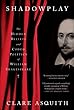
Clare Asquith’s Shadowplay: The Hidden Beliefs and Coded Politics of William Shakespeare. She over plays her hand once in while, but in the main the book is engaging and convincing.

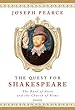
Also, Joseph Pearce, mentioned above, has The Quest for Shakespeare

Also, there is a possibility that Shakespeare was in Rome and that he studied for the priesthood at what is now the Venerable English College.

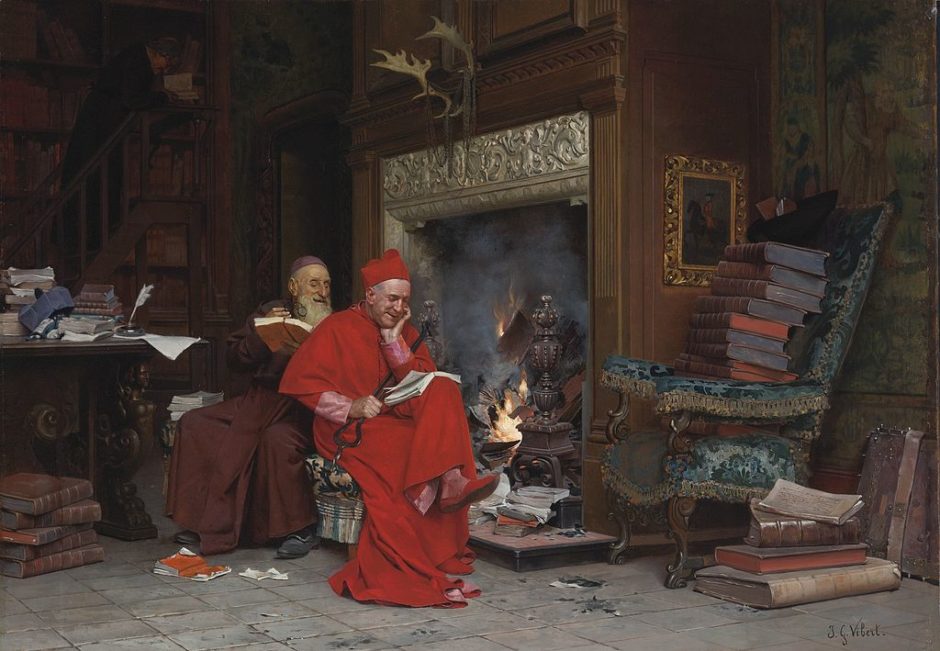
Let’s have some images of bears tearing kids apart for mocking the prophet.

French 1463 Ms Douce 336 Bodl. lib

How did they know he was bald if he had a hat on?

The Punishment of the Children who Mocked Elisha in Bethel; The Widow before Elisha; Unknown; Regensburg, Bavaria, Germany; about 1400 – 1410; Tempera colors, gold, silver paint, and ink on parchment; Leaf: 33.5 x 23.5 cm (13 3/16 x 9 1/4 in.); Ms. 33, fol. 229v
Posted in Saints: Stories & Symbols | Tagged
6 Comments

13 June: St. Anthony of Padua, Confessor and Doctor

COLLECT (Novus Ordo):
Omnipotens sempiterne Deus,
qui populo tuo beatum Antonium
praedicatorem insignem dedisti,
eumque in necessitatibus intercessorem,
concede, ut, eius auxilio, christianae vitae documenta sectantes,
in omnibus adversitatibus te subvenientem sentiamus.

This prayer was of new composition for the 1970MR.

Subvenio and adversitates give us a military flavor to this prayer.  Subvenio means, “to come up or advance to one’s assistance (the figure taken from the advance of a military reserve; v. subsidium), to come to one’s assistance, to aid, assist, relieve, succor; to obviate, remedy, heal, cure a disease, an evil, etc.”

We also need to turn to our knowledge of ancient rhetoric for a glimpse into documentum.  This is a “pattern for imitation”, like exemplum, but also in some contexts having the meaning of “a proof”, a concrete demonstration that what is asserted is true: evidence.   In this case it is a paradigm after which we are to pattern and shape our own lives.  But this pattern or model itself actually has power to shape us.  Christ transforms us the baptized who are made in his image and likeness, after his perfect exemplum, and who imitate His exempla and documenta, His words and deeds.

Think….

Tantum ergo Sacramentum
Veneremur cernui:
Et antiquum documentum
Novo cedat ritui:

LITERAL VERSION:
Almighty eternal God,
who gave blessed Anthony to Your people
as an outstanding preacher,
and in times of need as an intercessor,
grant, that, by his help, following his examples of Christian life
we may sense You coming to aid us in every adversity.

I recall seeing statues of the famous Franciscan when I was in Lisbon, many years ago.  St. Anthony, a native of Portugal, is there depicted in his pre-Franciscan mode, indeed, as an Augustinian canon with long hair, not the corona we are used to seeing.

You know the old Italian phrase, “Chi fa per se, fa per tre”.  You also know the old rhyme of those in need:

Tony, Tony, look around.
Something’s lost and must be found.  

It might be consolation to many of you that St. Anthony was able to help himself when something important was lost.  Some years ago an important relic of St. Anthony (jaw, perhaps?) was stolen from his shrine in Italy.  It was recovered after not very long.


Posted in Saints: Stories & Symbols |
4 Comments