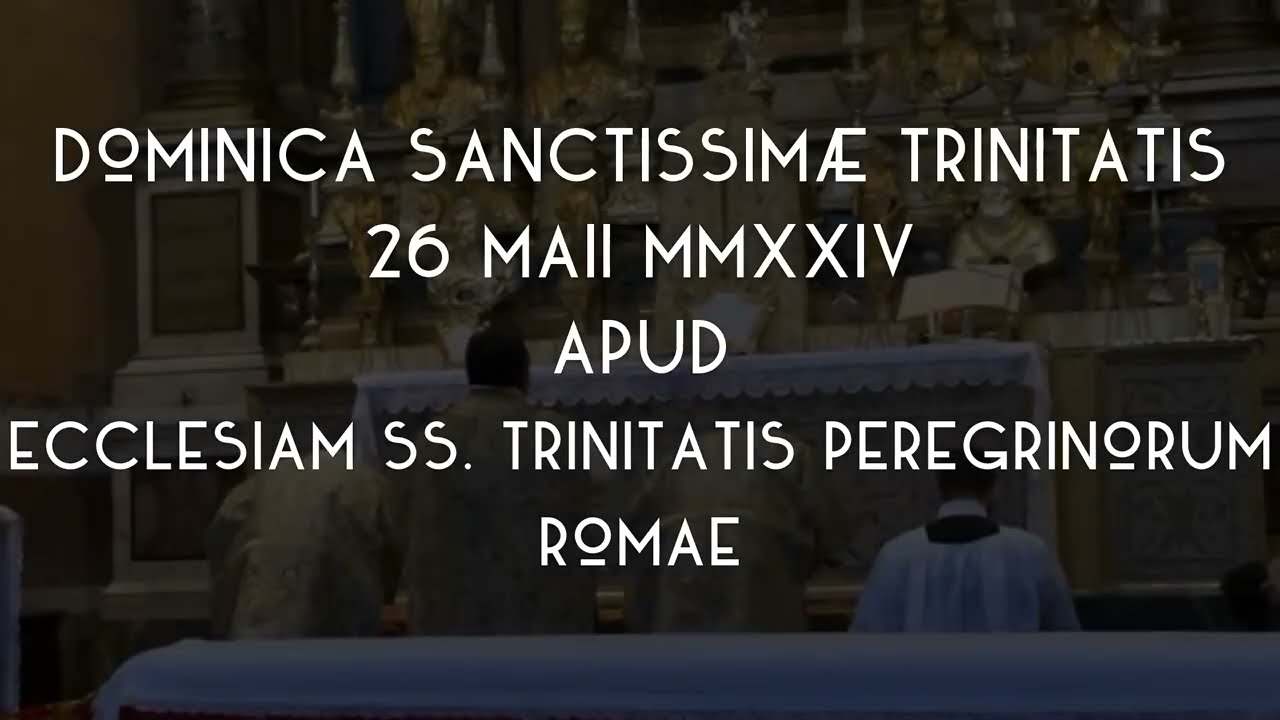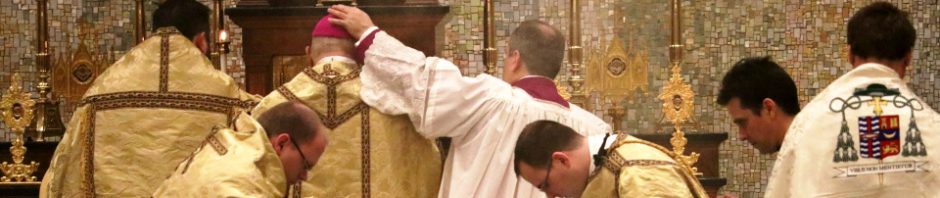
26 May 1991: 33rd anniversary of ordination – Trinity Sunday and St. Philip Neri

Booklet for the Mass

Many priests observe the anniversary of their ordination at this time of year. It is a common time for ordinations, probably because Ember Days were common times for ordinations and Ember Days fall during the Pentecost Octave.

It is my anniversary of ordination today, 33 years ago, by St. John Paul II in St. Peter’s Basilica.  That might make me a 2nd class relic.

When this date rolls around, I usually say to myself:

“Well… I made it this far.”

And so begins the 34th year.  I’ve now been a priest longer than the earthly Jesus (depending on ancient counting practices).

On 26 May 1991, the Feast of St. Philip Neri, it was also Trinity Sunday, just like this year!

It is a wonderful synchronicity that the parish in Rome to which I am so attached, is both the place of St. Philip Neri’s great work and also in honor of the Most Holy Trinity.

It was a perfect Roman May day.

I got up that morning, ate breakfast, said my prayers, and walked alone across town to the basilica, where I entered through the main doors with the rest of the crowd. After that, however, I went to the right, to the nave near the Pietà, where we ordinands vested and waited for the Holy Father. My family members came separately from a different part of town. They had special tickets which brought them very close to the altar.  St. Theresa of Calcutta was there, just in front of where my folks sat.

Since we were 60 in number, and from many countries, the basilica was absolutely jammed with people from all over the world who had come for the ordinations, probably some 50k.

You have not experienced the Litany of Saints until you have heard it sung by that many people in a space like that.

I arranged for my grandmother, a convert to Catholicism in her 80’s, to receive Communion from the Holy Father, St. John Paul.

I often wonder what happened to the other men with whom I was ordained. I only knew a few of them personally, since I had been at the Lateran University with them.

It was the first year that the Iron Curtain was raised a bit.  A few men were permitted out Romania to come to Rome to be ordained by the Pope. There were some Opus Dei guys ordained with us.  Another of the group was John Corapi of the SOLT group, though I didn’t know him at the time. Pray for him.  One priest was ordained for the Archdiocese of Southwark in England. I know that one fellow is now a bishop in Haiti.  Last February he was injured in an explosion but is recovering.

This day, especially when I review some of these videos and think about what has happened between then and now, underscores the fact that God doesn’t choose men who are worthy. He chooses those whom it pleases Him to choose.

I ask for your prayers today and in an ongoing way for my cares, my health, and my future.  Pray for canceled priests.

And please, in a special way, pray for the mother of a priest, my own.

The sermon from the Mass. The sermon is in Italian and the text is HERE.
YouTube thumbnailYouTube icon

I really miss him.

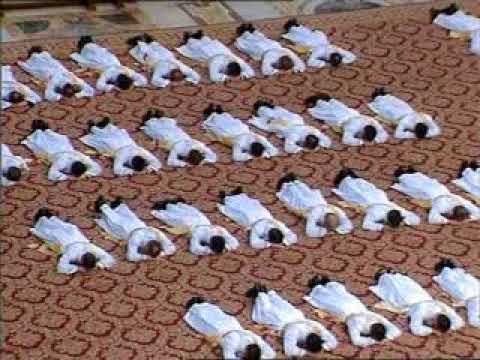
Here are some excerpts from the broadcast of the ordination, which was on national television in Italy.  We have the interrogation, litany and the prayer (form).
YouTube thumbnailYouTube icon

Imposition of hands.


Posted in SESSIUNCULA | Tagged
12 Comments

Your Sunday Sermon Notes: Trinity Sunday 2024

Too many people today are without good, strong preaching, to the detriment of all. Share the good stuff.

Was there a GOOD point made in the sermon you heard at your Mass of obligation for Trinity Sunday?

Tell about attendance especially for the Traditional Latin Mass.

Also, any heresy from the pulpit today (usually in analogies about Trinity)?

Any local changes or (hopefully good) news?

A couple thoughts about the sign of the cross: HERE  A taste…

[…]

The small cross is made with the thumb of the right hand on the forehead, mouth and breast while saying Christ’s own Trinitarian formula we read and heard in the Sunday Gospel.  We sign our head, the principle and principal part of the body, in the name of the Father, the mouth in the name of the divine Word spoken from eternity, and the heart in the name of the Spirit as the seat of charity, sacrificial love.  We say, in the “name of”, as mentioned above, for each of the Persons, not carelessly or even ostentatiously in the manner of some liberals omitting it for the Son and the Holy Ghost as well.  This threefold repetition of “in the name of” reveals the distinction of the Persons and their unity.

[…]

Posted in Liturgy Science Theatre 3000 | Tagged ,
5 Comments

Daily Rome Shot 1030: Video – Solemn Mass in Rome

Today the World’s Best Sacristan™ sent some video glimpses of the Solemn Mass for the patronal feast of the parish, Sunday of the Most Holy Trinity. I put them together in a brief video.

YouTube thumbnailYouTube icon

The resolution isn’t that high.  It was what I was sent.

Welcome new registrant:

LeawoodTLM

In chessy news, a 12 year old Turkish boy has broken the 35 year old record of under 13 with the highest rating, which had been held by Judit Polgar (2555), the best woman player in history. Yagiz Kaan Erdogmus (2645) has already earned his grandmaster norms, but titles are only officially approved every few months. These kids are terrifying. Engines have changed everything.

Nice people! Great service!

White to move and mate in 2.

NB: I’ll hold comments with solutions ’till the next day so there won’t be “spoilers” for others.

UPDATE:

I almost forgot!   Here is the targa mondezzaro for 26 May 1717!  This is found in the via di Sant’Eustachio, sort of an open area where there is a wall with two ancient columns visible and some spectacular “ivy” (really Virginia Creeper).  If you are facing the Church of Sant’ Eustachio, you go around the the right side into the street.

SI PROIBISCE ESPRESSAMENTE A TVTTE E
SINGOLE PERSONE DI QVALSIVOGLIA STATO
E CONDITIONE DI FARE IN MONDEZZARO
NELLA PIAZZETTA AVANTI QVESTA PORTICELLA
DI SˆEVSTACHIO SOTTO PENA DI SCVDI
DIECI MONETA ET ALTRE PENE IN CONFORMITÀ
DELL’EDITTO DI MONSIGˆILLˆE RMO PRESIDENTE
DELLE STRADE PVBLICATO IL DI XXVI
MAGGIO MDCCXVII PER GLˆATTI DELLˆ
ORSINI NOTARO DEL TRIBVNALE DELLE STRADE

The granite columns were found in 1934 under the piazza in front of San Luigi dei Francesi (not too far), the French national church with the Saint Matthew paintings by Caravaggio.  They are from the baths built by Nero in 62 AD and restored by Alexander Severus, and are therefore known as the Terme Neroniane Alessandrine, between the piazza in front of the Pantheon stretching to the Corso del Rinascimento along the modern Via di S. Giovanna d’Arco.  The Palazzo Madama or Senate sits pretty much on top.  A couple of other columns were found in 1666 and were inserted into the pronaos of the Pantheon to replace two that were missing.  Also from those baths is the enormous granite basin in the V. degli Staderari, across the way from the famous coffee shop of Sant’Eustachio.  It was found in 1985, weighs 25 tons and is 5.3 meters across.


Posted in SESSIUNCULA |
6 Comments

Daily Rome Shot 1029: I don’t give a fig for that garbage

Hey  sa****t@c***********g.ws!  My thank you note was kicked back.  New email?

Special thanks to NG and TL for making the switch to Zelle.

This is where the Romanaccio chess “club” meets.  And there is a damaged targa mondezarro there, too. from 17?7.

And because I played OTB today, a bonus Rome shot.

The Bar der (= Italian del) Fico, “of the fig tree”.  This fig is not to be confused with the well-known fig tree in the Via Margutta in the Campo Marzio, the Fico di Via Margutta or Fico Marguttiano.  It had grown up spontaneously through the cobblestones (sampietrini = little saints Peter – get it?). A couple of plaques with poems have been dedicated to the fig and there is also a prize awarded called “Er mejo fico der bigonzo… the best fig in the bucket”, Roman phrase suggesting that the best figs have been put on the top to hide the worse ones below.  Now it has to do more with the best thing or person in a group.  Bigonzo comes from Latin bis (twice) and congius, an ancient measure of liquid amounting to an eighth of an amphora, about 3.5 liters, a little under a gallon.  The bigoncio itself is wooden, with two sides higher with holes through which a pole could be passed for carrying.

Liquids in ancient times were often measured by weight, using either a goniometer (which now is a term for a folding ruler that measures angles) or a sextarius 1 sixth of a congius or about a pint.

And because there is a targa mondezzaro for today.  1753.  The usual penalties are left to the discretion of the The Most Illustrious and Most Reverend Monsignor President of the Streets.   This one is at the Largo dei Lombardi, near San Carlo al Corso (of course).

PER ORDINE ESPRESSO DI MONSIGR·ILLMO·E RMO’
PRESIDENTE DELLE STRADE SI PROIBISCE ES
PRESSAMENTE A QVALSIVOGLIA PERSONA DI
NON GETTARE IMMONDEZZE DI SORTE VERVNA
IN QVESTO SITO SOTTO LE SOLITE PENE ED
ALTRE AD ARBITRIO DI SVA SIGR· ILLMA· IN
CONFORMITA DELL’EDITTO EMANATO LI XXV
MAGGIO MDCCLIII

There should be one for tomorrow, also.

A targa a day, keeps the garbage away.

Please remember me when shopping online and use my affiliate links.  US HERE – UK HERE  WHY?  This helps to pay for health insurance (massively hiked for this new year of surprises), utilities, groceries, etc..  At no extra cost, you provide help for which I am grateful.

Speaking of playing OTB, which I did this morning, here is a position I got myself into playing black.

Here we are after 32. a4.  Black to move.

QUAERITUR: How did I extricate myself from this mess?

It’s black’s move, for eventual victory (at move 57).

NB: I’ll hold comments with solutions ’till the next day so there won’t be “spoilers” for others.

Posted in SESSIUNCULA | Tagged
3 Comments

Should bishops “quiz” confirmands? UPDATED with responses from bishops

UPDATE 25 May:

Another response rolled in from a bishop whose name you would recognize.

Thanks for the invitation. Here as some thoughts.

1. Yes, I was slapped when I was confirmed – although, it was just a tap. And yes, we were quizzed. We were called on by the bishop, he did not ask for volunteers.

2. I do not slap when I do Confirmations because it is not called for in the rite (although the other auxiliary bishop in ___ when I was there did, and he wasn’t really a traditionalist – I think it was just a hang-over from former days). I do, though, sometimes talk about it in my Confirmation homily, and what it means. As for quizzing, I used to do that, in fact, did it for years. Then I realized that that was the reason my homilies were so long. The confirmandi are always shy to answer, and I would work hard to coax answers out of them. Not even questions that they know the answers to better than anyone else are they willing to answer (what school do you go to? What did you do in preparing for Confirmation?). So, for the last several years I do not quiz. I do sometimes meet with the Confirmandi before the Mass starts, and then I will ask questions.

Back to the slap: some years ago there was a proposal before the USCCB to restore it to the rite for our country. Needless to say, it failed to pass. There seems to be a lot of resistance to “change”.

UPDATE 23 May:

In light of the many comments and interest in the topic, I reached out to a few bishops with whom I have some correspondence about quizzing and slapping at confirmation.  I received three responses back, though I hope for a couple more.

Here’s what I received, somewhat edited to preserve anonymity:

Bishop 1

Good to hear from you. Hope you are well in these chaotic times.

I was confirmed in the old rite – in second grade. We were slapped. The Bishop did not, to my recollection, ask us questions. We were prepared ahead of time in Catechism at the Catholic school, of course.

As a parish priest, most the times the Bishop came to the parish for Confirmation. They did ask questions during the ‘homily time.’ No slap (although I heard that auxiliary Bishop X used to use the slap).

I have confirmed in the old Rite a few times. I slapped them as called for by the rubric. In the Novus Ordo, I did not use a slap. I anoint them and afterwards say “peace be with you” and handshake.

Most all times I confirmed, I met the candidates with their sponsors before the Mass, usually in the parish hall or wherever they were getting ready. I would ask some questions. I didn’t do it during the Confirmation itself, because it had not been the local custom.

Bishop 2

By my recollection, we were quizzed at the time of the homily, but the questions were all softballs. We were not slapped, but I do remember the bishop being somewhat cranky!

In practice, I never quiz the candidates, basically for the reasons outlined in the article. It is a Mass (usually) and the conferral of a Sacrament. I prefer to use the time that I have with the candidates and their sponsors before the Mass to connect with them, and then of course, in the homily to exhort them to understand the effects of the Sacrament , and to encourage the candidates to really live their Faith. By extension, I always hope that the message is heard by all of the rest of the “Catholics.” All in all, I think it’s a great opportunity to put a good face on the Church. Attitude, eye contact, joyfulness all are important.

And the only time I have slapped is when conferring the Sacrament in the traditional form.

Bishop3

When I was confirmed in 1962, a priest was assigned to question the confirmands before the bishop conferred upon us the Sacrament of Confirmation.

In confirming us, after the anointing with the Sacred Chrism, the bishop gave us a slight blow to the cheek while saying “Peace be with you.”
I do not question the confirmands when I administer the Sacrament of Confirmation, whether according to the old rite or the new rite. Since I require that the pastor of each confirmand formally declare that the confirmand is prepared to receive the Sacrament, I do not see the need to question them further.
When confirming according to the old rite, a give a slight blow to the cheek of the confirmand, as is prescribed in the Roman Pontifical.
When confirming according to the new rite, the gesture is not prescribed and, therefore, I do not give the slight blow to the cheek. In this, I follow the discipline of not mixing elements of the two uses but, rather, respecting the integrity of each use.
I hope that the above is of some help to you.

Be assured of a daily remembrance in my prayers.


ORIGINALLY PUBLISHED May 20, 2024 at 16:35

I went to Fishwrap (aka National Sodomitic Reporter) to see if there were any spittle-flecked nutties about Harrison Butker.  They didn’t disappoint, which is itself a disappointment.

I found an opinion piece stating that bishops should not quiz confirmands about any fundamentals of the Catholic Faith.  You know, old, backward stuff like, “What is a sacrament?” and “Who are the three persons of the Trinity?”.

You laugh.   Don’t.  I was in a midwestern suburban parish and I was given the chore of checking on the preparation of confirmands.  These were, essentially middle school and high school kids.  The results were terrifying.  Worse was the 1st Communion prep, which elicited a response from a boy about the Eucharist: “You mean that piece of bread thing?”

At Fishwrap, Confirmation seems to be about feeling good.

It is a liturgy, a moment in which we ask the Holy Spirit to come down and fill the hearts of the confirmands. Creating a situation which causes them to enter in with anxiety or worse undermines their ability to experience that.

Construing confirmation as a kind of culminating exam also demeans all of the prior work that the confirmands have done.

The old formula “fill the hearts of your faithful” is the from the Veni, Sancte Spiritus, which has unfathomably rich vocabulary – in Latin – when properly understood.  In the antiphon and the oration the Latin word for “heart” is used twice, especially in “light” (illusratio) of the rational soul (recta sapere).   We ask the the hearts (minds, intellect which under the operation of the will seeks to understand and, in knowing and understanding, seeks the more in love and be in the union of peace with the beloved) be enflamed with the Spirit, which is the Spirit of Love and of Truth (which has content).

Also, these days there is great interest in doing things the way that ancient Christians did, provided that it doesn’t involve anything “traditional”.  Hence, those being prepared for sacraments have to jump through lots of hoopy stages and endure being sent out during Mass etc.   Never mind that in ancient times there were exorcisms and scrutinies.   Yes, they were expected to know something.

When I was brought into the Church, I was expected to know things.  And I did.  When I was ordained, I was expected to know things, and I was grilled by various Roman profs on many theses we had to prepare.  It is reasonable to expect that we know the Faith. You can’t love what you don’t know.  You can’t pass on what you don’t know either.  As my old pastor used to say: Nemo dat quod non ‘got’!

When I was brought into the Church, the old pastor delayed confirming me because he thought it would be better for me to be confirmed by a bishop, in this case a former pastor of the same parish who had retired from being the first bishop of New Ulm, a lovely man, Bp. Alphonse Schladweiler.  He quizzed me, a little, and slapped me too, and rightly so.

Anyway, there is a funny story about old Schlady and a confirmation during which he quizzed.  At a confirmation he once said, in his booming voice, “Now children, the bishop has been asking you questions.  Do you have any questions for the bishop?”  Always dangerous.  One lad piped up, “What’s a Monsignor?”  The priest at the place was a Monsignor.  Without missing a beat the old bishop said “Why, sonny, a Monsignor is the cross that hangs around the bishop’s neck!”

There’s a lot more to say about Confirmation and about Monsignors.

Were you quizzed?  Were you slapped?  Do you have recollections of your Confirmation?

Meanwhile, check out this prayer.  HERE


Posted in "How To..." - Practical Notes | Tagged
43 Comments

Two items concerning Jesuits, one grim and real, the other a tribute

Two items, quickly.

First, at CNA there is a must read article about the thoughts of a Jesuit priest in Uruguay about the state of the Society of Jesus.  Realistic about their profound decline and grim future.  HERE

Next, there is a new book by Karen Hall about one particular Jesuit, the late and lamented Fr. Paul Mankowski, whom I knew.  He was treated horribly by his confreres.   One of their most brilliant lights, and they snuffed him out.  There are a couple books about him.  Here is the latest.

The Sound of Silence: The Life and Cancelling of a Heroic Jesuit Priest

US HERE – UK HERE

Also available…

Jesuit at Large: Essays and Reviews by Paul Mankowski, SJ edited by George Weigel

and

Diogenes Unveiled: A Paul Mankowski SJ Collection edited by Phil Lawler

Posted in REVIEWS | Tagged ,
6 Comments

Pentecost Saturday: Wherein Fr. Z rants

Pentecost Saturday

Today the Season of Easter comes to an end.  The cycle that started with pre-Lent Sunday’s is over.

Being an Ember Saturday, there would be a vigil in the night in preparation for ordinations to the priesthood at St. Peter’s.

Tomorrow, as a matter of fact, is the ecclesial-liturgical and secular-calendrical anniversary of my ordination at St. Peter’s, Trinity Sunday.  In 1991, as today, it was Trinity Sunday and the Feast of St. Philip Neri.  In Rome at my adoptive parish, Most Holy Trinity (where St. Philip was) they will bump his feast to Monday and celebrate it also with great style, as they do everything.

There are five readings before the Gospel in the Mass today, in the forma longior, the longer form. There is an option for a shorter Mass with two readings, but still with all the Pentecost Octave features, such as the Sequence and proper Communicantes and Hanc igitur. It is peculiar that at the end of the Sequence there is no Alleluia before the Gospel reading. There are various Alleluia verses amongst the lessons.  I think what happened is that when the more penitential Mass formulary for the Ember Day was fused into that of the Pentecost feria of Saturday, a bit of the Alleluiatic festivity was lost.

The progression of the Collects and lessons is overwhelming if read in light of the moment (Octave of Pentecost) and ordinations.

I very much like the reading from Joel 2:

Thus says the Lord God: I will pour out My Spirit upon all mankind. Your sons and daughters shall prophesy, your old men shall dream dreams, your young men shall see visions; even upon the servants and the handmaids, in those days, I will pour out My Spirit. And I will work wonders in the heavens and on the earth, blood, fire, and columns of smoke; the sun will be turned to darkness, and the moon to blood, at the coming of the Day of the Lord, the great and terrible day. Then everyone shall be rescued who calls on the name of the Lord.

Sounds like an eclipse. 

And why not?  The Person of our Lord is often blanked out and blackened by the unworthy men who are His priestly mediators.  When you look on them, and see their faults, try to remember who is directly on the other side in blazing glory, making possible what we do in our liturgical rites.

And when a priest gets anything right… non nobis, Domine, non nobis.

The Collect.

May the Holy Spirit, we beseech You, O Lord, inflame us with that fire which our Lord Jesus Christ cast upon the earth and desired that it be fanned into flame.

I’m not going to go through all of them, but I’ll suggest the themes. Start with “heat”.

The account in Leviticus is about Shavuot and the wave-offering of the first fruits.

The account in Deuteronomy is about the first-fruits of the land of milk and honey.

The description in Daniel is of the stoking of the furnace and the 49 cubits high flames that burned the enemy but not the stokers as they sang in praise of God.

Finally, in the Gospel, Jesus rebuked and casts out an afflicting fever demon from Peter’s mother-in-law and then healed and exorcised, commanding the demons to be silent.  Originally, before the fusing of the Ember Day with the Pentecost feria, the Gospel was the Matthew 20 account of the healing of blind men.

The work of the Gospel is the work of the priest against the enemy, the prince of this world.

How shocking it is to me that even bishops can be embarrassed by such things today.  They should set the example in exorcising left, right and center!  Why let the prince of this world run unchecked?

How I long to see bishops to set examples of solemn worship. 

I long to see them perform manifestly, blatantly, even ostentatiously priestly actions in public: processions, exorcisms, lying prostrate on the steps of their cathedrals in reparation for the sinful votes and actions of Catholic politicians.

How I long to see them bishops be unabashedly, unapologetically Catholic, with every possible visual, material aid at their disposal, including glorious vestments, banners and big gaudy rings.

Turn up the heat, for the love of God and all that is holy!

But, no. They talk talk talk in their bourgeois black suits and their slim apologetic neck chains connected to the Cross … which they hide in their pockets.  It’s like they are all laid out prostrate from the heat of the fever of this world’s fever swamp and they can’t get up.

They must be raised from their fever by our prayers and promptings!

What’s going on now sure isn’t working.

Big hats, raised voices, and interdicts.

It’s time to get medieval.

The SSPX recently built and consecrated a huge and unapologetically Catholic church in the middle of Nowheresville, USA.  They proved they could do it.   They did it because people trusted that they would do it.  Now they have the proof not only that it was doable, but that they will do more.  They demonstrated during COVID Theatre that they were not going to abandon people by locking up their churches.

They did something amazing, extravagant for God, to show the world that there is more, there is the transcendent.  They gave people a place to encounter Mystery.

Let our bishops and priest smash their way out of their chains and then be openly, clearly, freshly, traditionally, unmistakably CATHOLIC .   I know that people will BACK THEM UP when they take hits for being Catholic.  Lay people will stand in front of them when they are attacked!

Enough of this, “I’m with you, win or tie!” rubbish.

Am I wrong?

The Postcommunion today:

Praebeant nobis, Dómine, divínum tua sancta fervórem: quo eórum páriter et actu delectémur et fructu.

May your Holy Sacraments supply use with divine raging passion: by which we may exalt in both their celebration and in their results.

Everything starts with proper worship, the fulfillment of the virtue of Religion.

As a Church we’ve lost a great deal of the sense of who we are because of the loss of the riches of worship.

If we don’t know who we are, can we tell someone else?

Why should anyone pay attention to us if we don’t know ourselves?

Everything we do much start in worship and then be brought back to worship.

This is the staring point for renewal and the goal in an dynamic that will end in earthly terms at the Parousia described by Joel and will continue in heaven in eternity.

We Are Our Rites.

Posted in ¡Hagan lío!, Be The Maquis, Hard-Identity Catholicism, Liturgy Science Theatre 3000, New Evangelization, Save The Liturgy - Save The World, The Coming Storm, The future and our choices | Tagged
3 Comments

Daily Rome Shot 1028: no littering… really….

Today is the anniversary of the edict of 24 May 1766 in which the Monsignore Illustrissimo e Reverendissimo Presidente delle Strade prohibited littering and dumping in the Via Borgognona.  Someone caught dumping here would be fined 10 scudi and given three “tratti di corda” with perhaps other punishments.

What are “tratti di corda”?  It sounds like, maybe, “lashes”.  Nope. This is also known as “strappado”.  They tied your hands behind your back and then suspend you by the wrists, which results in dislocated shoulders.  They could add additional weight.  It would last about an hour.  This form of punishment is still used today as a torture.

Just between the Campo de’ Fiori and the Piazza Farnese in Rome, in other words where I walked almost every day when in Rome, there is a street called the Via della Corda.

Corda could refer to the fact that the Campo was a place where public punishments of the corda were carried out.   The street was originally a “vicolo” or “alley”, but in 1925 the city changed it to “via”.

The Roman poet Giuseppe Gioachino Belli (“er Belli”) wrote about tratti di corda in one of his Roman dialect sonnets:

Prima la corda al corso era un supprizzio,
che un galantuomo che l’avessi presa
manco era bbono ppiù a sservì la chiesa,
manco a ffà er ladro e a gguadaggnà sur vizio

“Before, the corda on the pulley was punishment, that a gentlemen who had taken it lacked the ability any longer to serve the Church, couldn’t be a thief and to make money by vice.”

Consider that St. Charles Borromeo assigned tratti di corda against the excesses of “carnevale” before Lent, imposing two times for those who transgressed on religious holidays or who had worn ecclesiastical clothing as a costume.

A certain group comes to mind.

St. John Sarkander, martyr, was tortured this way because he refused to reveal the contents of a confession to a fully Protestant court.  He died in agony in prison on 17 March 1620.

This… for littering… dumping.

Cities in those days were bad enough without garbage being left everywhere.  Strong measures were needed.  Also, in those days people were injured to discomfort and pain on a daily basis.  Simple punishments would be brushed off.  Hence, they used punishments that actually got people’s attention.

Life was hard.

Click!

In chessy news, I read an interview with world champ Ding Liren.  He will compete at the upcoming Norway Chess, tough field.  Ding said that his goals were “not to come in last” and that he had to show at least his “second-best”.  Gosh.  It makes me wonder if what Magnus opined about Ding might be true.  Magnus wondered if Ding wasn’t “permanently broken”.

Chess is hard.

Is this hard?  White to move and mate in two.

NB: I’ll hold comments with solutions ’till the next day so there won’t be “spoilers” for others.

Interested in learning?  Try THIS.

Please remember me when shopping online and use my affiliate links.  US HERE – UK HERE  WHY?  This helps to pay for health insurance (massively hiked for this new year of surprises), utilities, groceries, etc..  At no extra cost, you provide help for which I am grateful.

FINALLY…

Welcome registrant: 

Frdon58

Posted in SESSIUNCULA | Tagged , ,
3 Comments

Pentecost Friday: tearing things apart

Pentecost Friday

At NLM there is a great explanation of the Pentecost Roman Stations.

I find these historical details interesting because we find traces of ancient things in the traditional rites even today.

In any event, if I am to be believed, the Pentecost Friday Roman Station is Dodici Apostoli, Twelve Apostles, because that’s where Friday Ember Day Stations are. Believe me.

The texts of the Mass today are rather calming, as befits summery pursuits. Crops are planted. Early harvest of first fruits and grains are in. Other plantings and fruits are maturing. The days are long, warm, languid. There is always something to be done, but there is daylight for leisure.

The reading from Joel is about the harvest, and grain and wine and the gifts of God. The Antiphons and Gradual are all pretty joyful.

The Gospel is about the man whose friends lower him through the roof to get him to Jesus, who heals him. It’s a great moment in the Gospels.

Today in our Collect we have a return of the theme of “the enemy”.

Grant to Your Church, we beseech You, almighty God, that, united by the Holy Spirit, she may in no way be harmed by any assault of the enemy.

But for the most part, the overwhelming attitude of the Mass is joyful contentment with the abundant gifts of God.

Perhaps the idea of the enemy in the Collect, making a disturbance of the peace, is offset by the images of the paralytic man’s friends making a disturbance.  Making a mess, but in a good sense.

Enemies tear houses apart. The man’s friends tore a hole in the roof. Both make disturbances, but with different scopes in mind and different outcomes.

The Postcommunion seems to echo what happened in the Gospel, thus tying our minds in the moment of Communion to the healing, strengthening effects of the Eucharist:

“We who have received the gift of Your Blessed Sacrament, O Lord, humbly pray that what You have taught us to do in commemoration of You, may profit and help us in our weakness.”

As I write, I have a thought of all your priests being the friends who tear a hole in the roof to get you to the Lord. The friends lowered the man. The priests bring the Lord down to you. The fabric of the roof is torn open.

The division of heaven from earth is ripped asunder and Christ is called down, Body, Blood, Soul and Divinity.

But we have to turn this sock inside out. Even as this image takes form under my tapping fingers, it is really you lay people who are the ones who get that roof apart and get us priests to the Lord.

You do the heavy… lowering. We would be lost without you, frozen, unable to move.

Thank you for being our stretcher bearers.


Also, years ago, I made a series of PODCAzTs for the Octave of Pentecost.   My technical  abilities have improved a little since then, and I seem to have had a little more energy, but they aren’t bad.

So, these are from 2008… Benedict XVI was Pope.

1. Pentecost Monday: PODCAzT 56: Octaves – Fr. Z rants & Augustine on Pentecost
2. Pentecost Tuesday: PODCAzT 57: John Paul II on the unforgivable sin; Our Lady of Fatima and the vision of Hell
3. Pentecost Wednesday:PODCAzT 58: Ember Days; Chrysostom on St. Matthias; Prayer to the Holy Spirit
4. Pentecost Thursday: PODCAzT 59: Leo the Great on Pentecost fasting; Benedict XVI’s sermon for Pentecost Sunday
5. Pentecost Friday: PODCAzT 60: Pentecost customs; St. Ambrose on the dew of the Holy Spirit
6. Pentecost Saturday: PODCAzT 61: Pope Leo I on a post-Pentecost weekday; Fr. Z rambles not quite aimlessly for a while

UPDATE:

Posted in Liturgy Science Theatre 3000, Our Catholic Identity | Tagged
1 Comment

Novus Ordo Thursday after Pentecost: Feast of Jesus Christ, the Eternal High Priest – And a REQUEST from Fr. Z

In 2012 the Congregation for Divine Worship allowed that the Thursday after Pentecost could be celebrated as the Feast of Jesus Christ, the Eternal High Priest.   Music Sacra Forum as a link to the Latin texts for the Novus Ordo feast, as they appear in Notitiae 2012, 335-368.

It’s almost as if someone said, “This time after Pentecost seems a little empty.  I wonder what we could do to spice it up?”

May I make a request?  Perhaps today (or everyday) you could pray for a priest.  I have a link on the side bar to a Daily Prayer for Priests.

It might be good to pray not only for priests whom you like, but especially for priests whom you find seriously annoying or troubling.

If you can’t think of one, please pray for me.

Posted in SESSIUNCULA | Tagged
9 Comments