Catholic reactions to the reactionary reactions against Harrison Butker

Reactions to Harrison Butker’s commencement speech abound.   Today there are couple of note.

First, at Crisis is a piece by Paul Kengor:  “Hell’s Fury for Harrison Butker” subtitled: “If you’re sick of the bullying thugs of cancel culture, then stand with Harrison Butker. Now they’re coming for Butker. Next, they’ll come for you.”

The target audience for the speech, after all, was Catholics. Frankly, the speech ought to have elicited a shrug from non-Catholics who should view it as none of their business. But to the angry intolerants of cancel culture, everything and everyone is their business. Your business is their business. They will follow you, hound you, monitor you. They accept no dissent; they destroy those they disagree with. They howl. They start howling the moment they crawl out of bed and make coffee and flip open their laptop. They look for guys like Butker to destroy.

I can attest that this is active within the Church as well.

Next, there is pure gold from Anthony Esolen at The Catholic Thing: “A Much-Needed Kick in Kansas”

This line was great…

Of course, Butker suggested only what Chesterton suggested long ago, to the effect that modern women rose up and said they would no longer be dictated to, and promptly became stenographers.

And there are these posers…

Why do we shrug at an 80-hour work week shared between husband and wife, leaving the neighborhood a ghost town for most of the day, all through the year? Where is the multitude of child-rich and happy households with no one at home to see to the needs of the body, let alone to make the freedom of childhood possible? What do we gain from this evisceration of local life, and the institutionalization of small children?

UPDATE:

I can’t not add this. Replace Butker with a female kicker! No, really! What could go wrong?

Posted in Our Catholic Identity, Pò sì jiù, The Coming Storm, What are they REALLY saying?, You must be joking! | Tagged
6 Comments

Your Sunday Sermon Notes: Pentecost Sunday 2024

Too many people today are without good, strong preaching, to the detriment of all. Share the good stuff.

Was there a GOOD point made in the sermon you heard at your Mass of obligation for Pentecost Sunday.

Tell about attendance especially for the Traditional Latin Mass.

Any local changes or (hopefully good) news?

A taste of my thoughts from the other place: HERE

For this mighty Feast of Pentecost we first scrabble after some context to enrich our participation.  The sacred liturgical celebration of the mysteries of our salvation make us present to them and them to us.  Sacramental reality is not inferior to sensible reality.  Indeed, it embraces and elevates it and us, it transforms us.  In the strongest sense possible, we are our rites.  Therefore, we are never deeply content without deepening content, which includes context, even from the depths of history.

[…]

Posted in SESSIUNCULA | Tagged
6 Comments

Daily Rome Shot 1025: 20% off

Photo from The World’s Best Sacristan™.

Welcome registrant:

CharityBeginsAtHome

Meanwhile, in Casablanca where we wait… and wait… and wait… there were results from Round 1.  This is an interesting “variant” tournament wherein players start from positions in historic games.  In the first game, with the position of move 11 in the 1889 Chigorin v. Steinitz, Carlsen (won) v. Vishy and Nakamura (won) v. Amin (players from 4 continents).  Round 2 was move 11 in Game 10 of the Xie Jun vs. Alisa Galliamova Women’s World Championship Match in Kazan/Shenyang in 1999, Amin v. Carlsen (draw) and Nakamura v. Vishy (draw).  Round 3, move 12 in the 14th game of the 1985 Karpov-Kasparov match Amin v Vishy (draw) and Nakamura v Carlsen (won).

To demonstrate what a prodigious visual memory these guys have, Carlsen said:

 “The last game looked very similar to Karpov-Kasparov games from the second match, and I seemed to remember that Garry’s knight ended up on g4 and maybe h2. But that was about it. The first game I thought it has to be a Steinitz game since he’s the only one who plays like that. Probably against Chigorin, as they had a World Championship match in 1889, and there were a lot of Evans Gambits. The second one, I had no clue!”.

There is also a video of Carlsen identifying games from single positions.  Scary.

Three more rounds today.

Meanwhile, thanks to the kind but anonymous “A reader” who sent gift cards for Panera, which is virtually the only way I will buy their good but over-priced fare.   Why is this a thing?  We play OTB at a Panera.  Gratias tibi persolvo.

Nice people! Great service!

Interim, motus ad lusorem cum militibus albis pertinent. Scaccus mattus, scilicet mors regis, duobus in motis veniat.

NB: Detineam explicationes in crastinum, ne vestrae interrumpantur commentationes.

Priestly chess players, drop me a line. HERE

Meanwhile, Chess House has a 20% off sale going on.  CODE: S6296

Suggestion: If you travel or know someone who does, you might have a look at this: HERE  This is a spiffy travel set, remarkably compact and light (13.4 oz), with wood pieces, magnetized, extra queens, and a leather-backed folding 9″ board!  It is in a small pouch that fits in the bottom of my backpack when I am on the move.

It is interesting to root around at Chess House and see what they have.  May you can help to start a parish chess club!

Please remember me when shopping online and use my affiliate links.  US HERE – UK HERE  WHY?  This helps to pay for health insurance (massively hiked for this new year of surprises), utilities, groceries, etc..  At no extra cost, you provide help for which I am grateful.

Posted in SESSIUNCULA |
5 Comments

CHARTRES, FRANCE – PENTECOST PILGRIMAGE – Live and on demand VIDEO

The largest ever Chartres Pilgrimage for Pentecost departed central Paris today, from Saint Sulpice, for Chartres Cathedral.

There is a YouTube channel for it for live events and which can be watched on demand.

YouTube thumbnailYouTube icon

Posted in SESSIUNCULA |
4 Comments

Daily Rome Shot 1024


Yes, at The Parish™ preparations are being made for the Feast of St. Philip Neri (which is also my anniversary).  How I wish I could be there.  And now I, too, am a member of the Archconfraternity, the first priest invested who isn’t ex officio for who knows how long.

Welcome registrant:

OorahHooah

Nice people! Great service!

NB: At Chess House right now through May 20 20% off with coupon S6296

White to move and mate in 2.

NB: I’ll hold comments with solutions ’till the next day so there won’t be “spoilers” for others.

Please remember me when shopping online and use my affiliate links.  US HERE – UK HERE  WHY?  This helps to pay for health insurance (massively hiked for this new year of surprises), utilities, groceries, etc..  At no extra cost, you provide help for which I am grateful.

Speaking of a Triduum, and speaking of Benedictine nuns, he wonderful nuns of Gower Abbey, the Benedictines of Mary, Queen of Apostles, have this disc and digital download:

Tenebrae at Ephesus


US HERE – UK HERE

These are the RESPONSORIES of Tenebrae for all three days of the Triduum.  They are, arguably, the most beautiful chants of the entire liturgical year. So, it isn’t Holy Week or even Lent… so what?

In chessy news, there is talk that the World Championship could be held in Singapore. I hear Singapore is interesting.

Also, I note that several readers, including at least one priest, has signed up for chess.com using my link.  Thank you.

There is a new thing going on in Casablanca.  A tournament with a chess variant.  Players will rapid games from positions of historical games.  Present shall be, Magnus Carlsen, Hikaru Nakamura, and former world champ Viswanathan Anand.

I await the results!  And wait… and wait… and wait….

Posted in SESSIUNCULA |
1 Comment

Census Fidelium…. Sensus Fidelium… A book

At The Catholic Thing there is a piece about Catholic demographics.   The writer uses new information from the Pew Research Center.  As he says, the results are shocking but not surprising.   You can imagine the highlights.   Self-identifying “Catholic”, down.  Mass attendance, down.  Support of abortion, up.  For those attending Mass at least once a week, reverse the numbers.

One interesting bit is the observation that the Catholic core of these USA seems to be shifting to the South from the Northeast and Mid-West.

I note this passage:

But Burke points to a bright spot. Or at least, to a reprieve in the bad news. The portion of Catholics who say that their religion is “very important” in their life and who attend Mass at least weekly has not changed much in 15 years. Roughly a quarter of American Catholics – 23-25 percent – fall into this category.

If I were a bishop, I’d want to know a lot more about that slice of my flock and why they are the way they are. What are the conditions most conducive to promoting and maintaining a deep and abiding practice of the faith? What are the habits of living – at home, school, work, prayer, in the community – that help make such integrity of faith and practice possible? And how do we make such habits of life more easily accessible to more people?

I know a sector of the Church which is vital, young and committed.  Hey!  Let’s persecute them!

All the questions raised in the piece can be answered with a simple fact: the Church screwed up her sacred liturgical worship.  It has been a downhill slide into the demographic sink hole every since.

We are, collectively and individually, all bound to fulfill the duties of the virtue of Religion.  Justice governs what we owe to human persons.  Religion governs what we owe to divine Persons.  The primary act we owe to God is worship.  We fulfill this individually, in smaller groups like families parishes, and in larger groups like dioceses and the whole Church.  Screw up the Church’s formal sacred liturgical worship, the quintessential way by which we collectively fulfill Religion, and everything else will be screwed up too.  It is shocking but not surprising that the demographic sink hole is yawning, that Catholics support evils along societal trends.

We are our rites.  Change the rites, you change the “us”.

As the demographics change, I suspect a few groups will remind fairly strong in their identity, including converts, charismatics (who aren’t these days as goofy as they once were), and traditionalists.  These groups will have to find each other as the numbers and institutions of the Church collapse.  There will be frictions at first, but something amazing could emerge from the contact.

Now, more than ever, we all have to stand up for each other… in the manner described by Benjamin Franklin.

Finally, I recommend, again, an important book.

The Faith Once For All Delivered: Doctrinal Authority in Catholic Theology is a daring selection of essays by prominent orthodox Catholic scholars recently published by Emmaus Academic Press.

US HERE – UK HERE

The book includes a Foreword and Introduction written by Raymond Leo Cardinal Burke, and an Afterword authored by Robert Cardinal Sarah. The book is edited by Father Kevin Flannery, SJ.

The essays in the first part of this collection seek to answer the question, “What went wrong with Catholic theology since the Second Vatican Council?”

Following a brief account of the movement in modern theology from its philosophical basis in Kant and Hegel to the nouvelle théologie and later progressivist theologies of the twentieth century, the writings of Karl Rahner, Walter Kasper, and Bernhard Häring are treated as representative of principal problematic trends, and the concept of heresy is surveyed as it has been understood in the past and as it operates in the Church today.

The essays in the second part indicate the way forward for Catholic doctrinal and moral theology, examining and distinguishing the orthodox use of the sources of theology of magisterial teachings, the deposit of faith in its development, the “sense of the faithful” (sensus fidelium), Sacred Scripture, and Church councils and synods.

Edward Feser’s treatment of the Magisterium is deeply instructive and challenging to the present pontificate. The same is true of John Rist’s masterful commentary on contemporary heresies. These essays are especially valuable in debunking the current German synodal way and stand as a warning about the upcoming Synod on Synodality.

Posted in SESSIUNCULA | Tagged
3 Comments

“They must make the noise they can, because if they cease for a moment, we hear the calls of sanity and sweetness again…”.

A while back I wrote a review of Anthony Esolen’s fine book NostalgiaHERE

In it, I wrote:

How often is the charge of “nostalgia” flung as a cliché into the teeth of those who desire, with their legitimate aspirations, the liturgical forms of their forebears?

Nostalgia, however, is, as the Greek indicates, a pain (algea) we feel for our “return home” (nostron): “pain for the return, ache for the homecoming.”  It is an essential longing.

Today I saw this tweet… which has the proper definition of nostalgia.

Going back to my entry about Esolen’s book, I also wrote:

[…]

With every page, I cannot help but find a parallel with the devastation to our Catholic identity caused over the last decades, especially through devastation of our sacred liturgical worship.   We are our rites.  Change and tinker and make “progress with our rites” and you alter our identity as Catholics.  The damage has been nearly catastrophic.

[…]

Those technocrats, for the sake of progress, damaged not something that was technically perfect, every bit accounted for somehow and having a utilitarian purpose to justify its continuance in our rites. They damaged our place, our home, our patria, where we start from and toward which we tend.

No wonder we are so damn screwed up as a Church.

[…]

Many of you have been misunderstood and mistreated for your desire to go home, to be a Roman in the Roman thing, your rite, your patria which you ache for because it is yours.  I sure have my stripes to show for it and the long tracks of my tears.

Time after time I have spoken with people, especially with priests, who at some point woke up from Calypso’s arms, who opened their eyes within the pigsty far from home, and realized that they had both squandered the patrimony they had or had been cheated out of the patrimony they didn’t know that they ought to have been given.

In his introduction, Esolen ends one section with the reaction of the progressive to those who feel deeply their sense of belonging, their desire to be placed and rooted.

“[P]eople who object to nostalgia are afraid that their achievements, such as they are, will not stand scrutiny.  “No, you don’t want to go home!” they cry.  They must cry, they must make the noise they can, because if they cease for a moment, we hear the calls of sanity and sweetness again, and we may just shake our heads as if awaking from bad and feverish dream.  Coming to ourselves, we may resolve, like the prodigal, to “arise and go to my father’s house.”


Nostalgia: Going Home in a Homeless World by Anthony Esolen

US HERE – UK HERE


Posted in Linking Back, Our Catholic Identity, Pò sì jiù, The future and our choices | Tagged ,
2 Comments

WDTPRS – Pentecost: “We can’t read/savor/grasp them without knowing these things.”

Pentecost Sunday’s Collect is the same as we recite after chanting the Veni, Sancte Spiritus.

COLLECT – (1962MR):

Deus, qui corda fidelium Sancti Spiritus illustratione docuisti: da nobis in eodem Spiritu recta sapere, et de eius semper consolatione gaudere.

I am pretty sure that this ancient prayer, from at least the time of the Liber sacramentorum Gellonensis and probably older, survived the Consilium’s expert scalpels to live in the Novus Ordo only as the Collect for a Votive Mass of the Holy Spirit. ­

Sideline: What on earth is the Liber sacramentorum Gellonensis, or Gellone Sacramentary (LSGell hereafter).

There is a critical edition of the LSGell in the Corpus Christianorum Series Latina edited by A. Dumas, the guy who reedited Albert Blaise’s handy dictionary of Liturgical Latin I call Blaise/Dumas.

The manuscript of the LSGell is in the Bibliotèque National in Paris and dates to around 780.  It is part of the super complicated web of manuscripts descending from what we called the Gelasian Sacramentary, the source of so many of our ancient prayers found in the Roman Missal.

There are two types of Gelasians, “old” and “new”, which in turn descend from the far more ancient Roman Libelli.  The some dozen 8th century Gelasians that survive can be used to reconstruct a lost archetype sometimes called the Roman Sacramentary of King Pepin (+768 King of the Franks, son of Charles Martel and father of Charlemagne), thus showing the blending the Roman and Frankish influences in the Church’s prayer life. One of the keys to rebuilding the archetype is a manuscript called the Gellone Sacramentary, our LSGell, written perhaps in Meaux between 790-800.

King Pepin wanted a sacramentary, or missal, for use in his territory to promote liturgical unity. But this was later supplanted by what we call the Gregorian Sacramentary, a more prestigious book, which Pepin’s son Charlemagne obtained directly from Pope Hadrian in Rome between 784-791.  The Gregorian, put together by Pope Honorius (+638), was originally the book used by the Bishop of Rome.  It later developed into different versions, including the Hadrianum type, which Hadrian sent to Charlemagne.  In any event, the 8th century “new” Gelasians were later used to fill in gaps in the Gregorian.

So, Frankish developments from the more ancient Gelasians are exemplified in the LSGell which has 3024 prayers divided in two parts, the first mainly for Mass, and the second for other rituals.  The LSGell seems to have been an attempt at a complete book for liturgical services.  And now you know.

In any event, our old Pentecost Collect from the LSGell was shoved to the back of the bus in the Novus Ordo in favor of two Collects from the Gelasian, also existing in the Hadrianum version of the Gregorian.  See how those references make more sense now?  Maybe?

There is nothing especially challenging in the Latin vocabulary of the collect. The source of Latin consolation and wisdom, Messrs. Lewis & Short’s dictionary, says that sapio (infinitive sapere) means first of all “to taste, savor; … to have a taste or flavor of a thing”. Logically it is extended to “to know, understand a thing”.  It is often paired in literature with the adverb recte, “rightly”, when wisdom is indicated.  Think of the English word “insipid” (the sap- shifts to sip-) for something without flavor and also a person without taste or wisdom. I suppose a homo sapiens is someone of “good taste”, who knows the savor of life, as it were.  Sapiens is thus connected with Greek sophos, or “wise”, or “sage” (also a savory herb!).  Sapientia, “Wisdom”, is a figure for the Holy Spirit as well as one of His Gifts.  The Holy Spirit, Parácletus, is our Counselor, leading us rightly, and Comforter, bringing us consolation.

LITERAL TRANSLATION:

O God, who taught the hearts of the faithful by the light of the Holy Spirit, grant to us, in the same Spirit, to know the things that are right, and to rejoice always in His consolation.

What leaps to my mind, steeped in the literature of late antiquity, is the connection of wisdom, inherent in the phrase recta sapere, with consolation.

There was a genre of consolation literature in classical times and late antiquity into the medieval period.  This was part of the province of philosophy (“love of wisdom”).  This literature was used as a moral medication for the soul.

In the famous work of the imprisoned Boethius (+525) before his execution, the Consolation of Philosophy, Lady Wisdom, Philosophy, comes to the author in his cell and diagnoses the true nature of his sickness of sadness.  She does this in a dialogue, so that Boethius can understand things rightly (like our recta sapere), and therefore be consoled. Lady Wisdom descended so as to raise Boethius up to God.  This is our pattern too, both in creation and in our renewal when we have sinned.

In explorations of various orations, I’ve told you how they contain influences of the ancient philosophical concept of that all creation proceeds from God (exitus) in and then turns (conversion) to thus take determinate form and return again to God (reditus). These prayers of late antiquity are echoes of these ancient philosophical concepts.

We can’t read/savor/grasp them without knowing these things.

Think now of our prayer and also the Veni Sancte Spiritus with which it is connected:

“Come, Holy Spirit, fill the hearts (corda) of Thy faithful and kindle in them the fire of Thy love.

V. Send forth Thy Spirit and they shall be created

R. And Thou shalt renew the face of the earth.”

In the Holy Spirit, who breathed life into the Body of Holy Church on Pentecost, may we all be renewed.  May He help us to return to God when we have strayed – GO TO CONFESSION! – and to return to each other, reconciled in the embrace of our Holy Catholic Church.

Pray for those who are tearing the Church and her unity to pieces and committing grave scandal.  May grace illuminate their minds and hearts before more damage is done.
 

Posted in WDTPRS |
Comments Off on WDTPRS – Pentecost: “We can’t read/savor/grasp them without knowing these things.”

Some not Vatican news notes

Today things keep rolling along and I, uncharacteristically, am paying some attention.

In regard to the terrific speech that Harrison Butker made for commencement at Benedictine College, as the lib world has a spittle-flecked nutty, I was sent these two screenshots…

What do you suppose is their average age?

Here’s something to think about…

Gower Abbey, in Gower, MO, is there the Benedictines of Mary, Queen of Apostles are.  They have so many vocations that they have to found daughter houses.  They are building a huge new place in Ava, MO and a bishop in England is helping them take over an old abbey.

The Benedictines of Mount Saint Scholastica are associated (how much is hard to tell) with Benedictine College in Atchinson, KS.   These two communities, one at death’s door and the other bursting life, are about 45 minutes apart by car.

A look at the website of the lib sisters is enlightening.  They have a photo gallery!

The shot of sister carrying the Blessed Sacrament on Holy Thursday, with a humeral veil, is striking.

The Benedictines of Mary, at Gower Abbey, also have a photo gallery.

Compare and contrast.

Meanwhile, a friend informs me that Butker’s jersey is now among the top sellers in NFL jerseys.

And there’s this from the NYPost… it’s good to know that Archbishop Naumann is still a priest.

He is still a deacon too.

About the diaconate, I saw this at The Pillar….

[…]

This week marked the deadline for the world’s bishops’ conferences to submit feedback ahead of this October’s session of the synod on synodality, and several reports claimed significant support for the admission of women to the diaconate.

Australia, Austria, Luxembourg, and Switzerland all posted their reports online and, as Luke Coppen noted this morning, claimed “widespread agreement” for a female diaconate.

[…]

According to the German bishops’ portal, the teaching on sacramental ordination being reserved to men alone “isn’t infallible doctrine,” and the cardinal appeared to agree, saying “It can be changed. It needs arguments and time.”

[…]

Maybe the Benedictines of Atchison can get involved!

UPDATE:

Meanwhile, somehow this fits right in…

Posted in SESSIUNCULA |
10 Comments

Some Vatican news notes

For big Masses with Popes the Vatican’s  Office for Liturgical Celebrations issues a booklet.  We find in the booklet for Pentecost (19 May 2024) that, in the text for the consecration of the chalice, there has been a reversion:

Thus, at least for the sake of this Sunday, the choice was made to force a a Latin word to mean something it has never meant in the history of that language because a Greek word (polloí) had been made by Lutheran Scripture scholar Joachim Jeremias to mean something it had never meant before. All this was based on Jeremias’ guess about a word Jesus might have said in yet another language read through a lens designed correct an offense to Protestants implicit in the Church’s consecration formula. That’s what ICEL did back in the 70’s, though it was corrected by Benedict XVI in the wake of Liturgiam authenticam. ICEL and others set aside the probability that Evangelists and Paul knew what they were doing and meant what they wrote (with the Holy Spirit’s help). Never mind the Fathers of the Church. Never mind the explicit teaching in the authoritative Catechism of the Council of Trent, Part II, 4, which states that the Church cannot say pro universis.

It’s Back To The Future.

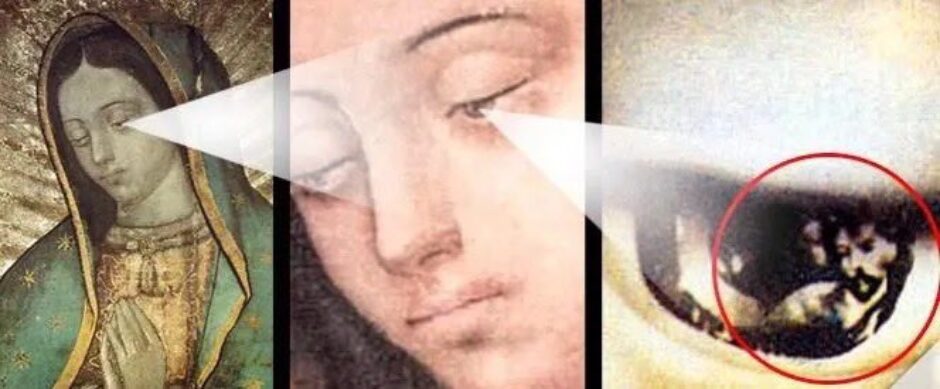
In other news, the document with the new Norms of the Dicastery for the Doctrine of the Faith for proceeding in the discernment of alleged supernatural phenomena has been released. HERE It was announced on 13 May, last Monday, the Feast of Our Lady of Fatima. That immediately set of the spidey senses of molti (maybe not tutti). Some suspected that this move was designed to reduce criticism of the Holy See aroused by negative implications in the messages of apparitions. Some alleged Marian apparitions have not been positive about what’s going on. One is, of course, forced to wonder why the Mother of God would appear just to say, “Everything’s fine. Keep doin’ whatchyer doin’! You’re okay just the way you are.”

The last norms were issued by Paul VI in 1978.

Some suspected that the move was designed also to cast doubts, or undermine, previously studied and approved apparitions, perhaps because they, too, were not wholly positive about what is going on.

Indeed, the new norms do not provide for approval of apparitions or messages, etc. They merely provide for a nihil obstat statement, that something is free from error. There is to be no determination that some event is of divine origin.

As I understand the norms, the role of diocesan bishops has been attenuated.    In effect, the diocesan bishop is no longer free to make a determination on his own without, first, consulting the Holy See and, next, agreeing with what the Holy See concludes.  The bishop can investigate and so forth, but in the end his hands are pretty much tied.

Also, I read at CNA that Francis did an interview for 60 Minutes (the long-running CBS interview/investigative show).   That piece posted a tweet (yes, I know it’s X now).  Apparently this is what the producers of 60 Minutes wants us all to take away:

Conservatives are suicidal!

“Because one thing is to take tradition into account, to consider situations from the past, but quite another is to be closed up inside a dogmatic box.”

The comments under that tweet express some disagreement with Francis.

Posted in SESSIUNCULA |
16 Comments