This is worth notice. Priests of the Cathedral in San Francisco have issued their own statement about FS…
Conscience First (English and Spanish)

This is worth notice. Priests of the Cathedral in San Francisco have issued their own statement about FS…
Conscience First (English and Spanish)
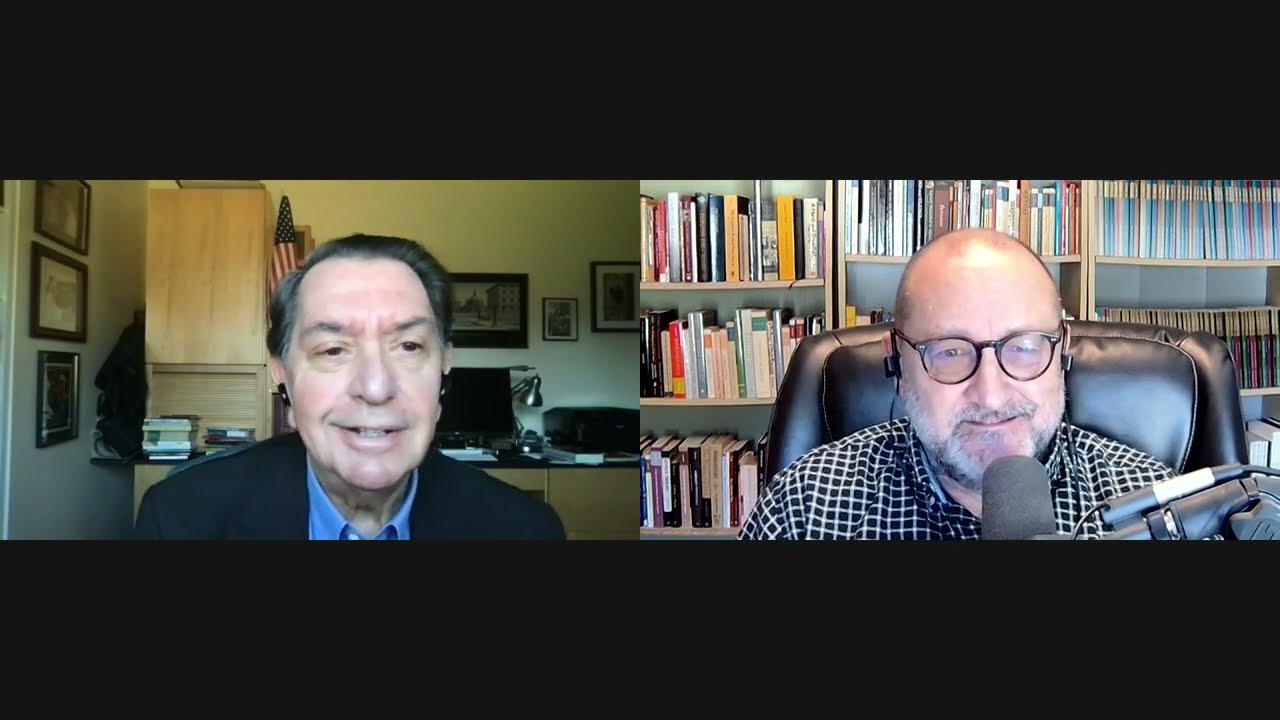
In this video with Robert Royal, Larry Chapp knocks it out of the park! He describes the present theological trend, a “theology from below” especially in relation to moral theology. The starting point becomes one’s subjective experience rather than the objective loci of revelation. What this winds up in is relegating to what the Church has taught in its moral theology as the virtuous, moral commandments, as an “ideal” which not everyone can or should attain, thus resulting in an attempt to dumb down the law. It contradicts Veritatis splendor They also talk about theology from below in relation to Liberation Theology, the experience of the poor being the starting point that winds up being pitted again the better off.
This is one of the best, brief descriptions of what is going on today in theology that I have heard.

Please remember me when shopping online. US HERE – UK HERE WHY? This helps to pay for health insurance (massively hiked for this new year of surprises), utilities, groceries, etc.. At no extra cost, you provide help for which I am grateful.

The flood is coming.
HEY! sr********@gmail.com – my thank you note to you got kicked back. New email?
WELCOME REGISTRANT:
urielangeli
White to play and mate in 2.


Click!
NB: I’ll hold comments with solutions ’till the next day so there won’t be “spoilers” for others.
Priestly chess players, drop me a line. HERE
Interested in learning? Try THIS.
The “Wimbeldon of Chess” is going on, Tata Steel in Wijk aan Zee. After Round Two “the Boy” is in the sole lead, 2/2. Gukesh, Nepo and Anish are 1.5. Ding in down the ranks as is the female champ Ju Wenjun. There is a lot of chess to be played. At the beginning of Round 3 (which is on as I type) there were some odd openings. Jovanka and Danya are commenting today. Robert Hess is off. One writer says that there isn’t a great press of viewers around the hall, as last year, when Magnus is involved.

Meanwhile, yesterday 14 January which is the Feast of the Ass, Magnus issued a video on Twitter saying that he is on vacation and he will soon be back to “beat all of your asses”, which is confusing. It seems that Magnus is into those old medieval observances but… I mean… you are supposed to be nice to the asses on Festum Asinorum. I suggest rather that he find a Jesuit to beat. It summons quite an image, the “goat beating an ass”. Hmmm… a Jesuit might like that. I just don’t understand high level chess trash talk.
Yesterday Nepo and Ju had a looong endgame. She defended very well. At the end, there was an amusing moment as each waited for the other to offer the draw. They were trying to suppress laughing. They were at each other for only about 5 hours, after all.
Ceterum censeo Firoujza esse delendum.
Please remember me when shopping online. US HERE – UK HERE WHY? This helps to pay for health insurance (massively hiked for this new year of surprises), utilities, groceries, etc.. At no extra cost, you provide help for which I am grateful.

THANK YOU …
… LC … for becoming a monthly donor today. The 14th of the month is a lean day.
WELCOME REGISTRANT:
AustinT
White to move and mate in two.

NB: I’ll hold comments with solutions ’till the next day so there won’t be “spoilers” for others.
Priestly chess players, drop me a line. HERE
Interested in learning? Try THIS.
The “Wimbeldon of Chess” is going on, Tata Steel in Wijk aan Zee. Many strong players. Ding is back. Anish and Nepo. The women’s world champ Ju Wenjun. Magnus and Fabi and Hikaru not there. Round 2 today. In Round 1, Ju Wenjun lost to Anish. Nepo destroyed a young dutchman Max Warmerdan. Ding and Vidit drew. All the victories in the first round in the Masters section (there’s another, Challengers) were with black.
 Ceterum censeo Firouzja delendum esse.
Here is a fine new translation of St. Augustine’s Confessions by Anthony Esolen. Beautifully printed and bound by the good folks at TAN. It is a lovely volume.

Too many people today are without good, strong preaching, to the detriment of all. Share the good stuff.
It is the 2nd Sunday of Ordinary Time in the Novus Ordo and the 2nd Sunday after Epiphany in the Vetus Ordo.
Was there a GOOD point made in the sermon you heard at your Sunday Mass of obligation?
Tell about attendance especially for the Traditional Latin Mass. I hear that it is growing. Of COURSE.
Any local changes or (hopefully good) news?
I have a few thoughts about the orations in the Vetus Ordo for this Sunday: HERE
Out of lack, loss, and deprivation blessings can come. In the first reading, the Epistle for Sunday, Paul tells the Romans (12:6-16) to bear up with cheerful generosity and patience in time of tribulation, each according to our proper vocations.
Today, 14 January, is the Feast of the Ass, Asses… the Festum Asinorum (in Latin, plural).
No, I am not talking about whom you think I’m talking about.
The feast which became popular in France, could have stemmed from the so-called “feast of fools”. It may tendrils into biblical donkeys, or the integration of the ass into the nativity narrative. It could have been in part inspired by a sermon of pseudo-Augustine.
The day included the tradition of a parading a couple of kids (not goats) on an ass (not a Jesuit) right into the church, next to the pulpit during the sermon. The congregation would respond with loud “hee haws”.
Who said that the Middle Ages were dreary?
In any event, it was celebrated for a long time and then faded out.
Here are possible greeting cards.

One for your parish priests….
Dear Fr. ___

There is a rather long entry about this at Wikipedia. It includes a liturgical note:
At Beauvais the Ass may have continued his minor role of enlivening the long procession of Prophets. On the January 14, however, he discharged an important function in that city’s festivities. On the feast of the Flight into Egypt the most beautiful girl in the town, with a pretty child in her arms, was placed on a richly draped ass, and conducted with religious gravity to St. Stephen’s Church. The Ass (possibly a wooden figure) was stationed at the right of the altar, and the Mass was begun. After the Introit a Latin prose was sung.
The first stanza and its French refrain may serve as a specimen of the nine that follow:
- Orientis partibus
Adventavit Asinus
Pulcher et fortissimus
Sarcinis aptissimus.
Hez, Sire Asnes, car chantez,
Belle bouche rechignez,
Vous aurez du foin assez
Et de l’avoine a plantez.(From the Eastern lands the Ass is come, beautiful and very brave, well fitted to bear burdens. Up! Sir Ass, and sing. Open your pretty mouth. Hay will be yours in plenty, and oats in abundance.)
Mass was continued, and at its end, apparently without awakening the least consciousness of its impropriety, the following direction (in Latin) was observed:
- In fine Missae sacerdos, versus ad populum, vice ‘Ite, Missa est’, ter hinhannabit: populus vero, vice ‘Deo Gratias’, ter respondebit, ‘Hinham, hinham, hinham.’
(At the end of Mass, the priest, having turned to the people, in lieu of saying the ‘Ite missa est’, will bray thrice; the people instead of replying ‘Deo Gratias’ say, ‘Hinham, hinham, hinham.’)
Here’s a treat for the Feast of the Ass.
Judging from the lyrics, this seems to be the festive installation of the “bishop” …who’s seems, appropriately, to be an ass.
Cliche today, perhaps, but still fun.
Have you sent a greeting card to someone?
There is some really fun music out there for this “feast”. ‘La Messe Des Ânes Et Des Buveurs’ Slightly… slightly.. sacrilegious? It’s not as bad as some of the music you hear in parish churches.
Here is a musical tribute by French composer René Clemencic (+2022) La Fête De L´âne – HERE
 Do you consciously pray for priests? For those local priests whom you know and those far away? For those whom you love? For those who are annoying or obviously in grave spiritual danger?
On the sidebar I have an image of a holy card of Our Lady Queen of the Clergy, which is a devotion that started in France (I think). I found a chapel dedicated to Our Lady under this title in Paris, at Saint-Nicolas du Chardonnet, which is under the care of the SSPX. There was seated there also a Confraternity of the same. There’s a fascinating conversation about this image on this blog HERE. The painter was Jules Breton, whose more famous Song of the Lark, a farm girl in a field holding a sickle at sunset, listening to the bird song in rapt amazement. It’s in the Chicago Art Institute. Willa Cather’s book is named after it.
That image of Our Lady Queen of the Clergy links to a page with a prayer for priests. Please use it, daily?
And here is another one, penned by my dear Saint Thérèse of Lisieux
Lord Jesus, You have chosen Your priests from among us and sent them out to proclaim Your Word and to act in Your name. For so great a gift to Your Church, we give You praise and thanksgiving. We ask You to fill them with the fire of Your love, that their ministry may reveal Your presence in the Church.
Since they are earthen vessels, we pray that Your power shine out through their weakness. In their afflictions let them never be crushed; in their doubts never despair; in temptation never be destroyed; in persecution never abandoned. Inspire them through prayer to live each day the mystery of Your dying and rising. In times of weakness send them Your Spirit, and help them to praise Your heavenly Father and pray for poor sinners.
By the same Holy Spirit, put Your words on their lips and Your love in their hearts, to bring good news to the poor and healing to the brokenhearted. And may the gift of Mary Your mother, to the disciple whom You love, be your gift to every priest. Grant that she who formed You in her human image may, by her intercession, help to form them in Your divine image by the power of the Holy Spirit, to the glory of God the Father. AMEN.
O Jesus, Eternal Priest, keep Your priests within the shelter of Your Most Sacred Heart, where none can touch them. Keep unstained their anointed hands which daily touch Your sacred Body. Keep unsullied their lips daily tinged with Your precious Blood. Keep pure and unworldly their hearts, sealed with the sublime mark of the priesthood. Let Your holy love surround and protect them from the world’s contagion. Bless their labors with abundant fruit, and may the souls to whom they minister be their joy and consolation here, and their everlasting crown in eternity. AMEN.
Please remember me when shopping online. US HERE – UK HERE WHY? This helps to pay for health insurance (massively hiked for this new year of surprises), utilities, groceries, etc.. At no extra cost, you provide help for which I am grateful.

It’s white’s move. Mate in 2.

NB: I’ll hold comments with solutions ’till the next day so there won’t be “spoilers” for others.
Priestly chess players, drop me a line. HERE
Interested in learning? Try THIS.

In chessy news, Ray Robson won his 5th consecutive Puzzles World Championship. Puzzle rush… solve as many puzzles as possible while the clock ticks down. They do this at terrifying speed.
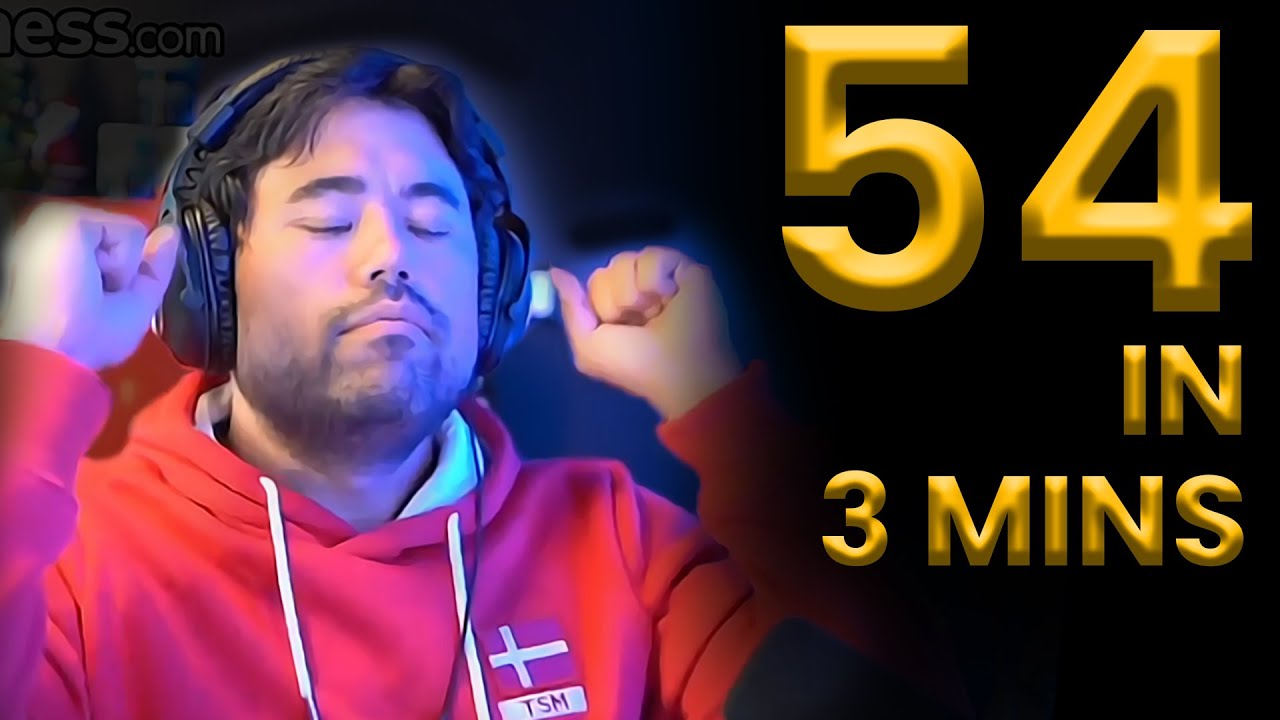
I try to do puzzles every day for a “chunk” of time, the chunk’s length depending on life’s goings ons. I’ve seen some of these streamers start out puzzle rush and I can’t imagine how they even move and click the mouse that fast much less solve the problems. I think it has to do with several factors. First, they are of a generation that never didn’t have a mouse to click. They develop pattern recognition. They have far above average visual memory retention. This is one of the reasons why I am hesitant to play short format chess online: I’m just not fast enough with the mouse. Ever see someone like Hikaru in a time-crunch rush with just seconds on the clock?
For example…. I set this to start at the beginning of a hyper bullet game. Each player starts with 30 seconds! The pre-moving is … whew!
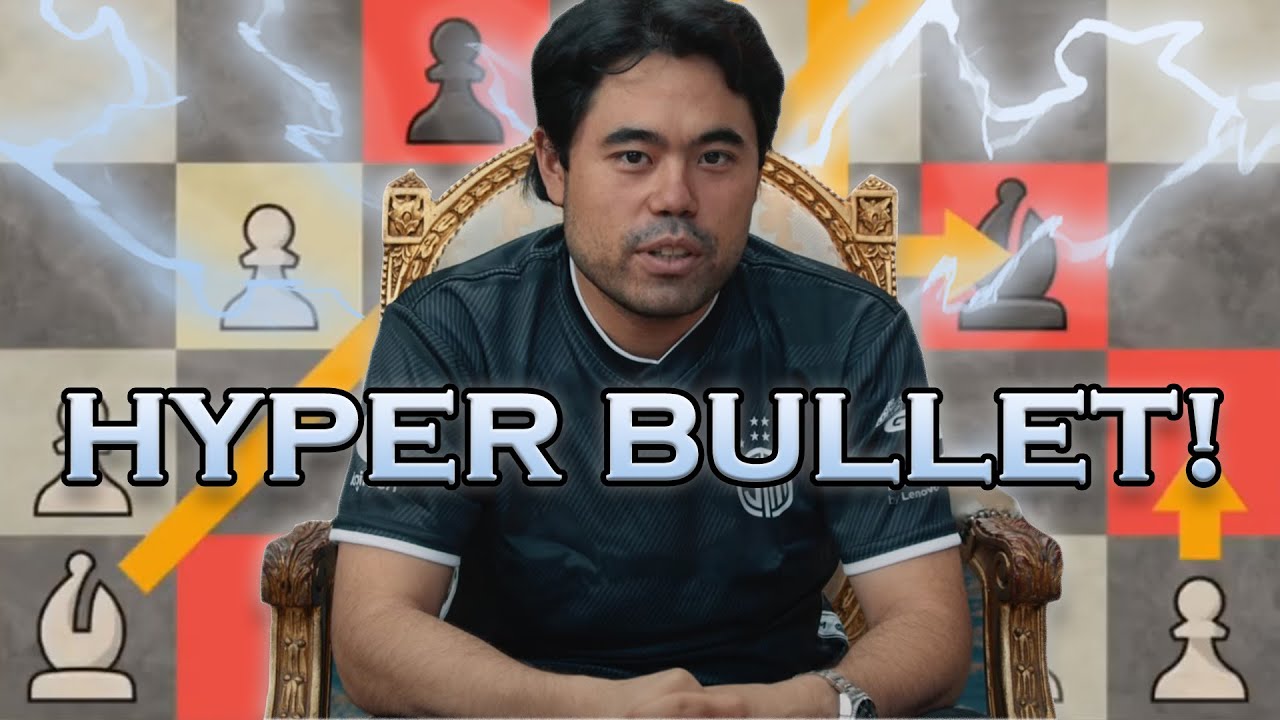
Is this really chess? I guess so. It serves a purpose.
Chess’ “Wimbledon” has started. Tata Steel Chess in Wijk aan Zee (13-28 January). 14-player single round -robin events. 100 minutes for 40 moves, followed by 50 minutes for the remainder of the game, with a 30-second increment per move from the start. Blitz for tie-breaks.
This morning at OTB I won all my games, classical and blitz (10 minutes). Felt good. Non-Catholic and Catholic members alike were all over me asking about what they are hearing in the mainstream media about Francis and controversies. They are genuinely shocked and want to know if it’s all true. Not the easiest sea of icebergs to navigate.
Meanwhile… this guy.
Cardinal Joseph Zen celebrates his 92nd birthday today. Please say one Hail Mary for this brave shepherd. pic.twitter.com/hCRcDP8Ym1
— Sachin Jose (@Sachinettiyil) January 13, 2024
 On the SIXTH of January, Epiphany, we prayed liturgically with the three mysteries of the Lord’s life revealing Him as divine: the adoration of Jesus by the Magi, the changing water to wine at Cana, and His baptism by John in the Jordan River.
In the reform after the Council, the mystery of the Lord’s Baptism (as revealing His divinity) celebrated at Epiphany was teased out, I suppose to put greater emphasis on the Lord’s baptism as a model for our own baptism.
The Novus Ordo Feast of the Baptism of the Lord (which closes the Christmas season in the Novus Ordo), is now placed on a Sunday. In the pre-Conciliar calendar it had, with some exceptions, a commemoration on 13 January… the octave day of Epiphany, which is appropriate.
John the Baptist helped us into our Advent preparation for Christmas by reminding us to straighten the paths of our lives for the coming of the Lord. It is fitting that we meet the Baptist again at the end of the Christmas season.
John announced the coming of the Messiah and now he points us to the Messiah. This was when the Baptist told his disciples to follow Jesus, saying “He must increase, I must decrease” (John 3:30).
In His baptism by John, Christ foreshadows what He would do later: He descends into the waters of the Jordan (death and the tomb) and rises out of them again (resurrection).
Christ had no need of John’s baptism. Being perfect and sinless Jesus had nothing to repent.
 Instead, His submission to baptism shows all humanity the way to our salvation.
Christ’s baptism reveals how we must die and rise to our sins in the sacrament He instituted at the Jordan. By receiving John’s baptism the Lord was solemnly revealed to be divine by the Father’s voice and the descent of the Holy Spirit, and He sanctified the waters for our baptisms. He instituted the sacrament.
Baptism is the starting point of all saving and actual graces we receive as Christians. Baptism confers on us an indelible character, almost like a branding mark of Christ’s Lordship in and over us. This is the foundation of our spiritual lives. Christ’s humility orients us in the right direction for our lives as baptized Christians.
He must increase, we must decrease.
We find two collects for today in the 2002 Missale Romanum. The first is of new composition for the post-Conciliar Novus Ordo and the second is from the 1962MR on 13 January, the Commemoration of the Baptism of the Lord.
COLLECT (2002MR):
Omnipotens sempiterne Deus,
qui Christum, in Iordane flumine baptizatum,
Spiritu Sancto super eum descendente,
dilectum Filium tuum sollemniter declarasti,
concede filiis adoptionis tuae, ex aqua et Spiritu Sancto renatis,
ut in beneplacito tuo iugiter perseverent.
 Apart from the obvious references to the events at the Jordan, there are echoes of Scripture here (cf. Is 42:1-4, 6-7; Is 61:1-2; Rom 8:15; Eph 1:3. 5-6). According to the illuminating Lewis & Short Dictionary the later Latin adverb sollemniter, from the adjective sollemnis, refers to all that which is performed according to the proper customs and forms usually in a ritual religious context. Thus, it mostly means grand and “ceremoniously” but also in an ordinary way, so long as it is the “customary” way. The form of the verb declarasti is again “syncopated” (declaravisti). Spiritu…descendente is our old friend the ablative absolute and it takes its time from the perfect declarasti. Iugiter, ultimately from iugum (a “yoke” for horses or cattle), means “continuously” as if one moment in time is being “yoked together” with the next, and so on. The substantive beneplacitum is from the late, ecclesiastical verb beneplaceo (“to please”), found in the Latin Vulgate and in authors such as St. Ambrose of Milan (+397).
SLAVISHLY LITERAL TRANSLATION:
Almighty eternal God,
who as the Holy Spirit was descending upon Him,
solemnly declared Christ, baptized in the Jordan river,
to be Your beloved Son,
grant that the children of Your adopting, reborn from water and the Holy Spirit,
may continually persevere in your good pleasure.
CURRENT ICEL (2011):
Almighty ever-living God,
who when Christ had been baptized in the River Jordan,
and as the Holy Spirit descended upon him,
solemnly declared him your beloved Son,
grant that your children by adoption,
reborn of water and the Holy Spirit,
may always be well pleasing to you.
The ICEL version isn’t too far off the mark today, probably because this rather chatty prayer pretty much tells a story and the syntax is fairly straight forward.
COLLECT 2 (2002MR):
Deus, cuius Unigenitus
in substantia nostrae carnis apparuit, praesta, quaesumus,
ut, per eum, quem similem nobis foris agnovimus,
intus reformari mereamur.
This prayer is far less wordy than the newly composed collect. The language here is denser and more “theological”. Note the contrast between two pairs of words. First, the adverbs intus, “on the inside, within”, contrasted with foris, “from without” (this is literally, “outside the doors”, so it refers to what you see from the outside). Next, the noun substantia, a theological word “substance”, that which we really are in and of ourselves apart, or “beneath” in a sense our outward appearances or “accidents”, contrasts with the adjective similis, “like, resembling, similar”. There is another theological concept, “form”, contained within the passive infinitive reformari. Human beings are composed of “matter” (our fleshly bodies) and “form” (our immortal, rational souls). The sacraments have matter and form: for example, in baptism water (matter) and the Trinitarian words spoken while pouring the water (form), in the Eucharist bread and wine (matter) and the words of consecration by an ordained priest (form), in penance the confession of sins (matter) and the absolution from the priest (form).
SLAVISHLY LITERAL TRANSLATION:
O God, whose Only-begotten,
appeared in the substance of our flesh, grant, we beg,
that we may merit to be reshaped inwardly
through Him, whom we recognize is like us outwardly.
CURRENT ICEL (2011):
O God, whose Only Begotten Son
has appeared in our very flesh,
grant, we pray, that we may be inwardly transformed
through him whom we recognize as outwardly like us.
 The Latin prayer’s meaning hinges on the effects of baptism.
Through the words of the formula for baptism and the outward pouring of sensible, visible water, there is an invisible and inward effect of grace in the soul.
By baptism we are inwardly conformed or “shaped” so that we can be a proper temple of the Holy Spirit and recipient of graces as holy member of the Body of Christ, the Church. By taking up our human nature, our “flesh”, into an indestructible bond with His divinity, the Second Person became one like us in all things but sin.
Our baptism is the first step of being more and more reformed and shaped according to His image, a process which will continue for eternity in heaven.
In this life it is our task to make sure that our outward life, our words and actions, are fully consistent with and show forth clearly the inward reality of Christ in us.
This but one of the lessons we receive from Jesus’ humble submission to a baptism at the hands of John in the Jordan for which He had absolutely no need.
The main concept underlying the primary Collect, and this feast, would have to be our spiritual adoption and new status in the Holy Spirit as the children of God, brothers and sisters of Christ having the same heavenly Father.
In our baptism and by living the faith we profess we enjoy the indwelling of the Holy Spirit, indeed the indwelling of the Triune God (cf. John 14:23).
This indwelling begins with the humble reception of a “character” or “owner’s mark” on our souls, which although it is a sign of God’s Lordship over us actually sets us free from the bondage of sin. He adopts us as His own making us sons and daughters, not slaves. When the Holy Spirit dwells in us, we can address God with reverential awe intimately as “Abba” (Mark 14:36), rather than with the abject fear of a slave for a hard master.
God does more for us than freeing us from sin and making us His adopted children.
He also makes us co-heirs with His eternally Only-Begotten to a divine inheritance.
As co-heirs we can be admitted also to the joys of heaven which Christ, our brother in our humanity, has in perfect possession with His resurrection and ascension to the Father’s right hand (cf. Romans 8:34).
Once we were slaves of sin and the enemies of God (Romans 5:10-11).
Now we are sons and daughters with a (re)birthright to inherit.
Our humanity, in Christ, already enjoys this while all of humanity still awaits the fulfillment of this promise.
God now hears our prayers as He hears His confident children, not fearful strangers.

Please remember me when shopping online. US HERE – UK HERE WHY? This helps to pay for health insurance (massively hiked for this new year of surprises), utilities, groceries, etc.. At no extra cost, you provide help for which I am grateful.

Photo by The Great Roman™
Giuseppe Gioachino Belli (“Er Belli) was an 18th century poet in the Roman dialect, a super critic of the Pope and the Vatican and clerics in general, and eventually one of their great defenders. He had a conversion when he saw Masonic thugs burning the confessionals in front of San Carlo ai Catinari. At first his sonnets, more than 2200, were for private readings only and he asked that, at his death, they be burned. Nope.
Click!
The sonnets themselves capture daily life in Rome and, for that, they are frequently very vulgar but still, even when he is at his most vicious toward corrupt clergy, shot through with the Faith… though a little jaded. In one post I made, years, ago, about the “scudo” coin which litterers and garbage dumpers would be fined at the command of “Monsignor illustrissimo presidente delle strade”, I have a recording of a sonnet about a spicy father and son dialogue. Far less shocking than the prose of Tucho’s pornotheology.
If you’ve been in Rome and gone across the bridge connecting the Viale Trastevere with the Via Arenula, you’ll see a large travertine monument featuring a fellow in a top hat. Ecco. Er Belli.
WELCOME REGISTRANT:
fisheralfred42
Hey l******.s*****@gmail.com – Your email box is full!
In churchy news, while 10 January was the anniversary of the death of Card. Pell, today is the anniversary of the revelation (by Sandro Magister?) that Card. Pell was the author of the “Demos Memo”. The full text of the Demos Memo is HERE. Commentary on the Demos Memo by Ed Pentin HERE.
In chessy news, during Chesscom’s Titled Tuesday, Hikaru Nakamura and Ian Nepomniachtchi did the Knight Dance again.
Meanwhile, my good friend Fr. Ermatinger shared his text for
“A Blessing That Does Not Imply Validation or Approval of Same-Sex “Couples”.

Let’s go back to Belli for a moment….
Here’s one dated 1833.
| LA CANNONIZZAZZIONE | THE CANONIZATION |
| Domani se santifica a Ssan Pietro Un zanto stato frate a Ssan Calisto, Che ssu li santi pò pportà lo sscetro, E ha ffatto ppiù mmiracoli de Cristo. Tra ll’antri, a un ceco, duscent’anni addietro, Che accattava oggni ggiorno a Pponte Sisto, Lui je messe un ber par d’occhi de vetro, E dda cuer giorn’impoi scià ssempre visto. ‘Na donna senza gamma de man manca Se maggnò la su’ effiggia in ner pancotto, E in men d’un ette je spuntò la scianca. A un’antra donna j’apparze in cantina, E jje diede tre nummeri p’er lotto: Lei ggiucò er terno, e vvinze una scinquina. |
Tomorrow at St Peter’s a brother of St. Calixtus will be canonized, A saint so great he can have a scepter and he performed more miracles than Christ. Among which, two hundred years ago, he gave a blind guy who begged every day on the Sistine Bridge a spiffy pair of glass eyes, and from that day onward he could see. A woman without a leg ate some day-old bread soup that looked like him, and in no time a leg popped out. Another woman showed up in the bar and gave three numbers for the lottery: She played the game for only three numbers But she won the prize for five. |
Very Roman. Belli was particularly good at capturing in verse the way people really spoke in the streets.
The big picture… bonus pic.


White to move and mate in 2.

NB: I’ll hold comments with solutions ’till the next day so there won’t be “spoilers” for others.
Priestly chess players, drop me a line. HERE
Last evening I had some texts with a priest friend who is a good chess player. I was working on setting up my ChessUp smart board, pairing it up with Lichess and ChessCom.
With this board you can play people who are playing on ChessCom or Lichess or who have a similar board and, I think, who are signed up at ChessUp. And it has its own AI engine which is very strong. There are different settings, so that you can have legal move indications and quality of moves, though I think that is disabled when playing a person. So, it can be online play with the feeling of OTB. However, I think that time scrambles might be clunky. The pieces are a a bit on the light side. I think larger and heavier pieces are better for OTB scrambles.
There is, as I write, ONE available at Chess House and it is on sale. HERE

Coat of Arms by D Burkart



Will you be a "Custos Traditionis" and commit to a DAILY 'Memorare' and WEEKLY penance?
Total Voters: 2,879
 Loading ...





A Daily Prayer for Priests


They find you a pro-life agent in your area who commits to giving a portion of the fee to a pro-life group!

PLEASE subscribe via PayPal if it is useful. Zelle and Wise are better, but PayPal is convenient.
A monthly subscription donation means I have steady income I can plan on. I put you my list of benefactors for whom I pray and for whom I often say Holy Mass.
In view of the rapidly changing challenges I now face, I would like to add more $10/month subscribers. Will you please help?
For a one time donation...

The "sign of peace" during Mass in the Ordinary Form...
Total Voters: 26,606
Loading ...Should the Bishops of the USA have us return to obligatory meatless Fridays during the whole year and not just during Lent?
Total Voters: 19,255
Loading ...


Help Monks in Wyoming (coffee – UPDATED LINK) and Norcia (beer) and the wonderful "Soap Sisters" of Summit, NJ!


Please follow me on Twitter!










Visits tracked by Statcounter
since Sat., 25 Nov. 2006:

