WDTPRS: O Antiphons – 18 December – O Adonai

The O Antiphons: 18 December – O Adonai

LATIN: O Adonai, et Dux domus Israel, qui Moysi in igne flammae rubi apparuisti, et ei in Sina legem dedisti: veni ad redimendum nos in brachio extento.

ENGLISH: O Lord and Ruler the house of Israel, who appeared to Moses in the flame of the burning bush and gave him the law on Sinai: come, and redeem us with outstretched arms.

Scripture References:
Exodus 3
Micah 5:2
Matthew 2:6

Relevant verse of Veni, Veni Emmanuel:

O come, O come, thou Lord of might,
Who to Thy tribes on Sinai’s height
In ancient times didst give the law
In cloud and majesty, and awe.

Adonai” is “LORD.” It was the Hebrew word that the Jews used when they found the four-lettered word for God’s name which they held to be too sacred to pronounce aloud. The four letter word for God’s Name, the Tetragrammaton, is still venerated by us to the point that Holy Church asks us not to use it in liturgical song.

Christ is Lord, Lord of Creation. We sang this yesterday in the antiphon “O Sapientia“. Christ is also Lord of the Covenant with the People He chose.

The Lord made covenants with Noah, Abraham, and Moses. He guided them and all the People. He gave them Law. He protected and feed them. The Lord delivered them from bondage to Pharaoh and unending slavery. He went before them with arm outstretched.

This was all a pre-figuring of the great work of redemption that Christ would work on the Cross. He redeemed us His People from Satan and the eternal damnation of hell.

He once appeared clothed in the burning bush that was not consumed by fire.

He is about to appear again clothed in flesh in our liturgical celebration of Christmas.

He will appear again one day in the future to judge the living and the dead.

He appears to us each day in the person of our neighbor.

What amazing contrasts we find in our Lord! He came in thunder and lightening to give the Law on Mt. Sinai. He comes now in swaddling clothes. He will come again in glory. He comes humbly in the appearance of Bread and Wine.

He still goes before us with outstretched arm and our foes are put to flight at the sight of His banner!

Shall we hear the Benedictines of Le Barroux sing the O Antiphon and Magnificat?

Posted in Linking Back, Liturgy Science Theatre 3000 |
1 Comment

WDTPRS: O Antiphons – 17 December – O Sapientia – The Way of Prudence

On December 17th we enter into that final stretch of our Advent preparation. In the Church’s solemn prayer of the hours, at Vespers, the great “O Antiphons” are sung. Today we have the first.

Years ago, I made a little webpage for the O Antiphons.  It might be useful.

By way of introduction, here are a few points every Catholic should know.

First, the song Veni, veni Emmanuel is a musical presentation of the themes of the O Antiphons.

Second, the first letters of the “addressee” of the Antiphon, arranged backward spell out “Ero cras… I will be (there) tomorrow”.  So, there is a clever “count-down” in the antiphons.

Third, each of the “O Antiphons” carries Old Testament biblical figures. At the same time each one carries an element of the New Covenant. These two characteristics are juxtaposed and a third dimension emerges which serves as a point of meditation when considering the Incarnate Word, the Son of God made flesh.

Today’s O Antiphon is O Sapientia.

LATIN: O Sapientia, quae ex ore Altissimi prodidisti, attingens a fine usque ad finem, fortiter suaviter disponensque omnia: veni ad docendum nos viam prudentiae.

ENGLISH: O Wisdom, who came from the mouth of the Most High, reaching from end to end and ordering all things mightily and sweetly: come, and teach us the way of prudence.

Scripture References:
Proverbs 1:20; 8; 9
I Corinthians 1:30

Relevant verse of  Veni, Veni Emmanuel:
O come, O Wisdom from on high,
who orders all things mightily,
to us the path of knowledge show,
and teach us in her ways to go.

In today’s “O Antiphon” – “O Sapientia” – we are drawn into the Old Testament’s wisdom literature. Wisdom is a divine attribute. The divine Wisdom is personified. Wisdom is the beloved daughter who was before Creation, Wisdom is the breath of God’s power, Wisdom is the shining of God’s (transforming) glory. (See Sirach 24:3 and Wisdom 8:1.)

Wisdom is also something which we deeply desire. It is also a human attribute, not just a divine attribute, though authentic human wisdom is never separated from a relationship with God. Fear of the Lord is the beginning of wisdom, as we learn from the psalms as well as the school of personal hard-knocks. From this convergence of awesome respect for God with the experience of learning through life’s mysterious calendar, we understand (if we are wise) that wisdom is more than mere knowledge. It is something more than love.  It is something more than just a special astuteness regarding how to get along in life, a certain kind of savior faire. Rooted as it is in fear of the Lord, true human wisdom is both love and that knowledge of God that seeks to understand, the knowledge that is completed by faith.

The Prologue of John’s Gospel refers to the “Verbum caro factum...the Word made flesh”. He is the divine Logos… the eternal thought/word/reason. Through Him all things were made. Without Him nothing can be. So, the New Testament image in the Prologue of John brings to completion the imagery of Wisdom. He, the Word, is the archetype of the material universe. All things are ordered in and to Him.

Our lives, to be happy, need order. Our individual private lives and our collective lives in larger society must have structure and order. They must be disposed in such a way that the real and genuine good of all is fostered and promoted. Thus, in human governance we struggle to find the proper balance of exercise of power (without which governance and order is not possible) and gentle concern for the individual and community (without which there is mere imposition and tyranny and exploitation for some end material or ideological). Wisdom permits the balance of these.

This first “O Antiphon” shows us the Creator of all that is invisible and visible, the whole of  spiritual and material creation.  Creation is moving according to an eternally disposed plan of divine Providence toward an inexorable end: that God may be all in all. In this end the blessed elect will participate. We have had the way opened for us toward this end by the Word (divine) made flesh (human). Our humanity now sits in transformed glory at the right hand of the Father in an indestructible bond with the Son’s divinity. The risen Christ is the new Adam…the new Creation. With unspeakable sweetness He orders our salvation. With irresistible power all things exist and move according to His will. Our lives have meaning only in Him, according to His guidance, who handles us “suaviter et fortiter“.

Our Old Testament and New Testament figures and images merge into a new point of reflection for our lives which today’s “O Antiphon” underscores as “prudence” – “Come…Teach us the way of prudence!”

“Prudence” comes from the Latin “to see/look ahead”. It is one of the four “cardinal” virtues, the one upon which the other virtues depend. Prudence is a habit of the intellect that allows us to see in any circumstance what is virtuous and what is not. Prudence helps us to seek what is virtuous and avoid what is not. Prudence perfects the intellect (rather than the will) in practical decisions. It determines which course of action must be taken. It indicates what the golden mean is hic et nunc…here and now. This mean is at the core of every virtue. Without the virtue of prudence courage becomes foolhardiness… rushing in to the wrong danger in the wrong way at the wrong time. Without the governing of prudence mercy devolves into slackness and enervated weakness, spinelessness.

But this is still a kind of prudence which is merely human prudence, not looking beyond the issues of daily life.  We must also look beyond this vale of tears. In addition to the prudence which grows out of the school of hard-knocks and which becomes a sound and good habit through repeated acts, there is another prudence, an “infused” prudence. This kind of prudence is a grace given us by God out of His merciful love. This greater prudence, which governs other grace-filled virtues, cannot be separated from the life of grace. It is exercised in the state of grace.  Mortal sin is its enemy.  This higher kind of prudence helps us to determine the proper things that help us to salvation.  It helps us to avoid things that slam the door that Christ opened (mortal sin). Thus, prudence cannot be separated from charity, which is in the soul as a characteristic of sanctifying (habitual) grace.

Today in the opening “O Antiphon” we sing to Emmanuel who is coming.  We plead with Him, for He orders all things “sweetly and strongly.”  He teaches us how to avoid things that harm us, both in material concerns and in our pursuit of the happiness of heaven.  He teaches us true prudence.

Take stock: is there something going on in my life that needs to be examined in prudence? Am I doing something which is going to be an obstacle to the happiness of heaven? Christ is coming, both at Christmas as the infant King and the end of the world as the Judge and King of fearful majesty. This is a cause to rejoice.  But it is also cause to prepare prudently and well the way of the Lord and make straight His paths before He comes, as we heard about on “Gaudete” (“Rejoice!) Sunday of Advent.

Listen to the monks at Le Barroux sing this antiphon and the Magnificat with which it is inextricably bound:


Posted in ADVENT, Liturgy Science Theatre 3000 |
Comments Off on WDTPRS: O Antiphons – 17 December – O Sapientia – The Way of Prudence

ROME SHOT 884 – a fight, some food, and a POLL

Please remember me when  CHRISTMAS  shopping online. Thanks in advance. US HERE – UK HERE  These links take you to a generic “catholic” search in Amazon. Amazon remembers that you used my link and I get the credit.  WHY?  This helps to pay for insurance (massively hiked for next year), utilities, groceries, all the necessities.  You get the items you need and, at no extra cost to you, you provide important help for which I am grateful.

Another shot from the beautiful presepio at Ss. Trinità.

Spectacular.

Speaking of spectacular, yesterday Magnus defeated my guy Wesley So to take 1st in the tournament in Toronto.  Oh well.  However, there was a game that blew my socks off.  Wesley got into real trouble. Then he unleashed his inner Kraken at the end and took down an angry and frustrated Magnus.  The short video starts a little slow, but – wow – does it pick up, players blitzing their moves at the end with scant seconds on their clocks.

Meanwhile, I had a complaint from a couple readers that I wasn’t posting about food.  There’s a good reason for that: I haven’t had anything interesting for a long time. Lot’s of soup.  I haven’t been very ambitious.  However, the other day I got a grocery store rotisserie chicken – several meals from one of those and then soup – and decided to have stove-top dressing/stuffing with it.  I wound up with left over dressing.  Yesterday evening I had a craving for a cheeseburger, but I had no bread or buns and I didn’t want to go out to get anything.  Adapt – Improvise – Overcome.  I used the left-over stuffing as the basis of a “patty melt”.

Really good pickles from a company in Brooklyn, Grillo, not to be confused with the malevolent liturgist.

Building it up with Pommery mustard (which I’ve put back on my wishlist).

And voilà the final product.  Munster. Cherry tomatoes.  Pepperjack or Havarti dill could have been good with this.  I used what I had.

Savory and satisfying.

Let’s have a poll… anyone can vote, but only registered and approved participants can comment.

Ketchup?

View Results

Loading ... Loading ...

Meanwhile,  white to play and gain material and winning position.


1. Nd4 Nxb3+ 2. Qxb3 Rxb3 3. Bxe7
NB: I’ll hold comments with solutions ’till the next day so there won’t be “spoilers” for others.

Priestly chess players, drop me a line. HERE

FSSP seminarians singing Christmas carols. Nice! Remember the “Soap Sisters” of Summit for gifts.

By FSSP seminarians


Posted in SESSIUNCULA |
5 Comments

From “The Private Diary of Bishop F. Atticus McButterpants” – 23-12-13 – They’re all against me

Previous… HERE.  I guess there is something in the air these days about the Sacrament of Penance.

December 13th 2023

Dear Diary,

I am pissed off at Fr. Tommy.  I’m pissed at Vice.  I’m pissed at the ST rector.*   I’m pissed at myself.  After the kertussle over that lying couple and the whole marriage blessing at the communal recon service thing – thank God that’s over – I told Vice to restore for use those old fashioned confessionals at ST cathedral.  BEFORE ADVENT.  I told Vice to get it done.  I told the rector.  Why O why did I DO THAT?  Sure, Fr. Tommy said that if we had been using, how did he put it? “real” confessionals that couple could never have pulled off that scam.  And so I spouted off, get em fixed up before Advent.  Now Advent is here.  Heck its half over and every day for a about a month Fr. Tommy has been dropping the word “confessional” into some remark at least once a day.  He had reminded me about it a couple times during the year but we laughed and I forget about it.  Or I did.  But today… o he really got under my skin with these stupid puns… he said, “Sorry, Your Excellency” – he knows I don’t like that it’s just bishop or something like that – “I guess reminding you about what you commanded really grates on you.”  GRATES.  Even I got it.  Like in those old confessionals!!!  I heard Mrs. Kennedy giggle in the outer office   Later in the day when I was telling Sr. Randi some notes for a letter, she cocked her head and listened just like priests use to do! And she said in a calm voice, “Can you remember anything else?”  They’re all in on it I swear!   I’ve gotta get on the horn and get this damn thing done.  How hard can it be?  HARD! McSwiney’s gonna softly drag his feet.  It’s Christmas and I want to be happy and have everyone not nagging me about this.  I mean, sure, they’re happy too, but are they also happy because they know they’re getting my dandruff up.  They’re all against me on this I know it.  Right after Fr. Tommy made the grate crack I noticed Chester in the corner who was ripping up one of the carpet squares and got revenge by telling him to take him for a walk which he cheerfully jumped up to do.   He whistled a here boy.  Chester looked back and forth between us a few times and happily trotted over to Tommy. I could’ve shot him the traitor but then I’d have to go to confession in one of those damn boxes.   Dozer is going to have a fit.  Jude will just grin and that’ll be worse.   I hit the xmas cookies pretty hard this evening.   And EGG NOG!  I love Christmas.  I just want this confessional thing back in the BOX.  HA!  I crack myself up.


*Libville’s “Spirit and Truth” Cathedral is really St. Telesphorus. They didn’t want Telesphorus after he was removed from the calendar in 1970 so they called it “Spirit and Truth” because Fatty’s predecessor wanted the cathedral rectory’s engraved silverware and place settings to have the same initials, ST for Saint Telephrous. The rector at S and T is Msgr. Seamus Patrick McSwiney (aka “The Irish Setter”), still there from Fatty’s predecessor. His overarching strategy in pastoral life is to do as much nothing as possible.

Posted in Diary of Bp. McButterpants, GO TO CONFESSION, SESSIUNCULA | Tagged ,
5 Comments

ROME SHOT 883

Please remember me when  CHRISTMAS  shopping online. Thanks in advance. US HERE – UK HERE  These links take you to a generic “catholic” search in Amazon. Amazon remembers that you used my link and I get the credit.  WHY?  This helps to pay for insurance (massively hiked for next year), utilities, groceries, all the necessities.  You get the items you need and, at no extra cost to you, you provide important help for which I am grateful.

You got used to my Roman street shots in my neighborhood in Rome. From the wonderful presepio of Ss. Trinità dei Pellegrini.

OPPORTUNITY
10% off with code:
FATHERZ10

Yesterday, Magnus went ahead in the first set (sort of like tennis) in the Final of the Chess Champions match in Toronto. Wesley has to come back today! $200,000 to the winner and $100,000 for second. At least Magnus remembered what a comb is.

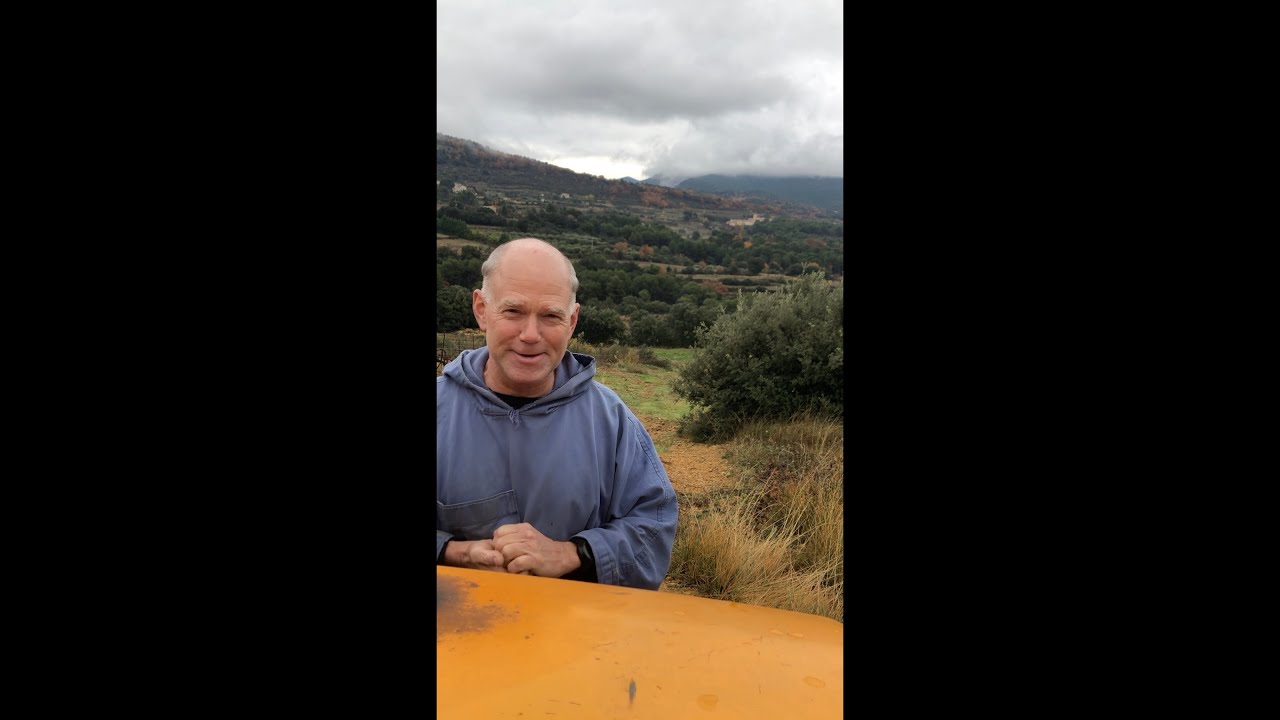
The traditional monks of Le Barroux make wine from the revived ancient vineyards of the Avignon Popes. I’ve had most of their selection and it is quite good. Right now they want to sell more wine because they need a new tractor. The one they have, they say, is good but it is getting dangerous to use.  Video below.   Buy a whole bunch of wine.  Give some to your priests.  With my code, 10% off.  FATHERZ10

YouTube thumbnailYouTube icon

Meanwhile, white to move and mate in two.  How long will it take you?

NB: I’ll hold comments with solutions ’till the next day so there won’t be “spoilers” for others.

Priestly chess players, drop me a line. HERE

Posted in SESSIUNCULA |
2 Comments

BONUS ROME SHOT 882 for the Octave of the Immaculate Conception

Today is the Octave of the Immaculate Conception.   As a BONUS Rome Shot, this is from The Great Roman™.   Note that the crescent Moon and Venus, separated by that wonderful Roman column are under the Virgin’s feet.  “Ipsa conteret!”

Posted in SESSIUNCULA | Tagged
1 Comment

ASK FATHER: Validity of absolution and reception of Communion in the state of grace

In light of several missives I’ve received – probably because of news about a recent confusing document – I reiterate hereunder what the Church holds to be true about the Sacrament of Penance, or Reconciliation.

From Ott’s Fundamentals of Catholic Dogma with my emphases:

§ 19. The Recipient of the Sacrament of Penance

The Sacrament of Penance can be received by any baptised person, who, after Baptism, has committed a grievous or a venial sin. (De fide.) D 911, 917.

According to the sententia communis the three acts of contrition, confession of sins and satisfaction, which form the matter of the Sacrament, are necessary for the valid reception of the Sacrament of Penance. For worthy reception the disposition of contrition is necessary in addition to faith. As this is an essential constituent part of the matter, worthy reception coincides with the valid reception.

Contrition is a necessary, constituent part of the Sacrament.  Contrition consists of three acts of the will: grief of soul, detestation, intention.  The intention of sinning no more is an obvious part of true sorrow for having sinned.   If there is no intention of amendment of life there is no true contrition.  In the absence of that intention, the sacrament absolution is not valid because the person is not disposed to receive it.

Contrition can be more perfect (sorrow for sins because of love of God), or less perfect (sorrow for sins because of fear of Hell).   Either of these are sufficient for valid reception of absolution.    When contrition is less perfect, it is often called attrition.

Perfect contrition bestows the grace of justification on the mortal sinner even before the actual reception of the Sacrament of Penance.  However, the extra-sacramental justification is effected by perfect sorrow only when it is associated with the desire for the Sacrament. (De fide.)   Again, there must be detestation of sin and the intention of amendment.

Moreover, the Church’s power to forgive sins extends to all sin without exception. (De fide.)  This means that there is no sin that we little mortals can commit that is so bad that God with His infinite power cannot forgive.  The Church’s ministers of this Sacrament (bishops and priests with faculties) absolve with Christ’s own power.

HIS DICTIS

A Catholic who is properly disposed can receive Holy Communion.  We are body and soul.  We are disposed in body by the Eucharistic fast (though certain circumstances mitigate this obligation).  We are disposed in soul by being in the state of grace (knowing you are not in the state of grace means no Communion).  Improper reception of Holy Communion, knowing and willed, is the sin of sacrilege.  It is very grave because the Eucharist is the most sacred of all possible things, the Body, Blood, Soul and Divinity of Christ.

There is no greater gift than the opportunity to receive Communion in the state of grace.

Hence, we see the necessary connection between the Sacrament of Penance and any hope for a Eucharistic Renewal.  Moreover, we understand that any Catholic, regardless of past sins and present state of life, can receive Communion with the sole caveat that care must be take to avoid any scandal or confusion.

With these few basic principles pretty much every “what if…” can be resolved without too much effort.

Examine your consciences and GO TO CONFESSION.

Posted in ASK FATHER Question Box, Hard-Identity Catholicism, SESSIUNCULA, The Drill | Tagged ,
4 Comments

WDTPRS – “Gaudete” 3rd Sunday of Advent: All the orations!

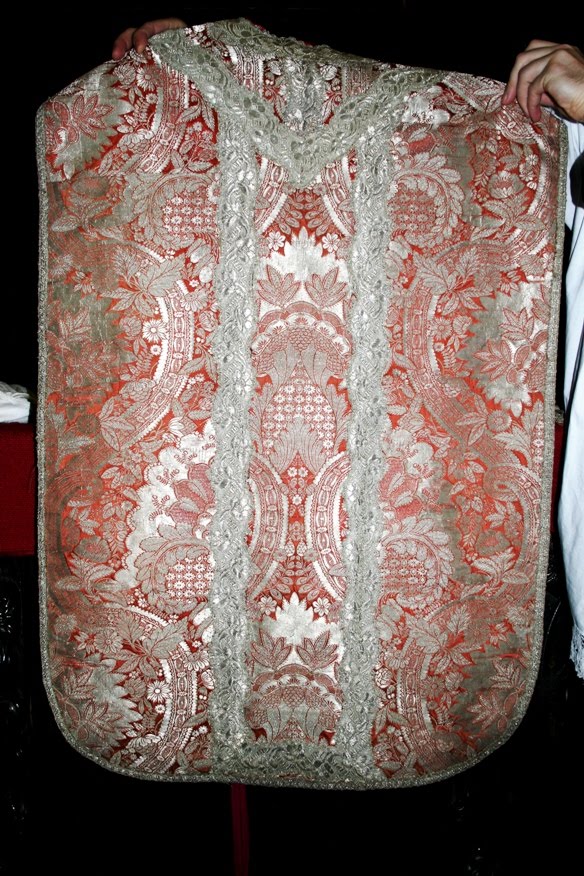
This Sunday’s nickname, “Gaudete” means “Rejoice!”  Gaudete, an imperative of gaudeo and the first word of the Introit chant, sets the theme in the Novus Ordo and the older, Traditional Mass: joy.

Advent is not strictly a penitential season the way Lent is.  Since Advent is about Lord’s Second Coming, not just His joyful First at Bethlehem, we also prepare through penance, joyful penance, or maybe penitential joy.  We sing Alleluia but not the Gloria.  During Advent flowers and ornaments are put aside and musical instruments are not to be used, except organ to sustain congregational singing… except for today, when the discipline is relaxed.  Gaudete parallels Laetare Sunday in Lent (which also means “Rejoice!”). Therefore, today is the only other Sunday we have rose (rosacea) colored vestments.

Let’s move along to our prayers.

COLLECT (1962MR):

Aurem tuam, quaesumus, Domine, precibus nostris accommoda:
et mentis nostrae tenebras, gratia tuae visitationis illustra.

The multi-volume Corpus orationum says this prayer was, with variations, in numerous ancient manuscripts.  The mickle Lewis & Short Dictionary says accommodo means “to fit or adapt one thing to another, to lay, put, or hang on”.  In English “accommodations” are a place suited to our living needs.  An “accommodating” person adjusts his world to suit our exigencies.  In relation to property accommodo means: “to lend it to one for use”.  In Classical Latin it is found, as in today’s prayer, with “ears”.  Think of Marc Antony crying out in Shakespeare’s Julius Caesar (III,ii) , “Friends, Romans, countrymen, lend me your ears”.  Mens means “the conscience” as well as “a plan, purpose, design, intention”.  Mens points to our heart, mind and soul.

LITERAL VERSION:

O Lord, lend your ear to our prayers, we beseech you, and by the grace of your visitation, illuminate the shadows of our mind.

God is infinite.  Yet it is possible for us to call on a loving God to condescend and adapt to our needs.  Our prayers, which our own for our benefit, are intricately bound with God’s eternal self-knowledge, plan and providence.  In the case of God “hearing” us, He knows what we want better than we know it ourselves.  Consider also that the eternal Word, uttered from before time, is in our prayers and good words and deeds, echoing back to the Father.  If we are images of God, especially in our mens, God should be able to hear and recognize Himself in us.  Our neighbor should look at us and hear us and see God reflected.

A second image in the prayer is from the contrast of illumination and darkness.  Christ, the light to our darkness, moral and intellectual, is coming.  With grace He adapts our minds and hearts to receive what is necessary for salvation.  He adapts to us, in His incarnation.  He adapts us to Him by grace.
SECRET (1962MR):

Devotionis nostrae tibi, quaesumus, Domine, hostia iugiter immoletur: quae et sacri peragat instituta mysterii, et salutare tuum in nobis mirabiliter operetur.

This prayer is in the ancient Gelasian among Advent prayers and in the Veronese Sacramentary during September for the “fast of the seventh month” (Latin septem “seven”).  It survived the post-Conciliar reform, and is in the Novus Ordo with potenter for the older mirabiliter.

Iugiter is an interesting adverb.   A iugum is a “yoke”, which harnesses oxen to a plow.  The iugum was the symbol of defeat.  Romans would force the vanquished to pass underneath to symbolize that they had been subjugated.  Our present iugiter means “always” or “continuously”, since by it actions are “yoked” together, one after another.

Immolo means “to sprinkle a victim with sacrificial meal” (as in grain) and also “to bring as an offering, to offer, sacrifice, immolate.”  Perago means essentially, “to pass through” and is construed as “to thrust through, pierce through, transfix” and hence “to slay.”  Also it means “to carry through, go through with, execute, finish, accomplish, complete.”  The Latin liturgical dictionary Blaise/Dumas says perago suggests continuous action.  Operor is “to work, have effect, be effectual, to be active, to operate.”

LITERAL TRANSLATION:

We now beg, O Lord, let there be offered up to You continuously the sacrificial victim of our devotion, which may both carry through the actions of the sacred mystery that was instituted, and wondrously effect for us Your salvation.

Do not forget this, O Catholic reader.  What does “wondrously effect for us Your salvation” really mean, if we do not as a consequence embody that effect, echo these words and sacred actions in our daily lives and works of mercy?  The Communion Antiphon drives this home.  This Sunday we hear Isaiah 35:4: “Dicite pusillanimes: confortamini et nolite timere…  Say to those who are of a fearful heart, ‘Be strong, fear not! Behold, your God will come with vengeance, with the recompense of God. He will come and save you.’”

This is meant not for us to hear and rejoice in, but also to hear and act upon.

We will all be called to account for how we treated the Lord’s gifts, how we shared them … or not.  Will you participate and Mass and then not attend to the salvation of others?  St. Basil “the Great” of Caesarea (+379), preaching about the obligation of Advent almsgiving said:

“The command is clear: the hungry person is dying now, the naked person is freezing now, the person in debt is beaten now – and you want to wait until tomorrow?”

After the Antiphon the priest intones today’s…

POSTCOMMUNIO (1962MR):

Imploramus, Domine, clementiam tuam: ut haec divina subsidia, a vitiis expiatos, ad festa ventura nos praeparent.

Again this is from the Gelasian Sacramentary.  It is also in the Novus Ordo, but rearranged with a slight change to improve the rhythm: “Tuam, Domine, clementiam imploramus…”.  It is also nice to start with God (Tuam) rather than with us (imploramus).
L&S indicates that clementia, is “a calm, tranquil state” and, “indulgent, forbearing conduct towards the errors and faults of others, mercy.”  It is a form of address, “Clementia Tua…Your Clemency”, like “Your Majesty”.  Subsidium means “the troops stationed in reserve in the third line of battle (behind the principes)” and thus “support, assistance, aid, help, protection”.   A vitium is “a fault, defect, blemish” and consequently, “a moral fault, failing, error, offence, crime, vice”.  Expio means “to make satisfaction, amends, atonement for a crime or a criminal; to purify any thing defiled with crime; to atone for, to expiate, purge by sacrifice.”

LITERAL TRANSLATION:

We implore Your mercy, O Lord, that these divine supports may prepare us, purified from our faults, for the coming feast days.

During Holy Mass today we anticipate the joy of Christmas with flowers, instrumental music, and rosacea vestments.  At the end, however, comes a stark prayer, spare, a reminder our sins.

We hear military language (subsidia). We are soldiers engaged in spiritual warfare.  In the Latin Rite, Holy Mass ends abruptly.  Seconds after this the priest will literally order us to get out, to go back into the world to our work: “Ite! missa est…  Go!  Mass is over!”, and bless us for our tasks. There must be continuity between the reception of Communion and our daily lives.

Today’s prayers, in both the Traditional Missale Romanum and in the Novus Ordo, speak to us from our ancient Roman Catholic origins.  And they continue them.   Is that not what the traditionally minded Catholic desires?  As a result, desire for these prayers, putting so much stock in them, demands a response according to the heart and mind of the prayers.

When these prayers were first uttered in the Roman liturgy, during Advent, Christians denied themselves in fasting in order to share more generously with the poor.  St. Leo I “the Great” (+461) was Pope when these prayers were probably coming into use.  Leo’s thought must help us understand what these prayers really say.

What did Leo think of Advent?   Hear him now in a sermon on the Advent fast:

“What can be more salutary for us than fasting, by the practice of which we draw nearer to God, and, standing fast against the devil, defeat the vices that lead us astray.  For fasting was ever the food of virtue.  From abstinence there arise chaste thoughts, just decisions, salutary counsels.  Through voluntary suffering the flesh dies to concupiscences, the spirit waxes strong in virtue.  But as the salvation of our souls is not gained solely by fasting, let us fill up what is wanting in our fasting with almsgiving to the poor.  Let us give to virtue what we take from pleasure.  Let abstinence of those who fast be the dinner of the poor.

Posted in SESSIUNCULA |
2 Comments

Daily Rome Shot 881 – Video!

Please remember me when ? CHRISTMAS ? shopping online. Thanks in advance. US HERE – UK HERE  These links take you to a generic “catholic” search in Amazon, but, once in and browsing or searching, Amazon remembers that you used my link and I get the credit.  WHY?  This helps to pay for insurance (massively hiked for next year), utilities, groceries, all the necessities.  You get the items you need and, at no extra cost to you, you provide important help for which I am grateful.

This is amazing.   It is the main altar of Ss. Trinità dei Pellegrini in my beloved Regola neighborhood in Rome.  Today is the feast of the saint in the main altar, St. Anthony, martyr.

Also, I received fabulous photos of the parish’s presepio, one of the finest in Rome.

Sample… because I can’t wait to start sharing them…

Click for larger.

It’s white’s move.  Mate in 2.

NB: I’ll hold comments with solutions ’till the next day so there won’t be “spoilers” for others.

Priestly chess players, drop me a line. HERE

Meanwhile, I think he must have heard me … and half the world, too, I hope.

What a difference a day makes.

Finally…

Welcome registrant:

Sunisyde

Posted in SESSIUNCULA |
9 Comments

Daily Rome Shot 880

Please remember me when CHRISTMAS shopping online. Thanks in advance. US HERE – UK HERE  These links take you to a generic “catholic” search in Amazon, but, once in and browsing or searching, Amazon remembers that you used my link and I get the credit.

In Toronto, the Set 1 of the Semifinal was yesterday. My guy Wesley So had a hard day against Nodirbek, winning his first and then losing two. Magnus… sheesh.. in one game against Fabi he blundered a queen and then won. Here’s a comment from Wesley.

Black to move. What are your next few moves to bring victory within reach?

NB: I’ll hold comments with solutions ’till the next day so there won’t be “spoilers” for others.

Priestly chess players, drop me a line. HERE

Posted in SESSIUNCULA |
4 Comments