Daily Rome Shot 795

Right now, the relic of the arm of St. Jude the Apostle is being brought on a tour of these USA. Schedule HERE

However, the church, above, is where the relic is usually kept and venerated.

Bonus shot.  A side chapel.

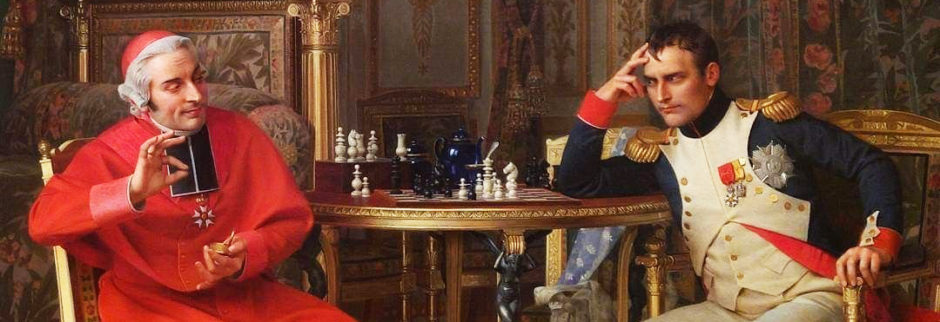
Meanwhile,… black is threating mate in the corner.  White to move.  What to do?


NB: I’ll hold comments with solutions ’till the next day so there won’t be “spoilers” for others.

Your use of my Amazon affiliate link is a major part of my income. It helps to pay for insurance, groceries, everything. Please remember me when shopping online. Thanks in advance.  US HERE – UK HERE

Yesterday Magnus buried Nepo in Speed Chess.  MVL beat Nihal Sarin.  Today, Sam Shankland and Wesley So have played in the under bracket but I don’t know the outcome.  I’m hopefull.

In OTB today I had a long battle against probably the strongest player in the club, from Romania.  Eventually, we swapped down and he had an extra pawn.  Hence, I am garbed in the disheveled rags of the mourning dust-laden outcast.   You could cheer me up by making a donation for victuals, etc., for my upcoming Roman sojourn.

Remember the good Dominican Sisters of Summit!

Posted in SESSIUNCULA |
5 Comments

WDTPRS – 16th Sunday after Pentecost: We need grace so as not to fail in the vocations God entrusts to us

NADAL_16_post_Pent-lrThis Sunday’s dense Collect survived the scissors and paste-pots of the Consilium during the 1960’s and lived on in the post-Conciliar Missale Romanum as the 28th Sunday of Ordinary Time. This prayer, used for centuries, is in the Sacramentarium Hadrianum, a form of the ancient Gregorian Sacramentary.

COLLECT (1962MR):

Tua nos, quaesumus, Domine, gratia semper et praeveniat et sequatur, ac bonis operibus iugiter praestet esse intentos.

Elegance.

This is a lovely prayer to sing. Latin’s flexibility, made possible by the inflection of the word endings, allows for amazing possibilities of word order. Latin permits rich variations in rhythm and conceptual nuances. For example, the wide separation of tua from gratia in the first line is a good example of the figure of speech called hyperbaton: unusual word order to produce a dramatic effect. It helps the prayer’s rhythm and emphasizes tua gratia. The use of conjunctions et and ac is very effective, as we shall see below.

The juxtaposition of praeveniat with sequatur reminds me of a prayer I used to hear at my home parish, greatly missed. The Tuesday night devotions there, which featured the Novena of Our Mother of Perpetual Help by St. Alphonsus Liguori (+1787), always included:

“May the Lord Jesus Christ be with you that He may defend you, within you that He may sustain you, before you that He may lead you, behind you that He may protect you, above you that He may bless you. In the name of the Father, the Son and the Holy Spirit.”

Let’s drill into vocabulary.

The adjective intentus, means “to stretch out or forth, extend” as well as “to strain or stretch towards, to extend.” Think of English “tend towards”. The action packed Lewis & Short Dictionary states that intentus is also “to direct one’s thoughts or attention to.”

Looking at a word like this should convince any of you with children that they must study Latin. A firm grip on Latin will give shape to their ability to reason and provide insights into the meaning of our English words. Roughly 80 percent of the entries in an English dictionary reveal roots in Latin. Over 60 percent of all English words have Greek or Latin roots. Over 90 percent in the sciences and technology. Some 10 percent of Latin vocabulary merged into English without an intermediary language such as French. Words from Greek origin often entered English indirectly through Latin.

Give your children, and yourselves, this splendid tool.

Latin has several particles that join parts of sentences and concepts together: et, – que, atque or (ac), etiam, and quoque. These little words all basically mean “and” but they have their nuances. For example, et simply means “and” while – que (always “enclitic”, i.e., tacked onto the end of a word) joins elements that are closely enough associated that the second member completes or extends the first. Another conjunction, atque (a compound of ad and – que) often adds something more important to a less important thing. The useful Gildersleeve & Lodge Latin Grammar points out that “the second member often owes its importance to the necessity of having the complement (- que).” Ac, a shorter form of atque, does not stand before a vowel or the letter “h” and is “fainter” than atque. Ac is much like et. Briefly, etiam means “even (now), yet, still”. Etiam exaggerates and precedes the words to which it belongs while quoque is “so, also” and complements and follows the words it goes with. There are some other copulative particles or joining words, but that is enough for now.

Let’s nitpick some more.

Our Collect has two adverbs, semper and iugiter. Semper is always “always”. Iugiter, however, means “always” in the sense of “continuously.” A iugum is a “yoke”, like that which yokes animals together. Iugum (English “juger”, a Roman unit for land measuring 28,800 square feet or 240 by 120 feet), is probably so named because it was plowed by yoked oxen. Moreover, Iugum was the name of the constellation Libra, the Latin for “scale, balance”. Ancient scales had a yoke-shaped bar. Thus, libra is also the Roman the weight measure for “pound”. Ever wonder why the English abbreviation for a pound is “lbs”?

The iugum was the infamous ancient symbol of defeat. The Romans would force the vanquished to pass under a yoke to symbolize that they had been subjugated. Variously, iugum also means a connection between mountains or the beam of a weaver’s loom or even the marriage bond.

Today’s adverb iugiter means “always”, in the continuous sense, because of the concept of yoking things together, bridging them, one after another in a unending chain. We get this same word in the famous prayer written by St. Thomas Aquinas (+1274) used at Benediction of the Blessed Sacrament which is the Collect for Corpus Christi:

“O God, who bequeathed to us a memorial of Thy Passion under a wondrous sacrament, grant, we implore, that we may venerate the sacred mysteries of Thy Body and Blood, in such a way as to sense within us constantly (iugiter) the fruit of Thy redemption.”

LITERAL WDTPRS TRANSLATION:

We beg, O Lord, that Your grace may always both go before us and follow after, and hence continuously grant us to be intent on good works.

OBSOLETE ICEL (1973):

Lord,
our help and guide,
make your love the foundation of our lives.
May our love for you express itself
in our eagerness to do good for others
.

Yes… I did a double-take too.  It is a nice little prayer for use on a grade school playground.

CURRECT ICEL (2011):

May your grace, O Lord, we pray, at all times go before us and follow after and make us always determined to carry out good works.

Back to happier things: copulative particles!

It is important not to get overly picky about particles or exaggerate their nuances. Still, today these conjunctions could be important. That et…et is a classic “both…and” construction. But our Collect has et…et…ac…. The et…et joins praeveniat and sequatur. That pair of verbs is followed by an ac. The author was providing more than a simply change of pace. While ac is not a very strong conjunction, the variation leads to a logical climax of ideas. This is why I add “hence” to my literal version.

As you read or, better yet, listen to the prayer being sung, attend to that tua gratia (“your grace”), underscored by means of hyperbaton. First, that “tua gratia” can be an ancient form of honorific address, as used today in some countries for nobility and certain prelates: “Your Grace”. So, in speaking of the gift, we speak of God Himself. Moreover, tua gratia is the subject of all the verbs. We beg God, by His grace, always to be both before us and behind us. We pray for this in order that we may always be attentive to good works. Our good works bound up in His grace.

Also, we can’t see that word praeveniat in relation to God’s assistance and not think also of prevenient grace, or preceding grace.  St. Ambrose and then St. Augustine posited, and this was confirmed by the Second Council of Orange (529), that, before we believe, before we answer a calling, God gives us the grace which helps us to believe, helps us to answer.    Prevenient grace aids a preparation of the will to respond.  One way of putting it is that it frees up our free will.   In the case of those who have fallen out of grace through mortal sin, prevenient grace disposes us to turn back to God and to assent freely to.   In the CCC 2670 we read:

“No one can say ‘Jesus is Lord’ except by the Holy Spirit.” Every time we begin to pray to Jesus it is the Holy Spirit who draws us on the way of prayer by his prevenient grace. Since he teaches us to pray by recalling Christ, how could we not pray to the Spirit too? That is why the Church invites us to call upon the Holy Spirit every day, especially at the beginning and the end of every important action.

We rely on grace so as not to fail in the vocations God entrusts to us.

God gives all of us something to do in this life.

If we attend to our work with devotion He will give us every actual grace we need to accomplish our tasks. He knew us and our vocations from before the creation of the cosmos, and thus will help us to complete our part of His plan, so long as we cooperate. Living and acting in the state of grace and according to our vocations we come to merit, through Jesus Christ’s Sacrifice, to enjoy the happiness of the heaven for which God made us.

In our prayer we recognize that all good initiatives come from God. When we embrace them and cooperate, it is He who ultimately brings them to completion. He goes before. He follows after. Our good works have merit for heaven only because God inspires them, informs them, and brings them to a good completion. He works through us, His knowing, willing, loving servants. The good deeds are truly ours, of course, and therefore the reward for them is ours. But God freely shares with us His merits so that our works are meritorious.

Today’s Collect stresses how important our good works are for our salvation. They are manifestations of God’s grace, indeed, of God’s presence.

We pray God will lavish His graces on us. In turn, we should be generous with our good works.
Posted in Liturgy Science Theatre 3000, Our Catholic Identity, WDTPRS |
5 Comments

15 September: Feast of the Seven Sorrows of Mary – The “Our Lady of Sorrows Project”

Today, the day after the Feast of the Exaltation of the Cross, is the Feast of Seven Sorrows of the Blessed Virgin Mary.  There is an analogous commemoration on Friday after 1st Passion Sunday.

Some time ago, I wrote a series of reflections on the Seven Sorrows of the Blessed Virgin.  I invite you to have a look.

Our Lady of Sorrows Project

Here are links to the individual posts

1st Sorrow – The Prophecy of Simeon
2nd Sorrow – The Flight into Egypt
3rd Sorrow – The loss of the Child Jesus in Jerusalem
4th Sorrow – Mary meets Jesus on the way to Calvary
5th Sorrow – The Crucifixion of Jesus
6th Sorrow – The Piercing of the Side of Jesus, and His Deposition
7th Sorrow – The Burial of Jesus

At the famous Basilica in Rome, Santo Stefano Rotondo we find this well-known image:

Posted in Our Solitary Boast | Tagged
2 Comments

Daily Rome Shot 794

White to move and mate in 2.

NB: I’ll hold comments with solutions ’till the next day so there won’t be “spoilers” for others.

Your use of my Amazon affiliate link is a major part of my income. It helps to pay for insurance, groceries, everything. Please remember me when shopping online. Thanks in advance.  US HERE – UK HERE

In chess news, Fabiano Caruana is the present leader by points in the FIDE Circuit which is the path to qualify to play in the Candidates Tournament (the winner going on to play against the present World Champ, Ding Liren). Each player must play in a minimum of five eligible tournaments by the end of the year. The final FIDE Circuit point score will be calculated as the sum of a player’s five highest event scores. The spot in the Candidates goes to the highest-ranked Circuit player who has not already qualified from the FIDE World Championship Match.

Posted in SESSIUNCULA |
6 Comments

REMEMBER! There’s only ONE expression of the Roman Rite. You can’t have your Vetus! It’s all Novus! All the time!

UPDATE 16 Sept ’23

Over at NLM there is a pure satire gold post that might make you snort Mystic Monk Coffee out your nose. HERE

It concerns the approval by Rome of the use of animal skins and parts – replacing the traditional liturgical colors, of course – to celebrate the liturgy of creation.

[…]

The official Latin text is still being composed (it will be called Risu dignum et justum), but a special note has already been released, which recommends the black-and-white striped hide of the quagga as a profound and meaningful expression of the unity of the Paschal mystery, and therefore especially appropriate for funerals. (It is left to the local episcopal conferences to determine which extinct animals’ hides will be most profoundly significant and meaningful for use in funeral liturgies; they are, however, strictly forbidden from making any such determination without the approval of the Sacred Congregation for Rites, to be requested in writing.)

[…]

See the rest there.

I could kick myself for not coming up with this myself.  Kudos.


Originally posted Sep 14, 2023 at 17:56

From the Italian site Messa in Latino.

A bishop in the Puglia region (heel of the boot), Most. Rev. Nicola Girasoli, celebrated a Mass for the anniversary of ordination of one of the diocese’s pastors (parish priests). Girasoli had been, is, a Nuncio. Photos are available at the Fakebook page of the Cathedral of the Diocese of Ruvo di Puglia. MiL helps us out by putting them on their page.

Leopard skin.  Very tricky.  You have to have the right complexion.

The gray of his street clothes – so typical of Italian clergy – is a better contrast to the spots than that nasty cream-colored polyester alb with the fashion-fatal zipper in the front.

You can have this.

But you can’t have this!

Posted in Liturgy Science Theatre 3000 |
26 Comments

Clarifications clarify the clarity of the clearness clarified.

I’m torn.  I really am.

On the one hand, don’t you wish they would just stop talking?  Stop writing?

For example, the new guy to head up the Dicastery (yeah, that’s what we call it now) for the Doctrine of the Faith, you know… the one who wrote the creepy book for young people about kissing … recently took a shot at people who are apprehensive about the up-coming Synod on Synodality (“walking together about walking-together-ity”).

For example, Archbp. Fernandez said in July that it is his job to ensure that people “accept the recent Magisterium” (7 July).

“It can happen that answers are given to certain theological issues without accepting what Francis has said that is new on those issues,” Fernández said. “It’s not only inserting a phrase from Pope Francis, but allowing thought to be transfigured with his criteria. This is particularly true for moral and pastoral theology.”

The recent Magisterium.

Fernandez talked to Ed Pentin who about asked him about that “recent Magisterium” thing (11 Sept).  Fernandez responded with

In this case, we are not talking about a deposit, but about a living and active gift, which is at work in the person of the Holy Father. I do not have this charism, nor do you, nor does Cardinal Burke. Today only Pope Francis has it. Now, if you tell me that some bishops have a special gift of the Holy Spirit to judge the doctrine of the Holy Father, we will enter into a vicious circle (where anyone can claim to have the true doctrine) and that would be heresy and schism.

“the doctrine of the Holy Father”

So, there’s the “recent Magisterium” and “the doctrine of the Holy Father”.

Now we read, today (14 Sept.) that Fernandez has responded to criticisms of that “doctrine of the Holy Father” notion, saying he was simply referring to the Lord’s “special assistance” to popes to confirm the brethren in the faith.

So, the “doctrine of the Holy Father” = “the special assistance” that the Successor of Peter has “to confirm the brethren”.

“This is an important clarification,” [Fernandex] contended, “because it is precisely the recent magisterium that engages in dialogue with the current circumstances of the world and the Church, with its culture and challenges. The magisterium is not a mere ‘deposit,’ but is also a living gift that is active through Francis.

“If the magisterium is also able to enlighten us in our pilgrimage at this moment in history,” he added, “we must allow ourselves to be guided by its recent and current interventions, and there is no doubt that this is tantamount to continuing to drink from that bottomless well that is ever-present and ever-relevant Revelation.

However, when Francis appointed Fernandez he wrote in a letter that his role as Prefect was not to go after doctrinal errors but rather to encourage theological dialogue.

Quaeritur: If one disagrees with something of the living-flowing-clarifying “doctrine of the Holy Father”, what’s the Dicastery to do?   What about those who insist on sticking with the “non-recent Magisterium” rather than the “recent”?

To sum up, the role of Successor of Peter is to make things clearer, to “confirm the brethren”.

And the role of the Dicastery is, well, to make things clearer.

Channeling one’s inner Reagan, one might ask, “are things clearer now than they were ten years ago”?

Circling back to the top, I’m torn, I’ll tell you.  I really am.

On the one hand, don’t you wish they would just stop talking?  Stop writing?

On the other hand… no, please, just keep going.

Posted in The Drill, The future and our choices, What are they REALLY saying?, You must be joking! | Tagged
13 Comments

Card. Müller calls the October Synod (“walking together”): “the great hour of manipulation”

Gerhard Card. Müller gave an interview to a Spanish outlet Infovaticana.   The questions were good and the answers were HARD HITTING.

Diane Montagna did a translation and posted it on Twitter.

Here is an excerpt:

Q-There are some voices that have criticized the presence of the laity in this synodal Assembly.

Müller-The bishops participate in their office by exercising collegial responsibility for the whole Church together with the Pope. If the laity participate in it with the right to vote, then it is no longer a synod of bishops or an ecclesiastical conference [and] does not have the apostolic teaching authority of the episcopal college. To speak of a Vatican Council III can only occur to an ignorant person, because from the outset a Roman Synod of Bishops is not an ecumenical council—which the Pope could not subsequently declare without ignoring the divine right of the bishops to a Vatican Council III—that could fni ind a new Church surpassing or completing the one supposedly stagnated at Vatican Council II.
Whenever populist effects tip the balance towards such spontaneous decisions, the sacramental nature of the Church and its mission is obscured, even if subsequent attempts are made to justify it through the common priesthood of all believers, and to eliminate the substantial difference between it and the priesthood of sacramental ordination (Lumen Gentium 10).

Q-Are there more and more bishops and faithful expressing concern about what might happen during this Synod?

Müller-Yes, the false prophets (nebulous ideologues) who present themselves as progressives have announced that they will turn the Catholic Church into an aid organization for the 2030 Agenda. In their opinion, only a Church without Christ fits into a world without God. Many young people returned from Lisbon disappointed that the focus was no longer on salvation in Christ, but on a worldly doctrine of salvation. Apparently, there are even bishops who no longer believe in God as the origin and end of man and the Savior of the world, but who, in a pan-naturalistic or pantheistic way, consider the so-called Mother Earth as the beginning of existence, and climate neutrality as the goal of planet earth.


Posted in SESSIUNCULA | Tagged ,
7 Comments

Daily Rome Shot 793

They saw the Synod (“walking together”) list.

Welcome new registrant:

Chatty CAThy

Meanwhile, black (Vishy Anand) tries for a King walk to the other side.  Ooops.  White to move and mate in three.

NB: I’ll hold comments with solutions ’till the next day so there won’t be “spoilers” for others.

Priestly chess players, drop me a line. HERE

Your use of my Amazon affiliate link is a major part of my income. It helps to pay for insurance, groceries, everything. Please remember me when shopping online. Thanks in advance.  US HERE – UK HERE

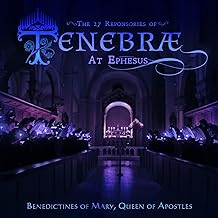
Since today is Exaltation of the Cross, I remind you of the marvelous recording of the Tenebrae Responses by the Benedictine Nuns of Gower Abbey. Wow.

Tenebrae at Ephesus

US HERE – UK HERE

Arguably, the most beautiful chants of the entire liturgical year.

The Speed Chess tournament: yesterday Wesley So defeated Alireza Firouzja in a nail biter. Wesley was way our in front after the 90 minutes of 5+1. Firouzja caught up in 60 of 3+1 and 30 of 1+1. After tie breaks they went to Armageddon and Wesley did it. 4 hours. 32 games. There was an amazing move. Entire match video HERE.

Today, Ian Nepomniachtchi v. Arjun Erigaisi.  Should be a blast. Also, in Berlin, the Armageddon Grand Finale begins today 19:00 CEST (13h EDT). HERE

BTW… today happens to be a very lean day for donations, for this 14th day of the month.  Please consider signing up?  There are various ways, such as Zelle, Venmo and Wise, but this one works well. A few more on this day would brighten things up considerably.


Some options


Posted in SESSIUNCULA |
2 Comments

Fr. Antonio Spadaro, SJ, leaves La Civiltà Cattolica to become “Under-Secretary” at Dicastery for Culture and Education

La Civiltà Cattolica is a Jesuit run, Secretariat of State approved journal with semi-official status.   Spadaro has been at LCC for 25 years, 12 as director.

The “Dicastery” – that’s what Congregations are now called.  All offices of the Curia were/are in a sense “dicasteries”, but the titles are formalized now.  The Congregation for Catholic Education (and what a great job they did) was merged with the Pontifical Council for Culture (such accomplishments!) to form one Dicastery.   The Council was, however, the overseer of the Vatican Cricket Team.  Not sure how they are doing.

The new head of La Civiltà Cattolica is another Jesuit, the rector of the Gregorian University, Fr Nuno da Silva Gonçalves, SJ.

During his time at LCC, Spadaro co-authored with a protestant Miguel Figueroa one of the craziest things we’ve ever seen for which he owes virtually every American an apology: “Evangelical Fundamentalism and Catholic Integralism: A Surprising Ecumenism”.  In effect:  Evangelicals and Catholic are haters, that is, that their social/political alliance is really an “ecumenism of hate”.  More HERE

So, off he goes to be Under-Secretary, a position whence he will be able to report all the inner doings of the Dicastery to Francis.

There was a time when we couldn’t see anything newsy about Rome without seeing Spadaro in it.  Then he sort of faded, or was shoved, into the background.  He remerged, made a real splash, and is now off to a new job, so near and yet so far from Casa Santa Marta.

It is interesting that this appointment come so quickly after Spadaro’s blasphemous sermon/article about the Lord and the Syrophoenician woman in Matthew 15. HERE

Il Messaggero opines that this new position will still allow Spadaro to travel with the papal entourage and transcribe every precious and greatly anticipated gab session with local Jesuits along the way. The article relates many and various weird things Spadaro has gotten into in his years at LCC, a journal which historically was the conscious consummation of intellect and diplomacy.

I wonder if Spadaro will still have the time to maintain his website about Pier Antonio Tondelli.


Posted in Jesuits, The Drill | Tagged
3 Comments

14 September: Exaltation of the Cross and Anniversary of Summorum Pontificum. Wherein Fr. Z rants.

Today, the Feast of the Exaltation of the Cross, is also the anniversary of the 2007 Summorum Pontificum going into effect.  This Motu Proprio – the Emancipation Proclamation for the faithful who desire the Vetus Ordo – was a keystone in Pope Benedict XVI’s program – I think it was a meditated program – for the renewal of Catholic identity and the life of the Church.

We are our rites.

Ratzinger/Benedict knew that the artificially cobbled up and brutally imposed post-Conciliar Novus Ordo interrupted the sacred worship of the Church without which we cannot fulfill the virtue of Religion.

If the virtue of Religion is absent, disorders in the Church will result.  Change the way we pray and the way we believe and live will, over time, change.

Since the Eucharist – that is, the Sacrament Itself and its celebration which is Holy Mass – is the “source and summit” of our Catholic identity and life, change the Mass and you cause massive waves in the Church.  Do it in a discordant way and with an artificial replacement, and the results will follow suit, as we have seen for some 50 years.

The imposition of the Novus Ordo did not only interrupt the Church’s life, it interrupted the organic development of liturgical worship, the kind that is necessary and prudent for a Church still in this vale of tears.

Correctives were and are – now more than ever before – necessary.

I think the idea of Eucharistic Congresses, etc., is great and necessary.  However, there will always be something missing if the Vetus Ordo is not also celebrated.

Hence, even after its seeming suppression Summorum Pontificum was and is still of monumental importance for the life of the Church today.

This is because, from 2007 until the attempts to crush the faithful who want the Vetus Ordo began in earnest, many thousands of committed Catholics learned of this way of prayer from our forebears.  Also, the internet and entrepreneurial ventures put all the tools people needed into their hands swiftly and economically.

In the 80’s and 90’s it was near impossible to find a Missale Romanum or information about what to do.  Now… this is no longer a problem.  It’s a wholly new landscape, and not one entirely controlled by modernists.

There will be more acts of persecution wrapped in weasel words and the faux-pastoral clucking and lisping about unity.

We must get through them with charity and our jaws set against the next pastoral uppercut.   And we can see more and more the vicious determination of powerful figures to cut down in the Church the people who want the Traditional Latin Mass.

Pressing and widespread problems plague the Church right now.  Hence it is hard to square the fury they’re applying to what they call a tiny fraction of the world’s Catholics.  It proves that the Vetus Ordo is of key importance.  They must feel threatened by something of which the Mass is for them a terrifying reminder

Stay strong and resolved and cheerful even as those who should be aiding you turn on you or, in cowardice, buckle.   What we needed to do before, we need to keep doing now.  Be the first in parishes to volunteer, especially involving works of mercy.  Make sure you know well your Faith and that you are not static, but in motion forward, always reviewing and learning more.  Show your joy in being Catholic and traditional.  Be inviting to others.

Never underestimate the power of an invitation.

All this to honor and to exalt the Cross.

Thank you, Benedict XVI, for such a great gift to the Church.

Posted in ¡Hagan lío!, "How To..." - Practical Notes, Be The Maquis, Benedict XVI, SUMMORUM PONTIFICUM, The Coming Storm, The future and our choices |
4 Comments