Note from a reader: first confession in 19 years! Wherein Fr. Z rants.

I nag you to…

GO TO CONFESSION!

I received a note today which made my day.

Father Z,

Today, on the Feast of Our Lady of the Rosary, I went to Adoration and Confession. It was my first time going to Confession in nineteen years! When I said as much, Father exclaimed, “Wow! Nineteen years! God must have been chasing you for a while.” That He has. I talked myself out of going for too many years and I am sorry it took so long. Thank you for your persistent reminders to go. There are not enough words to express my gratitude.

May God bless you immensely!

You get …

Everyone, for the love of God…

GO TO CONFESSION!

There is no sin that we little mortals can commit that our all-powerful and loving God will not forgive, provided we ask for forgiveness.

The Sacrament of Penance was established by Jesus Christ.  He intended that this sacrament be the ordinary means through which we return to the state of grace.

No matter what you have done, Christ – in the person of the priests in the confessional – washes that sin from your soul with His own Blood.

Once you have received absolution, those sins will not be held against you in your judgement.  They are gone.   You will remember them, but their guilt is no longer with you.  You have to do penance for them, but the sins are removed, they are not just covered over or sort of kind of forgotten.  They are eradicated from your soul. They are no more.

GO TO CONFESSION!

“I absolve you from your sins…”

When was the last time you heard those words from the priest after confessing all your sins in kind and number?   Hmmm?

While we live we have the chance to get things right with ourselves, our neighbors and our God.

Get things right.

GO TO CONFESSION!

Fathers, if you don’t now offer decent times for confessions in the parish entrusted to you and if you don’t preach about this important sacrament and about sin, you are probably going to go to Hell.  And Bishops…  I fear for you if you are not promoting this important sacrament in your dioceses.  Think about your judgment.

You also had better…

GO TO CONFESSION!

Posted in GO TO CONFESSION, Just Too Cool, Our Catholic Identity, Wherein Fr. Z Rants | Tagged
3 Comments

The Altar of Chair in St. Peter’s Basilica. What a shame.

What a shame that altar was torn out.  The Altar of Chair in St. Peter’s Basilica.

I was there that morning and saw them doing it.  They hadn’t gotten the crime finished before we priests were about to say our morning Masses.  The basilica personnel tried to shoo us away.

Having the altar THERE was a theological statement. Although, having the hideous Paul VI altar disconnected and freestanding is also a theological choice, isn’t it. For a while there was a better Cranmer version. Now the hideous Paul VI is back.


Posted in SESSIUNCULA | Tagged
3 Comments

An act of reparation for the demonic disgracing of St. Peter’s Basilica

Last year, I posted from 4-7 October about making acts of reparation for the sacrilegious antics with the demon “Pachamama” in the Vatican Gardens and even upon the main alter of St. Peter’s Basilica.  This year, the 4-6th slip by me.

But today is the Feast of Our Lady of the Holy Rosary.

Please consider saying a Rosary in reparation for the horrors perpetrated in the Basilica, not only with the demon idol and demonic bowl (on Oct 27) back in 2019.

You might include a this, from an angel who appeared to the visionaries of Fatima. It is sometimes called the Angel Prayer.  Include that for reparation for the unseemly actions by those in favor of sodomy which were perpetrated in the Roman Church bearing the Most Holy Name, the Gesù, and then in the Vatican Basilica under the pretext of observing the Jubilee Year.

Act of Reparation to The Holy Trinity

O Most Holy Trinity, Father, Son and Holy Spirit, I adore Thee profoundly. I offer Thee the most precious Body, Blood, Soul and Divinity of Jesus Christ present in all the tabernacles of the world, in reparation for the outrages, sacrileges and indifferences by which He is offended. By the infinite merits of the Sacred Heart of Jesus and the Immaculate Heart of Mary I beg the conversion of poor sinners.

Posted in Hard-Identity Catholicism | Tagged
1 Comment

ROME 25/10 – Day 10: ASK FATHER: “What is the Ave Maria Bell?”

7:12 was when the chariot of Helios began to grace the Roman skies.

18:44 is when Pyrois, Eous, Aethon, and Phlegon will seeks their nightly stable.

19:00 is when the Ave Maria Bell should ring.

Yeah… it’s day 10, not day 8.  I got off somehow.  I guess I need remedial counting.

Yesterday I ran into a priest of my native place whom I haven’t seen for some years. At first I didn’t recognize him! We had a nice catch up. In the course of our stroll and conversing, he wondered what the Ave Maria Bell is all about. Since I usually explain the bell at least once during my Roman Sojourns, here we go again!

QUAERITUR:

“What is the Ave Maria Bell you keep mentioning?” 

The Ave Maria Bells signals the end of the “religious” day and the beginning of “religious” night.

It is rung in the ball park of 30 minutes after sunset.  Usually the Ave Maria is rung in a way not dissimilar to how the Angelus (Regina Caeli now) is rung…  3x… 4x…5x… 1x.

If the Ave Maria rings at, say, 19:00h (7PM), then 18:00h (6PM) would start the 23rd hour of the day and 19:00 would start the 1st hour of the new day’s “evening and morning”.   In Roman churches, Vespers were usually sung about an hour before the Ave Maria Bell.  Hence, in the example above, at about 18:00 at the 23rd hour.

What was the Ave Maria Bell doing for the Roman Curia?

In the Roman Curia, Cardinals who were Prefects (the offices of the Congregations had/have throne rooms, btw) and other “pezzi grossi” around the place would receive visits for an hour after the Ave Maria. An hour after the Ave Maria was rung to signal the change of religious days, another bell was struck to denote the 1st hour of the new day.

The Ave Maria could also follow the sun, and ring precisely one half hour after sunset.   So, following the sun strictly, the solar Ave Maria this evening would ring at 19:14.

To simplify this for the Curia – ’cause who had watches, right? – they adopted 15 minute cycles.  We are in the 19:00 cycle now.  Actually we are in the 18:00 cycle, which lasts from 4-13 October.  BUT… there’s the “ora legale” here, the European “daylight savings” in force which moved the hour hand forward.   On 2 November this year “ora legale” is over and we will turn our clocks back to normal.

This also ties into the old Six Hour Clocks, you can still see around Rome.  The Six Hour Clock, which divided the day in 4 parts and made a complete revolution every 6 hours, influenced the recitation of the Angelus at 06:00 – 12:00 – 18:00.   These Six Hour Clocks were adjusted daily according to solar noon.

Here’s one:

Solar noon was tracked carefully, because that is when contacts and appointments went into effect.  In the Church today, appointments still generally are designated as starting at noon.

For Solar Noon in Rome, there is a solar calendar made by a shaft of light through a tiny hole at the church of Santa Maria degli Angeli by the Piazza della Repubblica.   The light spot on the floor traces the sun’s analemma over the course of the year across a 45 meter long meridian line.  It also could track certain stars, such as Sirius, the Dog Star.  Clement XI (+1721) commissioned it to check the accuracy of the Gregorian Calendar (1582). 

That sun clock was used to determine solar noon for all of Rome: a signal would be sent from that church by means of a flag, watched for by telescope across town from the Gianicolo Hill where a cannon fired to sound noon.  It still does, everyday!  BOOM!

John L. Heilbron has a book on churches and cathedrals as solar observatories.  It is called The Sun In The Church.   Very cool.

And now back to other things.

Charlotte… yeah…

I always enjoy walking by this little church in the Via Giulia.  Why?

Because they haven’t updated the papal coat-of-arms since 1914 when Giacomo della Chiesa was elected as Benedict XV.

It is customary in Rome to place the papal arms over the main door, or, if the church has an assigned cardinal, place their arms to each side of the door.

This is also done by embassies to the Holy See.

Here, along the Via della Conciliazione, there seems to be some confusion.  Different embassies sharing the space.

Amusing: Argentina is up to date!

And now a different thing altogether.

In chessy news… there is now info about the 2025 FIDE World Cup HERE

NB: I’ll hold comments with solutions ’till the next day so there won’t be “spoilers” for others.

Priestly chess players, drop me a line. HERE

White to move and mate in 4. Good luck.

What is the tactic called that you have to use?

Posted in SESSIUNCULA |
2 Comments

Diabolical Contagion – 17th Sunday after Pentecost – WDTPRS

falling into hellIs this prayer appropriate today or what?!?

This Sunday’s Collect prayer – in the Vetus Ordo:

Da, quaesumus, Domine, populo tuo diabolica vitare contagia: et te solum Deum pura mente sectari.

So might say, “Why look at a prayer from last Sunday?”

Firstly, in a sense the prayers from Sunday are retained during the week that follows except when there is a Feast Day that outweighs the feria.  This week we have beautiful feasts every day.  Nevertheless our Sunday orations are there as a subtext.  Also, if the prayer is good, then it is a good prayer.  Simply put.  Moreover, from Sunday through, say Wednesday evening, it is a good idea to go back and review the Sunday orations and readings, to reflect on them and ask how they may be shaping your life or challenging you to make adjustments.   A brief encounter with your Sunday Mass formulary isn’t enough.  This is also way having the same formularies each year, rather than a cycle of three, is helpful.  Repetita iuvant!

Back to Sunday’s Collect for the 17th Sunday after Pentecost.

Da, quaesumus, Domine,
populo tuo diabolica vitare contagia:
et te solum Deum pura mente sectari.

So dense!  Concise.

The phrase diabolica vitare contagia is a glory of the Latin Church’s millennial life of prayer.

Note the wonder assonance and the separation of diabolica from contagia by the verb, a use of hyberbaton.

This Collect, used for centuries in the post-Tridentine Missale Romanum, is in ancient prayer books such as the Liber Sacramentorum Gellonensis, a form of the Gelasian Sacramentary.  It appears as the Collect for the Sunday after the Autumn Ember days (Spring in the Southern climes, though that wasn’t a consideration of the ancients).  As such, it would have been a time of prayer and fasting and for ordinations.

Let’s check our vocabulary to see if we can find treasures beneath the surface.

I am sure you know the words “contagion” and “contamination”.  In Latin we have, as our steadfast Lewis & Short Dictionary informs us, feminine contagio, onis, and neuter contagium, ii, or contamen, inis, which mean “a touching, contact, touch, in a good or bad sense”.  It comes then to indicate “a contact with something physically or morally unclean, a contagion, infection” and thence “an infection, pollution, vicious companionship or intercourse, participation, contamination, etc.”.  Surely those of you who were educated by the sisters or brothers lo those many moons ago in Catholic schools were warned to “avoid the company of bad friends”.  Not only is your reputation tainted with their stains but you subject yourself to their “contamination” and the near occasion of sin.

Go with bad friends, and you go down.

We won’t get into the complicated idea of mens, which can mean “mind”, but also “heart, soul”, in fact the whole of the human person in some contexts.  But we can glance at purus, the adjective for, basically, “clean, pure, i. e. free from any foreign, esp. from any contaminating admixture”.  Obviously, this can refer not only to physical cleanliness, but also moral faultlessness.  There are juridical and religious overtones as well.  For example, for the ancient Romans a thing which is purus, such as a locus purus, a “pure place”, was not just undefiled, it was unconsecrated, not sacer.  On the other hand, purus does also mean “undefiled”, in the sense that nothing dead had been there.  There had never been a funeral or burial, etc.  It is interesting how the Romans got down to brass tacks.

Then we have the verbs vitare and sectari.  While a sector, m. – the noun – is a “cutpurse”, the sort of bad friend you don’t want to follow around, the verb sector, deponent (passive form but active meaning) is “to follow continually or eagerly, in a good or bad sense; to run after, attend, accompany; to follow after, chase, pursue”.   On the other hand, a vitor is, in fact, just a “cooper; basket-maker”. We are interested in vito, which is not the name of a character in The Godfather (well… it is and it isn’t).  The verb vito means “to shun, seek to escape, avoid, evade”.  The word sort of looks like it should be related to something having to do with “life”, vita.  In reality, however, vito is shortend from vicito, having the root vic-, related to the ancient root wik in Greek eikô (“to yield”).

The important thing to follow, and not avoid, is that in our prayer there are contrasting pairs: contamination v. purity, avoidance v. association.

Each pair reveals our need to make choices and to persevere in what is right.

LITERAL TRANSLATION:

Grant, O Lord, unto Your people, to shun diabolical contamination: and with a pure soul to follow You, the only God.

As you can guess, this collect did not survive the scalpel-wielding experts of the Consilium, who sliced and diced our orations under the surveillance of the late then-Fr. Annibale Bugnini.   So, dreary!  All that out-dated stuff about the devil.  It was not in the typical edition of 1970 or the edito altera of 1975.

Then a miracle occurred.

The third edition, the 2002 Missale Romanum includes this Collect, though in nearly complete obscurity.   It took me a while to hunt it up in the 2002MR.  If you are interested, look in the section Missae et orationes pro variis necessitatibus vel ad diversa, subsection Ad diversa, 48. In quaecumque necessitate, scheme “C”, “Aliae orationes (shortcut, go to p. 1152).  The 1970 and 1975MR, both, had two schemes for Masses In quacumque necessitate (“In whatever necessity”). In the 2002MR a third was added.

The redactors of the newest edition added quite a few things, such as new schemes for vigils of important feasts and the “Prayer over the People” on the days of Lent.  It is as if they recognized that too much had been lost to the Novus Ordo.

Please, Pope Leo!  Over turn Taurina cacata!

CURRENT ICEL (2011):

Grant, we pray, O Lord, that your people may avoid the contagion of the devil and follow you, the only God, in purity of heart.

As I read and reread the Latin, and then the literal English version, the Biblical imagery of faithlessness as “adultery” or “prostitution” came to mind.  The relationship between the People and God was conceived as an exclusive covenant like a marriage bond.

When the People of Israel were faithless to God they are described as “going with”, so to speak, false idols, “whoring after” other gods.  Think for a moment of Jeremiah 3:6-11 wherein the people go up the mountains or under every tree like a prostitute.  

Could that pertain to some leaders and assemblages of God’s Holy People today?

I digress.

It seems to me that we are dealing in this prayer with the time-hallowed warning of Christians to shun the three great temptations that corrupt the rational soul (mens) and pull it away from communion with the Holy Trinity.  The three contaminations – present in the Lord’s temptations in the wilderness – are mundus, caro et diabolus, “the world, the flesh, and the devil”.

A solid reference to the trio is found in a sermon of a pseudo-Augustine, but it becomes a solid reference in late-antique and mediaeval spiritual thought.  The influential theologian Peter Abelard (+1142) puts it succinctly in his Exposition of the Lord’s Prayer: “Tria autem sunt quae nos tentant, caro, mundus, diabolus… For there are three things which try us: the world, the flesh, the devil” (petitio vi).  St. Bernard of Clairvaux (+1153) speaks of this deadly trio, as does St. Thomas Aquinas (+1274).  It is no surprise that the post-Tridentine Missale would include this prayer, for this was part of the warp and weft of Catholic spirituality.

The Sixth Session of the Council of Trent wrote, with heavy reliance on St. Paul, in its 1547 Decree on Justification about perseverance:

He that shall persevere to the end, he shall be saved, (Matt 10:22; 24:13) which cannot be obtained from anyone except from Him who is able to make him stand who stands, (Rom 14:4) that he may stand perseveringly, and to raise him who falls, let no one promise himself herein something as certain with an absolute certainty, though all ought to place and repose the firmest hope in God’s help.  For God, unless men themselves fail in His grace, as He has begun a good work, so will He perfect it, working to will and to accomplish. (Phil 1:6, 2:13)  Nevertheless, let those who think themselves to stand, take heed lest they fall, (cf. 1 Cor 10:12) and with fear and trembling work out their salvation, (Phil 2:12) in labors, in watchings, in almsdeeds, in prayer, in fastings and chastity. For knowing that they are born again unto the hope of glory, ( cf. 1 Pet 1:3) and not as yet unto glory, they ought to fear for the combat that yet remains with the flesh, with the world and with the devil, in which they cannot be victorious unless they be with the grace of God obedient to the Apostle who says: We are debtors, not to the flesh, to live according to the flesh; for if you live according to the flesh, you shall die, but if by the spirit you mortify the deeds of the flesh, you shall live. (Rom 8:12ff)

The language, and therefore the concepts, of those formative ages of our Catholic faith and spirituality are very much at risk today.  But it is being recovered and reconsidered, especially in the wake of Pope Benedict’s efforts to reinvigorate our Catholic identity in continuity with our profound past.

Of course, there are those who vigorously seek to snuff out all mention of these categories. It is unfashionable in many circles to speak things so distasteful as the sort of temptation to which you can’t, with just a sly wink and hint of naughty struggle, simply give into along with everyone else.

To remind people of sin, guilt, and their eternal consequences is now rude, especially from pulpits in many parishes and cathedrals.  If you speak of the devil and sinful temptations, and the contamination of the soul – as if it isn’t always and automatically pure – you are considered a throwback to an era before modern man grew up.

“No longer do we grovel!  The old bogey-devil won’t drive us down to our knees!  (But then neither does the Blessed Sacrament.)  How feudal! I choose what my boundaries are.  I choose when to receive Communion, with our without reference to the “official” church.”

As a consequence, what sense does it make in some circles now to speak of “perseverance”?

When we are our gods, what sense does it make to speak of all these distasteful, outdated categories with which shriveled up old men tried to scare us, as a wicked uncles might terrify mere children?

I respond saying that the Enemy of the soul seeks our destruction. 

He seeks to thwart God’s design and our own best destiny of bliss in heaven by guiding us away from the only God down into false gods, created things. The Enemy seeks to accompany us, lead us, delicately into the ways of the world of which he is the prince, tempt us in our appetites and passions, so hard to control after the Fall he originally provoked, draw you into infidelity.

And for what?

In his eternal sickness of angelic malice Satan yearns to crow over your fallen soul, damned to eternal separation from God in Hell amidst the unending agony to boom heavenwards in his own twisted oration: “SEE! Here’s another victory You will now not have!”

Each day sets choices before us.  Most of the time they are rather simple, even black and white. Only rarely are we ever truly at a loss as to what is right or what is the wrong thing to do.  Our habits and passions make our choices more difficult, as does the wound to our intellect.

But Holy Church gives us the guidance of authority, which steers our still marvelous ability to reason.  We have not just intellect, but our Faith as well.  We are not alone. God gives us graces.

Today’s prayer gives us insight in an important dimension of our lives: contamination in sin v. purity with God – avoidance of sin and the Enemy v. association with God.
Posted in WDTPRS | Tagged
5 Comments

Your Sunday Sermon Notes – 17th Sunday after Pentecost (N.O.: 27th) 2025

Too many people today are without good, strong preaching, to the detriment of all. Share the good stuff.

Was there a GOOD point made in the sermon you heard at your Mass of obligation for this 17th Sunday after Pentecost, the 27th Sunday of Ordinary Time in the Novus Ordo.

Tell about attendance especially for the Traditional Latin Mass.

Any local changes or (hopefully good) news?

A couple thoughts about the sign of the cross: HERE  A taste…

[…]

If you will forgive a final digression, Archbishop Marco Antonio de Dominis (1560–1624) started out as a Jesuit. While remaining a believer in the Catholic Church he became convinced that the papacy was leading people astray. Disillusioned by curial politics and the Venetian–Habsburg struggle, he broke with Rome in 1616 and went to England, welcomed by James I. He abjured papal obedience and was made Dean of Windsor. In London he issued De republica ecclesiastica (1617–19), a conciliarist critique of papal primacy. As a naturalist he also offered an early explanation of the rainbow in De radiis visus et lucis. Hmmm… rainbow… Jesuit…. Eventually, he sought reconciliation with the Pope in 1622 and Gregory XV gave him a pension. But Gregory died, the pension ceased, and the irritated prelate relapsed. He was imprisoned by the Inquisition and died in Castel Sant’Angelo in 1624. A trial was held for his corpse in the Dominican Church Santa Maria sopra Minerva. The Inquisition ordered his body to be taken from the coffin, dragged through the streets of Rome, and publicly burned with his books in the Campo de’ Fiori about five minutes from where I type. That’s where my vegetable vendor, butcher and bakery are, along with my favorite evening cocktail place directly across from the statue of another heretic who got himself burned, the weird Giordano Bruno. Just a brief reminder about the Church’s perennial teaching on capital punishment.

[…]

Posted in Sermons | Tagged
2 Comments

ROME 25/10 – Day 7: It was the best of times. It was the worst of times.

When did the sun rise over Rome, you ask, on this feast of St. Faustina?  7:09

When did the sun set over Rome on this Feast of Sts. Placido and Mauro?  18:47

Was the Ave Maria Bell supposed to ring?  Yes, at 19:00

Today also was the Supplica to Our Lady of Pompeii.

Welcome registrants:

Gus
the tiberman

More shots…

It’s always fun watch someone light the really high candles.  It’s sort of a pre-game entertainment.

I live a pretty isolated life when not in Rome so I really enjoy the sacristy activity.  This included the shushing of the bambini coming from their catechism classes from a priest who pointed up at the great SILENTIUM painted on the wall.   Ironically….I’ll leave it there.

Just nice.

Tonight at Vespers.  I have some audio clips but I really don’t want to get into the weeds.

For the rest….

Tonight after everything… Solemn Mass in the morning with all the FSSP, the Supplica holy hour for the Archconfraternity, lunch, Vespers, Mass, long day.  The Great Roman™ and I went for a drink at my usual watering hole on the Campo de’ Fiori, where we plumbed the depths of many questions. To our annoyance, a vagabond duo came along, bass and sax and, inter alia nugatoria, play the horrendous “Bella Ciao” which is the darling of commies and now Antifa.  I was not complementary to the guy asking for money.

Then we leave that place, head around the corner to the P.za Farnese so The Great Roman™ could find his car and I my digs. The street is nearly blocked.  We made our way through the crowd and it was all men, in couples, focused on a bar on the corner of the piazza … festooned completely with TRANS flags.

I will never get a coffee or drink from them again.    HERE  – VyNIQUE Farnese

Let it live in infamy.  Let it be forgotten and, unless local and corporate repent, my the holy angels block its view from those passing by until the bar DIES.

UPDATE:

I have to add this.  This is NUTS!

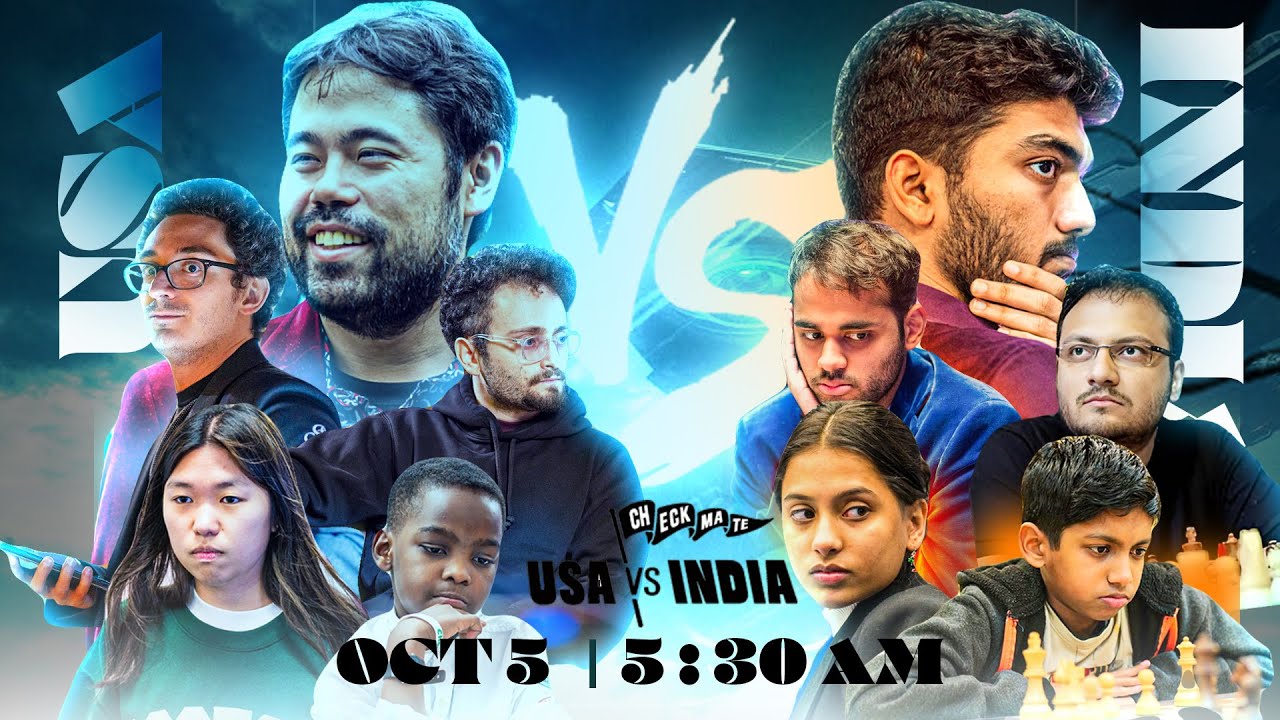
Chess… meets TEAM cage match.   innovative Checkmate: USA vs India match in Arlington, Texas.

India v. USA

YouTube thumbnailYouTube icon

Posted in SESSIUNCULA |
5 Comments

ROME 25/10 – Day 6: a serious hard ass

Sunrise: 7:08

Sunset: 18:49

Ave Maria: 19:00… it has changed cycles.

FYI… lately I have celebrated Masses requested by:

KS, SF, KM, JH and DCS

On Monday I’ll start with several from PS and MF

It is the Feast of St. Francis of Assisi.  Patron of Italy. This used to be a national holiday but it was abolished in 1977. It was just restored by the Italian parliament, with the senate giving it final approval on Wednesday. It take effect from 2026. to coincide with the 800th anniversary of the death of St Francis in 2026, thus bringing to 12 the number of national public holidays in Italy.

Some people have a false notion of St. Francis of Assisi. They see garden statues of Francis with birdies. They saw Brother Sun, Sister Moon. They’ve heard, or said, the prayer he didn’t write. You get the idea. Being Christian means rolling in the grass and hugging lambs as bluebirds flit around you while singing songs from Godspell.

In fact, Francis was a serious hard ass.  The writings of Francis show that he had lofty ideas about the sacrality of sacred worship – HERE – and other matters.  He would have been appalled at the Novus Ordo as it is employed and outraged (pace Franciscan of Charlotte) at the treatment of people who desire tradition.

Please remember me when shopping online and use my affiliate links.  US HERE – UK HERE  WHY?  This helps to pay for health insurance (massively hiked for this new year of surprises), utilities, groceries, etc..  At no extra cost, you provide help for which I am grateful.

I’m very tired, so I will not go into much detail.

No exciting food shots.  I didn’t eat at all until about 8PM.

Mushrooms in the market.

Puntarelle at my usual stand with TWBS™ being a smarticus pantsicus.

I went to the swearing in of the Swiss Guards.  It was postponed to now, because the regular date in early May was sede vacante.

On my way up the Borgo Pio.  You all know this one.

Inside the Vatican (I can still go in) at the Vatican Bank ATM to check on my account.

In the Cortile before Leo XIV arrived and the ceremony started.   Pano, therefore distorted


Posted in SESSIUNCULA |
11 Comments

Archcosplay of Canterbury

A Tale of the Prelatesse and the Cardinal A Tale of the Prelatess and the Cardinal

Whan Aprill’s ghost, with shoures late and sly,
Had wash’d the bookes clean of memory,
I, pilgrim poor, to Caunterbury wente,
For mirth and penance, both in one y-meinte.
Our Hoost, that lov’d a tart and learned tale,
Bad me rehearse a storie sherp and stale—
“Nat stale,” quod I, “but yren-hote and bright,
Of chaunged crookes and crozier’d new delight.”

Lo, first there rood a lady, fressh y-mitred,
A Prelatessë, smylende, sleek, and flitred;
“Dame Sarra” y-clept (so singen clerkes thin),
That wrote her crede with goos-quill made of tin—
Full light it scriven was, and soon amendid,
As wind of court or journale list pretendid.
She spak ful softe of “chois” and “autonomie,”
With termes newe y-brouht from Sorbonie;
And whyl she louted low to worldes eares,
She prunèd Doctrine’s thornës into peares.
“Peace! Peace!” quod she, “let conscïence be plaine,”
Yet bade the trump to pipe a courtly strain;
With rochet white and wimple press-release,
She bless’d debate and chrism’d Compromise.
Her crook look’d glauncing as a looking-glasse—
It stered not the sheepe, but check’d the classe.

Anon ther steppeth Reginald, Pole y-hote,
Last Catholike of Cantaur by that lot,
With Rome ful fasten’d in his brest y-stitched,
A martyr’s kin, in exil often pitched.
No tweet he knew, ne pressë for to please,
But Latin psalm and penitential knees;
His pall was gravë cloth, nat stage’s lawn,
His signet: tears that water’d England’s dawn.
He banquetteth not with noveltie for sauce,
But serveth Truth, tho’ garlanded with loss;
His “yea” was yea, his “nay” a nailèd nay,
As Peter’s barque did round the headland sway.

“Good Dame,” quod Pole (I herd it in my dreem),
“Thy woordës trippe as swallows at the streme;
But Faith, that once for all delyverèd,
Abhorreth gloss where blood is newly shed.
Lo, mother Church is nat a merchaunt’s stall,
To weigh the lambs by market’s festival;
Nor may a crook, y-shap’d of courtly reed,
Grow green by praysing weeds for wheaten seed.”

She smyled—O sleek curteisye of our age!—
And turn’d her pastorellë to a page;
“Sir Cardinal,” quod she, “be debonaire:
We play at synod; every voice a chair.
The world is wyde, and many tents are spred;
Let lex caritatis cover all that’s said.”
Thus, with a bow that might a sceptre bend,
She grac’d the gate and never touch’d the end.

But I, that am a pilgrim mean and thin,
In alehouse light I mark’d the jingling din:
How verity, that simple, sharp, and spare,
Sat like a widow, hooded, on a chair;
And Policy, that wanton curate spry,
Danc’d ringës round her with a moral eye.
The Host, that loveth sauce of quick desport,
Cried, “Knight! Clerk! Nun! Bring forth a brisk report—
Which crozier keepeth crookëd backes more straite:
The oken staff, or scepter varnish’d late?”

Then spak an olde Plowman by the fire:
“Whan fields ben thynne and wolves to foldes enquire,
The shepherd’s craft is not to please the moon,
But cry ‘Avaunt!’ and break the robber soon.”
“Y-wis,” quod I, “and he that loveth peace
Must hold his peace to Martyr’s master-piece.”

Envoy:
Go, litel balade, with thy pricky style,
And aske the learned for to bide a while;
If any stomak quake at ironie,
Pray hem remembre Pole’s fidelitie:
For Canterbury’s stones—tho’ kingdoms vary—
Know who did blede, and who but bade to tarry.
And if thou finde a crook that’s made of glass,
Crave grace of God—lest everie wolf may pass.

When April’s ghost, with late and crafty showers,
had washed the books clean of memory,
I, a poor pilgrim, went to Canterbury
for merriment and penance, both together.
Our Host, who loved a sharp, learned tale,
bade me tell a story, “sharp yet stale.”
“Not stale,” said I, “but iron-hot and bright—
of altered crooks and newly crosiered delights.”

Look—first there rode a lady, newly mitred,
a Prelatess, smiling, sleek, glittering;
called “Dame Sarah” (so these thin-nerved clerks sing),
who wrote her creed with a tin goose-quill—
written very lightly, soon amended,
whenever courts or journals changed their wind.
She spoke very softly of “choice” and “autonomy,”
with new terms shipped in from the Sorbonne;
and while she bowed low to the world’s ears,
she trimmed the thorns of Doctrine into soft pears.
“Peace! Peace!” she cried, “let conscience be plain,”
yet bade the trumpet play a courtly tune;
in white rochet with a press-release for wimple,
she blessed debate and anointed Compromise.
Her crozier shone like a looking-glass—
not steering sheep, but managing the audience.

Soon there stepped Reginald—called Pole—
the last Catholic Archbishop of Canterbury;
Rome was stitched fast within his breast,
kin to martyrs, often flung into exile.
He knew no tweets, nor flattered the press—
only Latin psalms and penitential knees.
His pall was grave-cloth, not theatrical lawn;
his seal: the tears that watered England’s dawn.
He did not feast with novelty as sauce;
he served the Truth, though crowned with loss.
His “yea” was yea; his “nay,” a nailed nay—
as Peter’s barque swung round the headland.

“Good Lady,” said Pole (I heard it in a dream),
“Your words flit like swallows over the stream;
but the Faith, once for all delivered,
abhors fine gloss where blood lies fresh.
Behold—Mother Church is no merchant’s stall,
to weigh her lambs by market holidays;
nor can a crook, shaped from courtly reeds,
turn green by praising weeds as wheat.”

She smiled—O the sleek courtesy of our age!—
and turned her pastoral staff into a page;
“Sir Cardinal,” she said, “be debonair:
we play at synod—every voice gets a chair.
The world is wide; many tents are spread;
let the law of charity cover all that’s said.”
Thus, with a bow that could bend a scepter,
she graced the threshold, never reaching the substance.

But I—a lean, lowly pilgrim—
in tavern light watched the jangling din:
how Truth, simple, sharp, and spare,
sat like a hooded widow on a chair;
while Policy, that frisky little curate,
danced circles round her with righteous eyes.
The Host, who loves a quick, spicy sport,
cried, “Knight! Clerk! Nun! Give us a brisk report—
which crozier straightens crooked backs more:
the oaken staff, or the newly varnished scepter?”

Then an old Plowman spoke by the fire:
“When fields grow thin and wolves nose round the folds,
the shepherd’s art is not to please the moon,
but shout ‘Begone!’ and smash the thief at once.”
“Indeed,” said I, “and he who loves peace
must submit his calm to the Martyr’s masterpiece (the Cross).”

Envoy:
Go, little ballad, with your prickly style,
and ask the learned to linger for a while;
if any stomach quakes at irony,
beg them remember Pole’s fidelity:
for Canterbury’s stones—though realms may change—
know who bled, and who merely counseled delay.
And if you find a crozier made of glass,
ask God for grace—lest every wolf slip past.


Posted in SESSIUNCULA |
16 Comments

3 October: St. Thérèse – Thank You! Please hear my petitions!

Today is the Feast of St. Thérèse de Lisieux.

I call upon her intercession today in a special way, for myself and for my benefactors.

One of my two 1st class relics of St. Thérèse, to whom I am grateful.

St. Therese probably saved my priesthood back when I was in seminary and it was “Ioannes contra mundum”.  What a sick sick place and time. 

What a beautiful saint and powerful intercessor.

I also call upon St. Thérèse to ask of Christ the High Priest to pour His Most Precious Blood down upon the bishops who are suppressing the Traditional Latin Mass, that this washing will open their hearts.

Posted in SESSIUNCULA |
3 Comments