Daily Rome Shot 1409 – UPDATE: BONUS VIDEO

Welcome registrant:

mmcgrath

Please remember me when shopping online and use my affiliate links.  US HEREWHY?  This helps to pay for health insurance (massively hiked for this new year of surprises), utilities, groceries, etc..  At no extra cost, you provide help for which I am grateful.

Help monks and get great beer!

The Church is more than these USA.

Interim, motus ad lusorem cum militibus albis pertinent. Scaccus mattus, scilicet mors regis, quattuor in motis veniat.

NB: Detineam explicationes in crastinum, ne vestrae interrumpantur commentationes.

Priestly chess players, drop me a line. HERE

BONUS VIDEO:

YouTube thumbnailYouTube icon

Posted in SESSIUNCULA |
3 Comments

“The sky is crying…” 10 August

The sky is crying, look at the tears roll down the street.

Thanks to flaming comet dust moving at 60km per second.

From Space Weather:

SET YOUR ALARM FOR DAWN: Venus and Jupiter are converging in the eastern dawn sky for a spectacular conjunction. At closest approach on Aug. 11-13, the two planets will shine like a bright double star–easy to see even from brightly-lit cities. As a bonus, the Perseid meteor shower peaks at the same time, so you might catch a bright fireball, too. Set your alarm and step outside before sunrise. This is worth waking up for! Sky maps: Aug. 111213.

Today is the Feast of St. Lawrence, who is bumped this year in favor of the Sunday.  He does get a commemoration in the older, traditional office.

It is time for the annual Perseid Meteor Shower, so called because the meteors appear to be streaking out from the constellation Perseus.  At the peak, there can be 100 meteors and hour.

The shower has been traditionally nicknamed the Tears of St. Lawrence.

Each year your little whirling blue ball zooms through the debris of a comet named Swift-Tuttle.

Those of you in the northern hemisphere should get out there and watch the meteors. If you have children, make a plan. I have fond memories of looking into the heavens as a kid.

This year the peak of the Perseids will come when Earth enters the densest part of the comet’s leavings, 12-13 August.

Take your kids out to see the sky show and tell them the story of St. Lawrence, Pope Sixtus and the other deacons.

YouTube thumbnailYouTube icon

Posted in SESSIUNCULA | Tagged
2 Comments

C’mon guys! You can do better!

This is from twitter… and I offer this with nothing but great admiration for both Matthew Hazell and the amazing Dr. Kreeft.


Firstly, this is, truly, quite funny. I think it is hilarious and refreshing that this was published.

His scriptis, humillime contra respondeo exarens….

I don’t comment much on the Novus Ordo readings these days. However, I went to look at the readings for this 19th Sunday of Ordinary Time year C and found that the Gospel is Luke 12:32-48, which includes an admonition about almsgiving (which is also appropriate for a Jubilee year) and then a parable about the servants waiting for their master to return from a marriage feast: if they are ready, the master will gird himself and serve them. Also, if the master knew when the thief was coming, he’d make ready. Of course this is about the Second Coming (or maybe also our moment of going to the Judge in death). But this section of the pericope also has an allusion to Passover: ““Let your loins be girded and your lamps burning,…” (v. 35). Then there is a dialogue with Peter and Lord adds additional parables which include the negative side for servants who are not ready or who take advantage of the master’s absence. It’s a long Gospel, but in effect it is about readiness for that inevitable about which we don’t know the hour. Also, at the very beginning of the Gospel reading, there is the beautiful and consoling message from Our Savior, “Fear not, little flock, for it is your Father’s good pleasure to give you the kingdom.” Therefore, give and alms and, for all love, be ready… PLEASE! God wants us with Him. Don’t screw up.

Going back to the Old Testament reading from the Book of Wisdom 18:6-9a, we read, and this is in the tweet, what is in effect a rapid recounting of the night of the Passover before the Exodus from Egypt.

That night was made known beforehand to our fathers,
so that they might rejoice in sure knowledge of the oaths in which they trusted.
The deliverance of the righteous and the destruction of their enemies
were expected by thy people.
For by the same means by which thou didst punish our enemies
thou didst call us to thyself and glorify us.
9a For in secret the holy children of good men offered sacrifices,
and with one accord agreed to the divine law,

After all the plagues, God warned the people what was going to happen so that they could prepare for the night of the destroying angel.  They had to put blood on their doorposts and eat the lamb standing and with their loins girded in readiness to get outta Egyptian Dodge.

So, it isn’t really all that hard to connect the Old Testament reading and the Gospel.  In fact, the Second Reading from Hebrew about Abraham also fits in, since Abraham was ready and willing to do whatever it was that God would ask of him, including sacrificing Isaac which seemed like a contradiction of God’s promise.

Anyway, this set of readings underscores a problem with the Novus Ordo Lectionary.  First, the addition of a third Scripture reading overloads the formulary and leaves the impression that we are participating in a didactic moment rather than a time for worship and sacrifice.  Moreover, the separation of place where Scripture is read away from the altar, obscures the fact that the readings themselves should be sacrificial offering.  That’s why in the Vetus Ordo they are read by the priest at the altar!  That’s where sacrifice takes place and the priest is the one who offers it.   A second problem with the Lectionary is that the Old Testament readings are often beyond the priest’s ability to tackle, because of his poor or downright bad formation in Scripture in seminary.  I trust things are getting better.  The Saint Paul Center for Biblical Theology is highly to be praised for getting priests up to speed with great scripture resources, much to their personal edification but importantly also the benefit of their flocks.

Finally, I hope you will go and click on that tweet from Matthew Hazell, because it is a chain of tweets.  He exposes the process of the cutters and pasters of the Consilium who snipped and glued the Lectionary together.  It is revelatory.  Pay attention to Hazell’s commentary along the way.  I don’t think there is anyone who has done such a thorough and objective autopsy on what happened under the aegis of the infamous Bugnini driven Consilium.


Posted in Liturgy Science Theatre 3000, The Drill |
4 Comments

Your Sunday Sermon Notes: 9th Sunday after Pentecost (N.O. 19th Sunday)

Too many people today are without good, strong preaching, to the detriment of all. Share the good stuff.

Was there a GOOD point made in the sermon you heard at your Mass of obligation for the this 9th Sunday after Pentecost?  19th Sunday of Ordinary Time in the Novus Ordo.

Tell about attendance especially for the Traditional Latin Mass.

Any local changes or (hopefully good) news?  I know there is a lot of BAD news.  How about some good news?

A taste of my thoughts from the other place: HERE

[…]

There is no question that the Lord wept.  However, He could never have lost the least control over His emotions.  Nor did the Blessed Virgin, even at the foot of the Cross.  This is a flaw in movie and television depictions of Our Lord and His Mother.  I have in mind, for example, in the popular and ongoing series Chosen: the Christ character is far too distraught at Lazarus’ tomb.  I’m sure the producers chose to stress His humanity, but they erred.  Also, in the Zeffirelli video about Christ, Mary is pretty much unhinged after the Deposition.  Nope.  Much better was Mary in Mel Gibson’s Passion.  But I digress.  Back on track.

[…]

Posted in Sermons | Tagged
4 Comments

ASK FATHER: The priest won’t let me make an anonymous confession – updated

From a reader…

QUAERITUR:

I have a question about confession. If you want to remain anonymous during confession, is it OK for the priest to not allow it? I did something horrible and it had a lot of ramifications in my life so it still comes up, but I have a really good reason to want anonymity. I’ve “tried out” many confessors looking for help with the problems I have now in my spiritual life, but I’ve found that many times the priest won’t let me be anonymous. Sometimes they ask to talk to me afterward, but sometimes they just come around the screen in the confessional or pop out of the confessional immediately after my confession so they can see who I am. Is that normal? Oddly enough, none of them really want to talk to me, they just want to know who I am I guess? Is that OK?

It is wrong wrong wrong for a priest confessor – let’s call him Fr. Ficcanaso – to require face to face confession and/or to come out of the confessional to see who just finished.

A note to priests or seminarians reading this:   On your way to the confessional to start to hear confessions keep your eyes lowered to the ground and do not look at the people standing in line waiting.  Don’t engage them, greet them, or even look at them.  Keep your eyes lowered.

According to the Code of Canon Law for the Latin Church a penitent has a right to have his confession heard anonymously behind a fixed grate between the penitent and the confessor.

Can. 964 §2: The conference of bishops is to establish norms regarding the confessional; it is to take care, however, that there are always confessionals with a fixed grate between the penitent and the confessor in an open place so that the faithful who wish to can use them freely.

The code also says that confessions are not to be heard outside a confession (which must have a fixed grate) except for a good reason (964 §3).

While the canon does specifically used the word “anonymous” or “anonymity”, it is clearly implied in the fact of the need for a fixed grate so that a penitent who wishes to use it may do so.  The grate is also there for the sake of propriety, to protect the priest and the penitent.

The Catechism of the Catholic Church says (CCC 1467):

Given the delicacy and greatness of this ministry and the respect due to persons, the Church declares that every priest who hears confessions is bound under very severe penalties to keep absolute secrecy regarding the sins that his penitents have confessed to him. He can make no use of knowledge that confession gives him about penitents’ lives. This secret, which admits of no exceptions, is called the “sacramental seal”, because what the penitent has made known to the priest remains “sealed” by the sacrament.

And…

Can. 983 §1. The sacramental seal is inviolable; therefore it is absolutely forbidden for a confessor to betray in any way a penitent in words or in any manner and for any reason.

§2. The interpreter, if there is one, and all others who in any way have knowledge of sins from confession are also obliged to observe secrecy.

Can. 984 §1. A confessor is prohibited completely from using knowledge acquired from confession to the detriment of the penitent even when any danger of revelation is excluded.

A priest confessor who takes action to discover the identity of the penitent who desires to be anonymous has already acted to the detriment of the penitent.

Moreover, it is easier to honor the Seal if the priest doesn’t know who the penitent is.

I think that, salvo meliore iudicio, a priest who forces face to face confession or who comes out to see who it was has already come dangerously close to violating the Seal.  He certainly has violated the point of can. 964.

What can one do about this?   If this priest is not the pastor of the parish, you should inform the pastor about this.  If this priest is the pastor, you should tell him that what he does has upset you.   If there is no change in practice, you should inform the diocesan bishop.  If that does not produce results, you should write to the Apostolic Nuncio.

The 2004 document Redemptionis Sacramentum is mainly about the Eucharist but it is applicable to other liturgical moments. It says:

[184.] Any Catholic, whether Priest or Deacon or lay member of Christ’s faithful, has the right to lodge a complaint regarding a liturgical abuse to the diocesan Bishop or the competent Ordinary equivalent to him in law, or to the Apostolic See on account of the primacy of the Roman Pontiff.  It is fitting, however, insofar as possible, that the report or complaint be submitted first to the diocesan Bishop. This is naturally to be done in truth and charity.

Sacramental confession is a liturgical act.   Forcing face to face confession or violating anonymity is a liturgical abuse.

AND ANOTHER THING… (update):

There are occasions in which the penitent has incurred a censure which the priest does not have the faculty to absolve.   In that case the priest has to make recourse to the competent authority, for example, the Apostolic Penitentiary in Rome (AP), which has competence in matters of the internal forum (confession).   In that case, the priest must gather some basic information from the penitent.   He doesn’t have to know the penitent’s name, but he needs to know their state of life, the basics, so that he can give the AP a bare bones idea of who the penitent is (age, maturity, etc.).   Then the priest must advise the penitent to make an appointment with him, say 2 weeks later to allow time for communication, to return for the verdict of the AP and, if the AP is favorable, to be absolved from the censure.

The AP usually responds to a communication within 24 hours.   So if a priest were to fax something to the AP, they would write by letter back to the priest confessor sending the response in an envelope inside another envelope through the mail bags between the Holy See and the Apostolic Nuncio, who in turn forwards the AP’s envelop to the priest.  That could be fast than 2 weeks, but that permits enough time to pass.

Again, when the priest writes to the AP, he gives just the bare bones minimum of information and circumstances to make the case plain.

This procedure should be part of the training of seminarians.  But it mostly isn’t.  Here is a book about how to have recourse to the AP.  It’s Italian but… hey… HERE.

FATHERS!  If you wind up with a penitent whose censure you can’t absolve, and you are not sure about what to do, fix an appointment with the penitent to meet again in the confessional in a couple of days or when convenient.  Then get informed about the next step.

Finally, if a priest needs to know more about how to do this, I’m willing to coach him up a bit.

Posted in "How To..." - Practical Notes, ASK FATHER Question Box, Liturgy Science Theatre 3000 | Tagged , ,
4 Comments

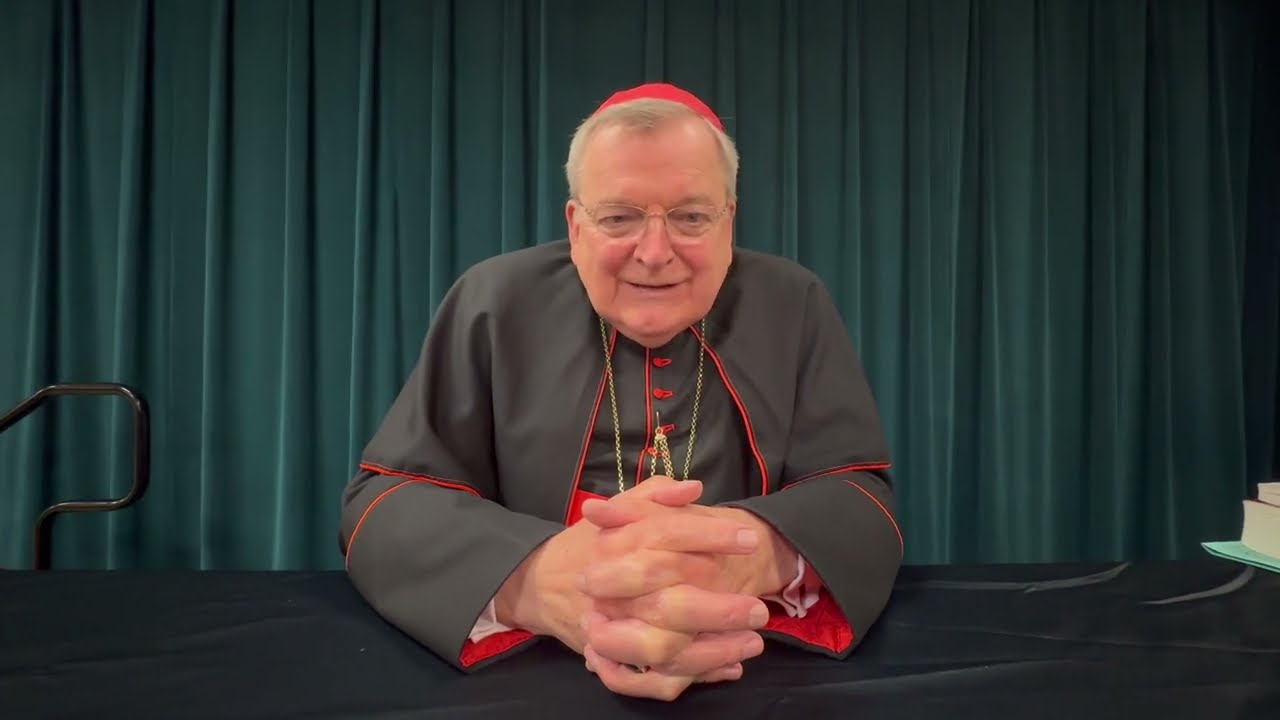
A message from Card. Burke to Fr. Z’s readers and viewers – August 2025

YouTube thumbnailYouTube icon

Posted in SESSIUNCULA |
7 Comments

ASK FATHER: In the confessional Father said the Holy Spirit is a woman.

From a reader…

QUAERITUR:

Father during confession said in his opinion, the Holy Spirit is a woman. “She gives us birth in baptism, she will help you.” [Jackass!] His other remarks were well taken but I was so appalled I couldn’t wait to get out of there. Not to mention, it was face-to-face and no other option — just two chairs at one side of the sanctuary. He also stopped me saying the act of contrition because I was being rote. [Jackass!]

I think his words of absolution were correct but I still wonder. Do you think I am absolved? Is he actually a heretic?

I’m reminded of one of the Martyrs of Gorkum, who were killed by Calvinist Protestants because they refused to deny transubstantiation.   One of them, a priest, was an infamous rake and fornicator.   They expected him to cave in easily.  But when he was challenged to denounce his Faith he said “I was a fornicator, but I’m not a heretic” and they killed him.

The 19 Martyrs of Gorkum are invoked especially for relief from hernias.  It seems to me that that jackass priest in that confessional has a brain hernia, cutting off part of his intellect.

Pray for him to the Martyrs of Gorkum.

Is that jackass a heretic?   It depends.  Heresy is the persistent denial or doubt of a revealed truth of Catholic doctrine.  Putting aside the obvious point that God the Holy Spirit transcends physicality, based on biblical texts the gender of the Holy Spirit as male is a core tenet of Catholic belief. Denying it would heresy.

If he said it in the confession, my guess is that this is part of his schtick.   Draw your own conclusion.

While Holy Spirit’s power and influence is often expressed in Scripture with feminine imagery (e.g., the word “ruach … spirit in Hebrew is feminine), Scripture consistently refers to the Holy Spirit using masculine pronouns. Jesus himself referred to the Holy Spirit as “He” (Greek ekeînos as in John 14:26, 15:26, 16:13).

Stopping you during the act of contrition… GRRRRR.  That old garbage.   Apparently we can’t sincerely mean what memorized prayers say.  The classical, memorized form has all the necessary points that must be manifested for the priest to give absolution.   Stick to your guns.

About the absolution.  I can’t say much about that since I don’t know what form he used.  Even if he is a heretic, were he to have used the proper form, you would have been validly absolved.

What a jackass.  What jackassery.


Posted in "How To..." - Practical Notes, ASK FATHER Question Box, GO TO CONFESSION | Tagged
5 Comments

Daily Rome Shot 1408 – Caccio-ing up

I keep starting these posts and then forget to publish them. So here’s one sorta kinda done.

A “bis” of caccio e pepe and asparagus with truffle.

Please remember me when shopping online and use my affiliate links.  US HEREWHY?  This helps to pay for health insurance (massively hiked for this new year of surprises), utilities, groceries, etc..  At no extra cost, you provide help for which I am grateful.

I, too, recoiled in disgust at the suggestion from a BBC cooking section to add butter to “caccio e pepe”.   It is suggested as a cheat and caccio e pepe is tricky to make correctly.   But still.   The horror of it all.  It was bad enough to insinuate that you might sub parmigiano for pecorino.   It goes to show how far gone the BBC really is.  My experience is that less starch releases into soft water.

The key to caccio e pepe could be the water.  I find it easier to do certain things with the water in Rome than in these USA.  Also, the type of pasta makes a difference, how quickly or slowly it dried, the way it is finished, etc.  “Bronze” cut, which leaves a rougher exterior seems better for many reasons.

I missed this yesterday.  It was the anniversary of the work on the dome of the Cathedral of Florence designed by Brunelleschi.  If you have not read it already, I cordially recommend Ross King’s fascinating Brunelleschi’s Dome: How a Renaissance Genius Reinvented Architecture.  It is a good book for understanding the roots of Renaissance architecture.

Posted in SESSIUNCULA |
2 Comments

My View For Awhile: To the Shrine and From the Shrine

Before launching into the trip itself, homage must be paid to my hosts. Last night we had terrific sauteed peppers and spicy sausage on the grill, which could be consumed with or without the excellent Turano rolls (which I have missed).

Transformations. sauteed pepper and hot sausage

So satisfying.

I picked up my rental car from ORD (the cost… YIKES) for the drive to La Crosse where the cool kids of canon and civil law gathered with Card. Burke and a star studded cast and try to be both civil (a challenge for some of them) and canonical for a couple of days of excellent talks and socializing. One of the presenters is Michael Mazza who has done so much to defend priests and defend their good name, their reputation, which is always a casualty especially at the hands of the dioceses which don’t follow proper procedures. I look forward to meeting good friends, including the official parodohymnodist of this blog, whom I’ve known since the 80’s.

Excellent presentations.   Card. Burke honored up with another brief video message which I must edit and post.

Arriving at the Shrine you see the “candle chapel” which one of my more brilliant friends compared to – the inside, mind you – “a zoroastrian fire tower”.  The grounds of the Shrine were truly lovely.  Volunteers swarmed to tend the flowers.

Card. Burke during the Q&A after supper last night.  I was able to ask about can. 249.  Heh.

Along the river walking home.  How nice to see real trees and grace.

The pilgrims house is being built.  It’ll be ready in 2027.

My dear Little Flower.

It was a good opportunity for confession.

Heading down after the talks.

This was fun.

I stopped in my old stomping grounds as a first leg to Milwaukee tomorrow.   Into a favorite grocery store I compared the pizza aisle to what is available where I now hang my head… HAT… my HAT.

The entire aisle is pizza.   It isn’t even quarter of that elsewhere.

More later.


Posted in On the road, SESSIUNCULA, What Fr. Z is up to |
7 Comments

THE GRAPES OF… TRANFIGURATION!

The Roman calendar has many little treasures which remind us of how our Faith and the Church’s calendar, the rhythm of temporal and spiritual life, are integrated in our seasons.

Today, for example, the Feast of the Transfiguration of the Lord, there is a special blessing of grapes in the traditional Rituale Romanum.   The powers that be, some of them at least, want to take this away from people.  It is not found in the “BOB” or “Book of Blessings… De Benedictionibus”.  In its index, “Grapes” are relegated to “new fruits” on the feast of the Presentation.    Don’t let them take away our heritage.

You might consider that title, “THE GRAPES OF… TRANSFIGURATION!” a little dramatic.  However, consider that the vast majority of grapes grown went to wine, their individual leap to collective glory.

In the Transfiguration, Our Lord let something of His glory shine forth through His human body.  In wine, in advance we detect something of the joy of the heavenly banquet, remembering that, just as grapes are crushed to make wine, our Lord had His Passion.  As the Golden Legend say, “the blood of Christ is renewed of new wine if it may be founden of a ripe grape”.

We also have to have our Passion, collectively as a Church, and individually.   There is no escaping the Passion.  Do not listen to those who posit anything Christian that avoids the Passion.

If truth be told, the blessing of grapes at this time seems to be attached more to the Feast of St. Sixtus II, martyred in 258 with his famous companions.  The Feast of the Transfiguration came to be observed centuries later in the Roman calendar.

But who cares?  The more the merrier!  We are Catholics.  That means we are both/and rather than either/or when it comes to these happy events.

Back to Sixtus.  At the beginning of August we Romans remember the martyrs Pope Saint Sixtus and his four deacon companions.  St. Lawrence would famously follow, burned on an iron grate.  For that see St. Ambrose.   HERE  This is the time of year with the first grapes of the harvest are blessed.  Together with the Transfiguration of our Lord, the blessing of grapes – an eschatological symbol – shows that Holy Church is already in the end time, though we wait for its completion.   And it sure feels like the end times.

Here is the translation for the blessing of grapes, for those who don’t have Latin:

V. Our help is in the name of the Lord.
R. Who hath made heaven and earth.
V. The Lord be with you.
R. And with thy spirit.

Let us pray.

Bless, we beseech Thee, O Lord, this fresh fruit of the vine,
which Thou hast graciously brought to full ripeness
with the dew of heaven, abundant rain, and calm and fair weather.
Thou hast given them for our use;
grant that we may receive them with thanksgiving
in the name of our Lord Jesus Christ, the True Vine,
who liveth and reigneth with Thee in the unity of the Holy Ghost,
God for ever and ever.
R. Amen.

(And they are sprinkled with holy water.)

I was delighted by the reference to “dew of heaven… rore caeli“.  You might recall the controversy over the reference to “dew” when the new, corrected English translation of the Novus Ordo was being prepared.

The cultivation of certain types of grapes requires special conditions.  In a contrast to the benefits of dew lauded in the prayer of the blessing, however, dew isn’t always good for grapes.  Dew helps fungus to get hold, through in the case of some grapes, certain fungi are welcome, as in the case of the “noble rot” in a very late harvest which produces wines of a spectacular sweetness and depth.  Also, it is important to harvest grapes after dissipation of dew.  But certainly the evocation of dew in the prayer refers to the necessary moisture grapes need for their proper development.  And of course, dew is a Scriptural image for the descent of God with graces.

The coming of and effects of the Holy Spirit, in Scripture and in the Fathers of the Church, are often described not by fire imagery, but rather by water images and, indeed, dew.

First, ros can come from above like rain.  Second, ros is dew which forms nearly imperceptibly.  In one case, rain flows across a thing and washes it.  Dew slowly dampens.  In both cases there results a penetrating soaking.  Arid ground yields to planting.  Seeds germinate and sprout.   The ros Spiritus in the (artificially cobbled up and inaccurately called ancient) 2nd Eucharistic Prayer can be both the cleansing and the moistening.

Our Catholic doctrine of sanctification teaches us that at baptism a person is both justified and sanctified by the washing/indwelling of the Holy Spirit.  That sanctification can be deepened through the course of one’s life.  It comes suddenly.  It comes gradually.

In Scripture the psalmist sings about the “King of Justice”. “May he be like rain (Vulgate ros) that falls on the mown grass, like showers that water the earth!” (Ps 72:6 RSV).

In the Song of Songs, we hear, “Open to me, my sister, my love, my dove, my perfect one; for my head is wet with dew (ros), my locks with the drops of the night. By night I have put off my coat, how shall I put it on? I have washed my feet, how shall I defile them” (Cant 5:2-3).  St. Augustine (+430) saw in the lover and beloved an image of Christ calling His ministerial Church to service.

From Isaiah we have an image which has come into the Latin Church’s liturgy, namely, “Rorate caeli desuper … Shower (rorate), O heavens, from above, and let the skies rain down righteousness; let the earth open, that salvation may sprout forth, and let it cause righteousness to spring up also; I the LORD have created it” (Is 45:8 Vulgate and RSV – Introit 4th Sunday of Advent).

The Fathers made much of ros through an allegorical technique of interpretation.  Origen (+254), via Rufinus’ translation of the Homilies on the Book of Judges (8.5) says: “But we also, if only we might offer our feet, the Lord Jesus is ready to wash the feet of our soul and cleanse them with a heavenly washing (rore caelesti), by the grace of the Holy Spirit, by the word of sacred doctrine.”

Saint Ambrose of Milan (+397), who drew much upon Origen’s writings as a starting point, in his work on the Holy Spirit wrote: “The Holy Scriptures were promising to us this rainfall (pluvia) of the whole world, which watered the orb under the coming of the Lord, in the falling dew of the divine Spirit (Spiritus rore divini)” (De spiritu sancto 1.8).

The imagery of grapes is also Scriptural.  The immediate association for Catholics is the Eucharist.  But grapes symbolize the end times.  They have an eschatological import.   In Revelation 14:19-20 we have an image of the end times and judgment when the grapes of wrath are pressed in the winepress. The title of the post might call to mind the book by Steinbeck, but that in turn points to Rev 14.

17 And another angel came out of the temple in heaven, and he too had a sharp sickle. 18 Then another angel came out from the altar, the angel who has power over fire, and he called with a loud voice to him who had the sharp sickle, “Put in your sickle, and gather the clusters of the vine of the earth, for its grapes are ripe.” 19 So the angel swung his sickle on the earth and gathered the vintage of the earth, and threw it into the great wine press of the wrath of God; 20 and the wine press was trodden outside the city, and blood flowed from the wine press, as high as a horse’s bridle, for one thousand six hundred stadia.

Of course the image of grapes is a happy one as well… obviously.  From the ancient Roman Church grapes are found in carvings in the catacombs and on sarcophagus reliefs.  Bunches of ripe grapes are symbols of completion, that the season has finally brought things to fruition.  Grapes remind us that Christ is the Vine, whence all our life and hope flows out to us, His branches and tendrils.

In those ancient depictions we sometimes see the harvest of grapes, which is the happy completion of life.  For example there is the relief of the famous 4th c. sarcophagus with the Good Shepherd from the Catacombs of Praetextatus which shows a harvest.  In the Catacomb of Priscilla there is a 4th century carving of a dove eating grapes, the dove being a symbol of the Christian soul and grapes the happy attainment of the goal of fullness in due time, heaven.  Remember that reference, above, to the dove from the Song of Songs?  It all fits together.  You can right-click on that image of the Good Shepherd for a larger view.

Grapes remind us that we shall be known from the fruits we both bear and we generate for the benefit of others.

Grapes remind us that we should not be sour grapes for others.

Grapes remind us that, if we do not live our vocations as the Lord’s branches well, then the grapes may be those of wrath, though mercy and forgiveness is what the Lord offers those who fall.

So, get your grapes and get them blessed, today, if you can.

When you eat them consider:

  • how good God has been to you, even if some of the grapes are bitter;
  • whether or not, through the dew of God’s graces and the light He shines on you, you are developing well for your own eternal salvation;
  • whether or not you are producing fruits for the benefit of others, hopefully sweet fruits and not sour.
Posted in SESSIUNCULA | Tagged
6 Comments