ASK FATHER: Celebrating Our Lady of Fatima’s Mass (TLM) on 13 May

From a priest….

QUAERITUR:

I need an advice. I would like to say the Holy Mass on Tuesday in Vetus Ordo and I would like to use the texts from the Our Lady of Fatima feast (optional commemoration in Novus Ordo).

Can I do it?
Are there any special propria for this feast in Vetus Ordo somewhere?
Or should I use a votive Mass from Our Lady?
What about the feast of Robert Bellarmine? Can I just commemorate him in the Mass?

Sort of. Yes. Yes. Yes.

Yes, you can do it, but the second question applies.

As we all remember 13 May is the anniversary of Our Lady’s appearance Fatima, Portugal.  Hence 13 May was designated for the event.  However it is also in the traditional calendar (not the Novus Ordo) the Feast of the great Doctor of the Church St. Robert Bellarmine. So, St. Robert usually gets all the liturgical love on 13 May with the TLM.

In 2017 the Pontifical Commission “Ecclesia Dei” granted to all priests of the Latin Rite (secular or religious) the possibility of celebrating on the 100th anniversary of the first apparition (13 May 2017) the Mass of Our Lady of Fatima as a Votive Mass of the II Class, using the exact same texts and prayers of the Votive Mass of the Immaculate Heart of the Blessed Virgin Mary.

The letter didn’t say anything about future instances of 13 May.  One might extrapolate from that that the grant applied to that single day, the 100th anniversary.  Or not….  After all… this is a Votive Mass in honor of the Mother of God in one of her most important apparitions we are talking about.  And honoring her doesn’t mean that we are slighting St. Robert Bellarmine.

Masses in honor of Our Lady of Fatima have long been celebrated in the Diocese of Leiria–Fátima where Fatima is located. The traditional propers for Our Lady of Fatima are those of the Feast of the Immaculate Heart of Mary on 22 August except for the following Collect, Secret, and Postcommunion orations:

COLLECT:

Peccatórum nostrórum, Dómine, multitúdine praevalénte, ad Beátae Mariae Virginis recúrrimus singuláre suffragium: ut, qui eiúsdem Cordis pietáte fovémur, tua misericórdia praeveniente, indulgéntiam delictórum consequámur. Per Dóminum nostrum Iesum Christum, Fílium tuum, …

SECRET:

Convérte, Dómine, quáesumus, nostras rebélles voluntátes et tríbue: ut, auxiliánte beatíssima Vírgine María, divina mysteria castis iucunditátibus celebrémus. Per Dóminum nostrum Iesum Christum …

POSTCOMMUNION:

Pórrige, quáesumus, Dómine, déxteram tuam pópulo deprecanti, et cui tríbuis supplicándi benígnus afféctum, intercedénte Vírgine María, praebe plácatus auxílium, ut cuncta mala declínet et ómnia bona apprehéndat. Per Dóminum nostrum Iesum Christum,…

If I used this form for Our Lady, I would commemorate St. Robert Bellarmine.

Posted in "How To..." - Practical Notes, ASK FATHER Question Box, Liturgy Science Theatre 3000, Our Solitary Boast | Tagged
4 Comments

ASK FATHER: Father just said “I absolve you in the name of….”

From a reader…

QUAERITUR:

I’ve been in a conundrum after confession today. The priest, a very holy yet elderly one was the confessor. At the words of absolution he said “and I absolve you in the name of etc…” and not the full ” I absolve you of your sins in the name of etc …” Is my confession valid? I believe it really is due to his age, I’ve been going to daily mass and he sometimes celebrates and at one Mass he accidentally said the old form of consecration of the wine (it will be shed for you and for all, instead of, which will be poured out for you and for many) he normally doesn’t do that. Anyways, thanks for your help and God bless you.

God bless that priest for his long and many years of service to God’s people.  Think of the good he has done.   Now in his twilight he is drifting a little.  I get it.   But this is why we have books to follow.  No matter our age, we need to use our books because we can and do drift once in a while.

I am in my place in Rome and not back home… or is this home?  Anyway, I don’t have my library at hand.  However, I’ve written on similar questions.

The formula of absolution is, in its short form, “Ego te absolvo a peccatis tuis, in nomine Patris +, et Filii, et Spiritus Sancti… I absolve you from your sins in the name of the Father +, and of the Son and of the Holy Spirit.”

St. Thomas Aquinas argues (though his opinions are not the equivalent of the Church’s Magisterium – never forget that!) that “Ego te absolvo”  is the form of the sacrament (ST III, Q. 84, Art. 3).  If he is right, then that may suffice.  He’s probably 99.9% right.

The Catechism of the Council of Trent, reliable and definitely an expression of the Church’s Magisteriumand surely working from Aquinas has this:

Pastors should not neglect to explain the form of the Sacrament of Penance. A knowledge of it will excite the faithful to receive the grace of this Sacrament with the greatest possible devotion. Now the form is: I absolve thee, as may be inferred not only from the words, whatsoever you shall bind upon earth shall be bound also in heaven, but also from the teaching of Christ our Lord, handed down to us by the Apostles.


These days it seems that the minimum form in the Latin Church (the Eastern Churches have their own somewhat different practices) is “Ego te absolvo a peccatis tuis… I absolve you from your sins.”

Because I am an Unreconstructed Ossified Manualist, I consulted several manuals (e.g., Tanquerey, Prümmer, Sabetti Barrett).  They all come to the same basic conclusion.  “Absolvo te a peccatis tuis” is certainly valid, and “Absolvo te” is probably valid, but if possible the longer form should be repeated to be sure.

The point is that “I absolve”, the word itself, implies that a) a person is being freed and that b) he is being freed from something.  In this context the person is a penitent confessing sins.  So, the penitent is being absolved of sins.  That’s implicit in absolvo te.

Part of the problem with not using the proper form – aside from the arrogance of priests who screw around with the form of absolution purposely – is the regular use of the bare minimum.  That suggests that perhaps the rest is not so important.  Just because it isn’t the bare and essential part of the form, that doesn’t mean that it isn’t important.

If you confess to a priest who regularly does something dodgy with the form of absolution, I would politely bring it up.

In your case, this was probably just a slip.  I wouldn’t bring it up unless he does it more often.

People are within their rights to have the form of absolution spoken as it is in the book. Ask the priest to give you absolution with the proper form. Do not be nasty or aggressive about this.

Posted in "How To..." - Practical Notes, ASK FATHER Question Box, GO TO CONFESSION | Tagged ,
1 Comment

ASK FATHER: Priest cut me off while confessing my sins

From a reader…

QUAERITUR:

Long-time listener, first-time caller, as it were. I’ve followed your blog for years, and it has been a great source of knowledge and spiritual wisdom for me.

I went to confession today in a cathedral. As always, I kept it brief and succinct but this time, the priest cut me off after 30 seconds, as he was clearly on a schedule. As a result, I missed several sins out and was unable to confess them before absolution. My question is, if this is the case, does the absolution carry for all the sins I had to miss (mortal and/or venial) or should I find another priest and confess the sins I missed?

From the onset, thanks for that intro, which made me think of the late, great Rush Limbaugh and his “open line Fridays”.

You stated that “he was clearly on a schedule”.  I’ll make a guess that he had to say the upcoming Mass and time was getting short.

Sensible priests want to hear the confessions of as many penitents as reasonably possible.  Hence, perhaps he thought you were a “rambler”.   A lot of people, especially those who have not made a good examination of conscience before hand, can fall into rambling, a bit aimlessly.   A confessor ought to interrupt rambling and help the poor person out of their self-torture and get to the point, which is the point of relief, unburdening.   Another reason for rambling could be embarrassment.   It is best in the confessional just to SAY IT.

As for your situation, I don’t know if you were rambling or not.  Sometimes I think penitents aren’t aware that they are offering up all sorts of extraneous, needless information.   That examination of conscience I mentioned helps to prevent that.

Also, you can confess a LOT of sins in both kind and number in 30 seconds.  Sure, sometimes you need to explain something about circumstances, but that can be important and needed.  That said, most of the time, you don’t need to add circumstances.  Just say what sins you committed and how many times (or how often… to the best of your ability… again examination of conscience beforehand!!!).  It doesn’t have to take a long time.

Do you have to confess the things you didn’t get a change to say?

Technically, not really… all of your sins were forgiven with the absolution, not some of them.   This applies also to things you sincerely forget about and didn’t actually confess.   That said, if you remember something, sure, bring it up the next time you go to confession.  We should confess all the mortal sins of which we are aware or which we remember that are unconfessed later on.  “Father, the last time I went to confession, I forgot to confess…X”.  In your case, “Father, the last time I went to confession, the priest was pressed for time and I didn’t get to confess A, B and C, which I do now.”  Meanwhile, you sincerely intended to confess your sins and, when you received absolution all your sins were absolved, not some of them.

Posted in "How To..." - Practical Notes, ASK FATHER Question Box, GO TO CONFESSION |
7 Comments

ASK FATHER: Priest went “off script” when giving absolution

From a reader…

QUAERITUR:

In Confession recently, a visiting priest went off script during the absolution and concluded with “I do absolve you in the name of the Father…”

Do you think this is valid? I trust in God’s mercy but left the confessional doubting the validity. Should I let the pastor know about ? Or the vicar general for the region? I am furious to think of souls left in sin by a priest playing fast and loose with our most sacred rites! Pray for the priest to be a better one!

A couple things first.

First, good for you for going to confession.  I hope this is a regular part of your life, along with a frequent and thorough examination of conscience.

Next, the confessor was a “visiting priest”.  That means that it could be hard to bring the issue up with him directly.  If the priest is from a neighboring parish, it wouldn’t be hard to find him.  However, if he was just at your parish that weekend to preach for a mission somewhere, then there isn’t a high chance of engaging him.

To the point: If what you report he said is accurate, then, yes, the form was valid

The introduction of “do” would not change in any significant way the sense of the form of absolution.  As a matter of fact, the Latin absolvo can be translated as “I absolve” or “I do absolve” or “I am absolving”.

The priest should NOT use his own translation, however.

That said, priests … how many times have I typed this?… should STICK TO THE APPROVED FORM!

FATHERS!   Review occasionally the form of absolution.

Anecdote.

I was at supper with a priest and I remarked that, on my way there, I saw a bad car accident site being cleaned up.  It must have been very bad, because there was a burned out car involved.  I couldn’t see any injured person at the time so I didn’t stop, but it made me think of the form for Anointing and of the Apostolic Pardon at time of death.  I started to repeat them – in Latin – to check my memory.   That lead to the priest and I talking about the changes to the English translation of the form of absolution which took effect a while back.  Since I don’t use English at all, I wanted to double check what the change was and he launched into the form.  And he got it wrong.   Mind you, this is an excellent, diligent, 100% reliable priest I’m talking about, and he left something out, even on repetition.  He was a little horrified when I mentioned it.  Mind you, he left out some little element of the long form that would not have had any impact on the validity of the absolution.  Nevertheless, he got the form, as a whole, wrong.   This just goes to show that priests should, from time to time, refresh and keep a copy of the form in the confessional, and a copy of the form for anointing and the pardon handy when going around.

FATHERS!   This goes for celebration of Mass as well.  STICK TO THE BOOK!   That means, LOOK AT THE BOOK!  That’s why it is on the altar.

Posted in "How To..." - Practical Notes, ASK FATHER Question Box, GO TO CONFESSION |
1 Comment

ASK FATHER: Security video camera inside a confessional

From a reader…

QUAERITUR:

Are security cameras allowed inside the confessional? I went to confession to a Novus Ordo parish and when I was done saying my sins something prompted me to look up and when I did, I saw a security camera on the ceiling pointing straight at me. I’m concerned because I normally go to confession here, but I’m not sure how long that camera has been there. On my next regular confession, I went back to the same church just to make sure that in fact it was a camera and sure enough it was. Is there something in canon law that prohibits this. Wouldn’t this violate the seal of confession? Should I notify the bishop?

Just when I thought I had heard pretty much everything, there is this.

The Code Canon Law touches on this topic but does give a crystal clear answer to your question as you asked it.  Why?  Because we don’t know if that camera was recording sound or not.

It is possible that it was able to record the mouths of penitents moving, which means that a certain amount of lip reading could be done.  With new AI tools, who knows?

This is what the Code says.  Read this and then tell me!  This is the canon that deals with the censure for priests/confessors who violate the Seal and about anyone else who would reveal the contents of a confession. Emphases mine.  Most pertinent is § 3.

Can. 1386— § 1. A confessor who directly violates the sacramental seal incurs a latae sententiae excommunication reserved to the Apostolic See; he who does so only indirectly is to be punished according to the gravity of the offence.

§ 2. Interpreters, and the others mentioned in can. 983 § 2, who violate the secret are to be punished with a just penalty, not excluding excommunication.

§ 3. Without prejudice to the provisions of §§ 1 and 2, any person who by means of any technical device makes a recording of what is said by the priest or by the penitent in a sacramental confession, either real or simulated, or who divulges it through the means of social communication, is to be punished according to the gravity of the offence, not excluding, in the case of a cleric, by dismissal from the clerical state.

The key items here are “any person”, and “any technical device” and “or by the penitent”.

Whoever turns on that cam is “any person”.  A security cam is a “technical device”.  The cam was aimed at “the penitent”.

Again, we don’t know if sound was recorded or lip movement was recorded.  If just the back of the penitent’s head and back were recorded without sound, I think this canon may not strictly apply.

HOWEVER… this has a VERY bad feeling to it.  The fact that you asking shows that.

Not too long ago, when making a confession of my own, I beat up a young priest for having his active mobile phone with him, which I could clearly see through the rather sheer curtain.  I also beat him up for screwing up the form of absolution.

I am fully aware that priests would want to protect their own physical persons and public reputations and have mitigating evidence in the case of false accusations.  Still, this doesn’t seem right to me.

I would bring this up with the pastor of the parish, in a written letter asking for a written response.  I would send a copy to the local bishop.   If the pastor will not respond… or if he does in an inadequate way, then send the copies of the correspondence with the pastor to the bishop.  If that doesn’t produce a response, then send copies of everything to Apostolic Nuncio.

Meanwhile, you might want to find somewhere else to make your confessions.

Posted in "How To..." - Practical Notes, ASK FATHER Question Box, GO TO CONFESSION | Tagged ,
6 Comments

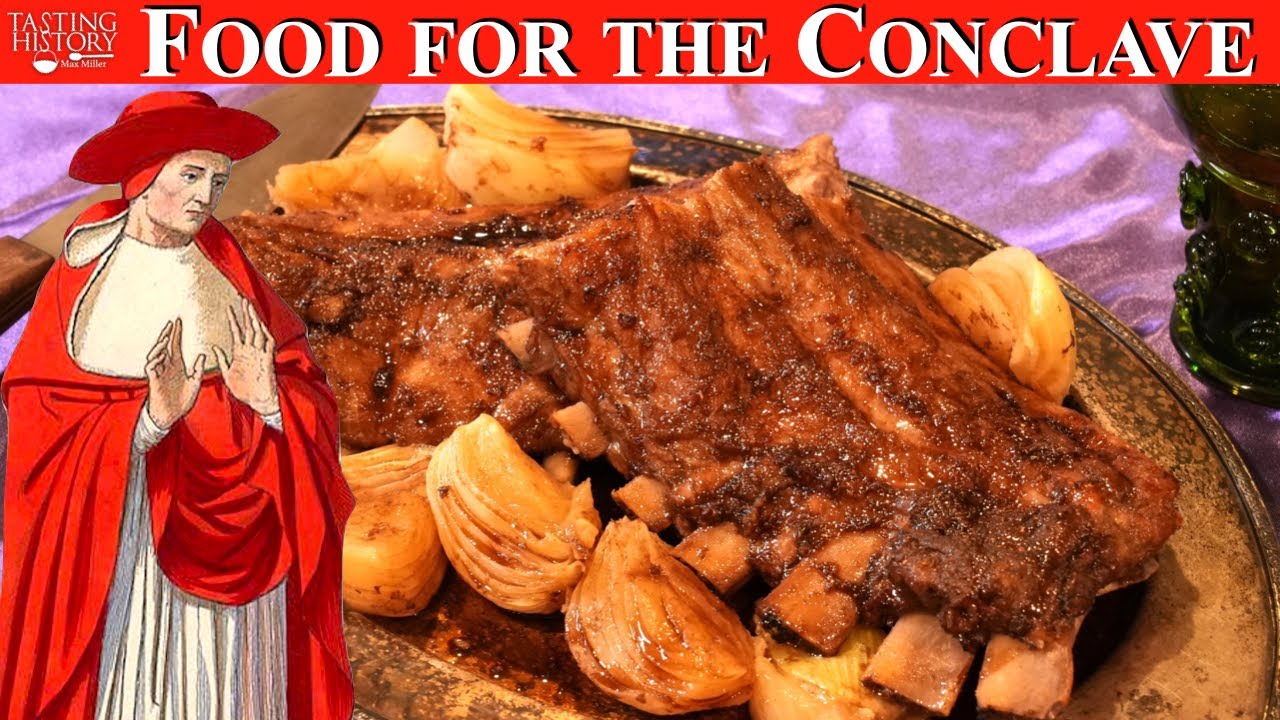
Wherein cooking and conclaves how the cardinals ate in conclaves come together in a fun video

This is great and the history is pretty good.

Just sit back and enjoy and… maybe… make a few notes and TRY the recipe!   I’ve forwarded to priest friends who are really into smoking and bbq, … hint hint hint…

There is a lot of fun church history, conclave trivia.

YouTube thumbnailYouTube icon

Posted in Fr. Z's Kitchen, SESSIUNCULA |
3 Comments

ROME 25/4– Day 28-29: New Pope – What Do The Romans Really Say?

WRITTEN YESTERDAY MORNING 8 MAY:

On this first full day – maybe full day, maybe note – the sun rose at 5:55. Sunset is slated for 20:19.

The Ave Maria Bell is still in its 20:30 cycle for the Roman Curia.

Today is the Feast of two Pope’s, Boniface IV (+615) who in dramatic fashion consecrated the Pantheon as a church dedicated to Our Lady of Martyrs and Pope Benedict II (+685).

Could we, today, get a Boniface X or a Benedict XVII?

Today is also one of two days of the year when we offer the Supplica to Our Lady of Pompeii.


WRITTEN TODAY 9 May:

On the first full day of the Pontificate of Leo XIV the sun rose at 5:54. It will set at 20:20.

The Ave Maria… will it begin to ring again? … in the 20:30 cycle.

It is the Feast of St. Isaiah, Old Testament Prophet.

People have pointed out that, yesterday, we have the Supplica to Our Lady of Pompeii and the 1500th anniversary of the Apparition of St. Michael at Monte Gargano… to the day.

What does that portend?

Who knows.

There are lots of rumors going around that Papa Prevost has celebrated the TLM. Some say this forcefully. I would like to think so, especially because I think that EVERY priest should know how to say it! The TLM teaches priests about who they are. Over time the gains are great and the knock on effects are significant.

My early sense is that he is not going to further punish people who want it. My early sense is that he will let Taurina cacata slip into the vague fog of fading memory or maybe after some benign neglect, sweep it aside.

I like the new papal name. It reminds us of the early stirrings of the modern Church’s social teaching because of Rerum novarum of Leo XIII. It also reminds us of Leo XIII’s powerful MARIAN devotion!

Moreover, Leo is the only name of a relatively recent Pope that is not likely to provoke negative associations in any of the various factions of today’s Church.

Welcome REGISTRANTS:

Bjorn
Carolus-csmb
freizeitbauer
Gingerly
inthebeginningwastheWord
larabee
Mr. Doty
PersianEsther77
Willis62
WolfendenP

Good to see new people.

It’s hard to know what to post, since there is so much to write about.  Hence, I’ll still to the bread and butter of these daily posts.

Last night I got together with a few friends for supper at a favorite place which is going from success to success.

Here is my first course (instead of pasta), asparagus with crumbled hard boiled egg and house-mayo.

I didn’t order this, but I was able to have a bite.  This is monk fish made like saltimbocca.

It was remarkably good!

We had a choice of amaro.  The World’s Best Sacristan™ can’t exercise any control when it comes to photo bombs.

Guess which one I had.

In the market this morning.

My walk through the Campo de’ Fiori this morning was funny.

The new Pope was the topic, at least with me, the guy in a cassock.   Since they are ROMANS… I asked them what they thought.   The results made me laugh.

First, “I don’t like him” – “Why?” – “I don’t like his face.”  “Really?”  “I don’t like his face… too skinny.”

Next, “I really like him!” – “Why?” – “I like his face, he seems nice”.

Next, “I don’t like him.” “Why?” “I don’t like his face… and he’s not Italian, enough with the foreigners.”

Next, “He’s great!” “Why” – “I like his face and he AMERICAN!” “Really?”  “Why not? And he’s young!”

Please note well: Almost all Romans are theologians of some sort.  They are not usually very good at it, but they are rarely uncertain.

Please remember me when shopping online and use my affiliate links.  US HERE – UK HERE  WHY?  This helps to pay for health insurance (massively hiked for this new year of surprises), utilities, groceries, etc..  At no extra cost, you provide help for which I am grateful.

Black to move and mate in 4.

NB: I’ll hold comments with solutions ’till the next day so there won’t be “spoilers” for others.

It is fun and instructive to watch the high level games with good commentary.  Right now there is a big match up in Bucharest for quite a lot of money and circuit points.   Today my guy Wesley So is up against the young Pole phenom Jan-Krzysztof Duda.

Can you visit the Benedictine monks of Norcia and help them by getting some of their excellent beer?  It could be a gift to someone else.

Posted in Leo XIV, SESSIUNCULA | Tagged ,
7 Comments

Here’s an idea to bring about healing and peace: Let the “Dubia Cardinals” re-submit the 2016 Dubia (Amoris) and 2023 Dubia (Synodality)

One of the thing that a new Pope has to do, is tie up the loose ends left by his predecessor.


There are no ends looser that one can imagine that the DUBIA about Amoris laetitia submitted in 2016 to Francis by the “Four Dubia Cardinals” (Burke, Brandmüller, Caffarra+,  Meisner+).

There were also dubia submitted in 2023 about synodality by five Cardinals (Brandmüller, Sarah, Sandoval Íñiguez, Burke, and Zen).

Resubmit the dubia Leo when things settle down.

This could be a foundational moment of healing at the beginning of a new Pontificate as well as a gesture of continuity with the last years out of which those sets of – serious! – questions were submitted by serious and highly credentialled men of the Church, Cardinals, fulfilling their duty to advise the Pope.

It might not be the best timing to resubmit these before the ink on Leo’s first signature is dry, but sometime soon when things are settling down, they could ask for the healing gesture of clarifications to their questions.

Responses could be a great consolation for a lot of people who have struggled in confusion about the Church’s teachings on some matters.

Some might argue that resubmitting the dubia would make him defensive.  I think it depends on how they are resubmitted and in what moment.

Posted in "How To..." - Practical Notes, Leo XIV, POPES, The future and our choices | Tagged ,
17 Comments

Card. Burke on Leo XIV

Posted in SESSIUNCULA |
21 Comments

Another Romanaccio sonnet about “The New Pope” by G.G. Belli (1832)

The 19th c. poet Giuseppe Gioachino Belli… Er Belli. He wrote satirical sonnets in the Roman dialect about life in Rome and took deadly aim at Rome’s priests, religious, prelates and popes.   The speakers in the poems are shop keepers and artisans, ordinary people, talking about the the high and mighty they see.

This was back in the day when Popes got around in town, walking or with a carriage, etc., and lived at the Quirinale.

Here’s one about a brand new Pope!

ER PAPA NOVO

Stavo ggiusto ar pilastro der cancello
Der cuartiere a cciarlà cco lo scozzone,
In ner mentre smuronno er finestrone,
E sbusciò er Cardinale cor cartello.

E io sò stato stammatina cuello
Ch’è entrato er primo drento in ner portone
Cuanno er Papa saliva in carrozzone,
E l’ho arivisto poi sott’a Ccastello.

Poi sò ccurzo a Ssampietro; ma le ggente
Eremo tante in chiesa, bbuggiaralle,
Che de funzione nun ne so ddì ggnente.

In cuanto sia portallo su le spalle
L’ho vvisto, ma vvolevo puramente
Vedé ccome je bbrusceno le palle.

Roma, 26 novembre 1832

Thanks to The Great Roman™ you get a great taste of the Roman dialect.

I was just standing at the gate post
of the neighborhood chatting with the horse breeder,
while they unbrick the big window,
and the Cardinal came out with the sign.

And I was the one this morning
who first entered the gate
when the Pope got into the big carriage,
and I saw him again later under the Castle.

Then I ran to St. Peter’s; but there were so many people
in the church, **** them, that I know nothing about the liturgy.
I saw how much it is to carry him on shoulders,
but I really wanted to see how the fluff balls burned.

That last part is a reference to the Sedia Gestatoria and the custom of burning fluff to remind the new Pope of the passing vanity of this world, sic transit gloria mundi.

Posted in Poetry | Tagged
Comments Off on Another Romanaccio sonnet about “The New Pope” by G.G. Belli (1832)