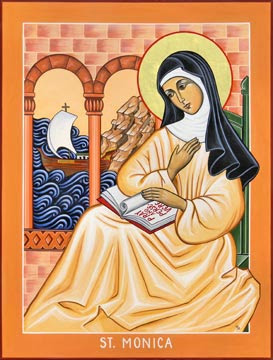
Priests, Sacrament of Penance again under attack by the State

You have probably heard about law in Washington that priests will be required to divulge to law enforcement anything about child abuse which they learned when hearing confessions (in the internal forum).

Fox now reports HERE that priests who obey that and who tell law enforcement something they learned during a confession will be excommunicated.

It’s canon law.

Can. 1386— § 1. A confessor who directly violates the sacramental seal incurs a latae sententiae excommunication reserved to the Apostolic See; he who does so only indirectly is to be punished according to the gravity of the offence.

Catholic Church to excommunicate priests for following WA law requiring child abuse confessions to be reported
‘Catholic clergy may not violate the seal of confession — or they will be excommunicated from the Church,’ the Archdiocese of Seattle said

The Catholic Church announced that priests will be excommunicated if they follow a new Washington state law requiring clergy to report confessions about child abuse to law enforcement.

“Catholic clergy may not violate the seal of confession — or they will be excommunicated from the Church,” the Archdiocese of Seattle said in a statement. “All Catholics must know and be assured that their confessions remain sacred, secure, confidential and protected by the law of the Church.”

“The Catholic Church agrees with the goal of protecting children and preventing child abuse,” the statement added, noting that it “remains committed to reporting child sexual abuse, working with victim survivors towards healing and protecting all minors and vulnerable people.”

The new law — signed by Democrat Gov. Bob Ferguson last week — added “members of the clergy” to a list of professionals who are required to report information that relates to child abuse or neglect to law enforcement, and the measure does not provide an exception for information offered at a confession booth.

Priests in the Catholic Church have been bound by the absolute seal of confidentiality, an obligation that requires them to keep anything learned in confession a secret.

The Archdiocese of Seattle said its policies already require priests to be mandatory reporters unless the information is received during confession.

“While we remain committed to protecting minors and all vulnerable people from abuse, priests cannot comply with this law if the knowledge of abuse is obtained during the Sacrament of Reconciliation,” its statement said.

The U.S. Department of Justice’s Civil Rights Division has opened an investigation into the law for possible violations of the First Amendment’s religious protections.

“SB 5375 demands that Catholic Priests violate their deeply held faith in order to obey the law, a violation of the Constitution and a breach of the free exercise of religion cannot stand under our Constitutional system of government,” Assistant Attorney General Harmeet K. Dhillon of the DOJ’s Civil Rights Division said.

“Worse, the law appears to single out clergy as not entitled to assert applicable privileges, as compared to other reporting professionals,” she continued. “We take this matter very seriously and look forward to Washington State’s cooperation with our investigation.”

The bill will go into effect on July 26.

Washington is one of just five states that does not explicitly or implicitly require clergy to report suspected child abuse or neglect, a federal report shows, according to Fox 13. Most states exempt information obtained through confession from mandatory reporting, but Washington now joins just a handful of states that do not provide such exemptions.

“This new law singles out religion and is clearly both government overreach and a double standard,” the Archdiocese of Seattle said. “The line between Church and state has been crossed and needs to be walked back. People of every religion in the State of Washington and beyond should be alarmed by this overreach of our Legislature and Governor.”

More Canon Law about the priest and the Seal.

Can. 983 §1. The sacramental seal is inviolable; therefore it is absolutely forbidden for a confessor to betray in any way a penitent in words or in any manner and for any reason.

§2. The interpreter, if there is one, and all others who in any way have knowledge of sins from confession are also obliged to observe secrecy.

Can. 984 §1. A confessor is prohibited completely from using knowledge acquired from confession to the detriment of the penitent even when any danger of revelation is excluded.

Posted in Pò sì jiù, Priests and Priesthood, The Coming Storm, The Drill, The future and our choices, The Last Acceptable Prejudice | Tagged , ,
6 Comments

EWTN sidelined their conclave “A team” and called in the … “C team”

It seems that EWTN has – mostly if not completely – sidelined, for the Conclave coverage, Raymond Arroyo, Robert Royal and Fr. Gerald Murray… the “Papal Posse”.

Now, the same three have a YouTube series.   HERE (Raymond’s personal site)

In EWTN’s new “C” team, I don’t know the woman at all and I only tangentially know the layman Matthew Bunson, but Landry?

This is GALACTICALLY STUPID on the part of EWTN leadership.

Perhaps you have a view on this.

Contact:

EWTN
5817 Old Leeds Rd.
Irondale, AL 35210
1-800-447-3986

viewer@ewtn.com

Posted in ¡Hagan lío!, You must be joking! | Tagged
25 Comments

What is going on with ETWN?

Has EWTN sidelined Raymond Arroyo and Robert Royal and Fr. Murray?

I’ve seen another threesome.  However, with the exception of one (I don’t meant the cleric) who are they?


Posted in SESSIUNCULA |
10 Comments

Starlink… thoughts

I’m starting to see IP addresses in comments via “starlink”.  I don’t usually pay attention to them.  “starklink” got my attention.

I can’t tell much about anything from those IPs, but the make me wonder.

Anyone here using Starlink who cares to share their experience with it?

I marveled at how Starlink is now providing also comms for the ISS and other craft that go up (and come down, often now, softly).

Occasionally back home on a clear night, I could spot starlink chains whizzing along.

What a change from my childhood when spotting a satellite was amazing.

Now, using my phone’s star app, I see all the stuff up there.  Wow.

So, anyone?


Posted in Just Too Cool, Look! Up in the sky! | Tagged
7 Comments

Pre-Conclave photos are out. This was the most interesting to me.

Photos of the different conclave areas and items have been released.  This is the that interested me the most.  You can right-click for larger.

Posted in "How To..." - Practical Notes | Tagged
10 Comments

ROME 25/4– Day 27: Getting rooked

On the last day before the 2025 Conclave, the 126th day of the calendar year, the sun rose in Rome at 5:58.

Sunset is at 20:17:

The Ave Maria Bells hasn’t budged… in more ways than one… at 20:30.

Today was a dies non so I celebrated a Mass “for the election of a Supreme Pontiff” and then worked on a piece here about the Mass texts. Powerful stuff.

Tonight in the parish Exposition, Rosary, Benediction and Solemn Mass for that intention.

I was out to supper with The Great Roman™ last night.   We split portions of two pastas for the sake of variety.  Tonnarelli with a ragu of venison and spaghetti with guanciale, pecorino and fave (like gricia with beans).  Both were good, the venison ragu was great.   The place we went to is under new management since about last February.  Some continuity with the menu, but new people and new chef.  Style has been upgraded.   Alas, part of that is change of service items like bowls.  Our pastas were served in Stupid Bowls, hard to eat out of.   Of course these days, cooks have a mania for twisting pasta up with tweezers and stacking it like Babel.  I am unimpressed.  It had better taste better than you’ve tried to make it look.  I get the visual part.  But….

Stupid Bowl.

It was not an inexpensive supper, but we wanted to check it out under the new regime.   It was close. Good quality food, nice staff, spiffed up tables, … alas, stupid bowls.

I checked out this little church on the Via Giulia, which still has the coat-of-arms of BENEDICT XV… yes… 15.  (14 would have been even better)  I don’t know how they held out.

I had a little time so I wandered over the Angel Bridge to the other side of the river… first time since being here.

Nice and clean.

Here, an angel is holding a large chess rook, …

The angel is sad that you don’t play chess and the he wants you to be happy by signing up for

Okay… it’s not really a big chess rook.  It is the pillar of the flagellation.  I tried.

PSSSST….

Strong candidates right now, the day before… Pizzaballa and Mamberti with a hedge toward Erdö.   I think this will take more than one day.

Posted in SESSIUNCULA |
8 Comments

What Does The Prayer Really Say? Mass for the Election of a Supreme Pontiff – full of emotion, laden with longing,

Spolier: The Postcommunion is fantastic.  And, forgive typos.  I did this fast.

This morning I said Mass with the formula of the Votive Mass Pro Eligendo Summo Pontifice… for the Election of a Supreme Pontiff.   VETUS ORDO… USUS ANTIQUIOR… It is the very first Mass formula in the section of Votive Mass for “different needs”, which might things like for peace in time of war, safety in time of plague, for the sick who are dying… you know, the little stuff.  In fact, in that section the Masses are presented in order of importance for the good of the whole Church, so they go from choice of a Pope, to choice of a Bishop, to ordinations and blessing of religious and defense and unity of the church, and vocations, etc.

Apparently, Holy Mother Church in her experience and wisdom seems to think that getting the right guy for Pope is pretty important.

The last few decades have borne that out.  Look at what Papa Wojtyla accomplished, and Ratzinger… and… you get it.

What will the next one accomplish, other than get elected.  The conclave starts tomorrow, as I type, not many steps away from where I sit.   And, frankly, if the next Pope does do much other than get elected… that’s okay with me.   Most of the time, the core role of a Pope is, like that of a father, to say “No.” most of the time when big issues come up, which isn’t all that often.

With that as a preamble, let’s see what Holy Mother Church thinks about Popes through the lens of the prayers she chooses.

NB: For a Mass pro eligendo, the priest can also say a Votive Mass of the Holy Spirit, for obvious reasons, but let’s stick with this.

Suscitábo mihi sacerdótem fidélem, qui iuxta cor meum et animam meam fáciet: et aedificábo ei domum fidélem, et coram ambulábit Christo cunctis diébus.

(T.P. Alleluia, Alleluia ). V.  Ps 131, 1.- Memento Dómine, David: Et omnis mansuetúdinis ejus.

The Introit comes from 1 Sam 2:35 which is about a “man of God” coming to old Eli and foretells the death of his wicked sons, very bad priests who treated God with contempt.  The “man of God”, whom I guess was an angel, says  “35 And I will raise up for myself a faithful priest, who shall do according to what is in my heart and in my mind; and I will build him a sure house, and he shall go in and out before my anointed for ever.”

And, as if to predict the Roman Curia and dioceses 1 Sam 2 ends (not part of the Introit, but we always look at context: “36 And every one who is left in your house shall come to implore him for a piece of silver or a loaf of bread, and shall say, “Put me, I pray you, in one of the priest’s places, that I may eat a morsel of bread.”’”

Yeah… some things don’t change.

The verse is from a Psalm about God’s faithfulness to His promises about David and his house.

The Collect runs:

Súpplici, Dómine, humilitáte depóscimus: ut sacrosáncte Romanae Ecclesiae concédat Pontificem illam tua immensa pietas; qui et pio semper et nos stúdio tibi plácitus, et tuo pópulo pro salubri regimine sit ad gloriam assídue tui nominis reveréndus.

Supplex indicates someone humbly bent down.  Pietas when applied to God means “mercy”, and to man “dutifulness” “devotion”.  Here, pietas seems almost like a form of address, “Your Mercy”, like “Your Majesty” or “Your Grace”.  Of course a pontifex is literally a “bridge builder”.

Bowed down in humility we entreat You, O Lord, that Your Immense Mercy will grant to the Roman Church a Pontiff who will please You both in devotion and zeal for us, and that he will be revered by Your people for his advantageous rule assiduously to the glory of Your Name.

As is reasonable, that Pontifex is a key.  It is not only the point (i.e., we don’t have one and we want one) it subtly organizes much of the content of the prayer.  A “bridge builder” connects two sides over a gap, in this case God (then an infinite gap) and us.   Note how the prayer says, in two ways, what the new Pope should do, be devout to God and be zealous for us, provide rule helpful for salvation for us and provide glory for God’s name, and in those things he will be pleasing to God and revered by us.   It’s back and forth in the prayer, God and us, us and God (which is a chiasmus).

A look at the Epistle from Hebrews 4:16 – 5:1-7:

16 Let us then with confidence draw near to the throne of grace, that we may receive mercy and find grace to help in time of need. 5:1 For every high priest chosen from among men is appointed to act on behalf of men in relation to God, to offer gifts and sacrifices for sins. He can deal gently with the ignorant and wayward, since he himself is beset with weakness. Because of this he is bound to offer sacrifice for his own sins as well as for those of the people. And one does not take the honor upon himself, but he is called by God, just as Aaron was. So also Christ did not exalt himself to be made a high priest, but was appointed by him who said to him, “Thou art my Son, today I have begotten thee”; as he says also in another place, “Thou art a priest for ever, after the order of Melchizedek.” In the days of his flesh, Jesus[a] offered up prayers and supplications, with loud cries and tears, to him who was able to save him from death, and he was heard for his godly fear.

At the end of chapter 4 Paul is discussion “the High Priest”.  He ends with that note of drawing near in confidence because he has just finished explaining how Christ (the High Priest) knows well what we are going through: “15 For we have not a high priest who is unable to sympathize with our weaknesses, but one who in every respect has been tempted as we are, yet without sin.”   Then we move into chapter 5, remembering that these chapter and verse divisions were imposed long after Paul wrote the words (and I leave aside the debate about authorship – it’s Paul and leave it at that).

In the verses from chapter 5, the Church is using the lens of Paul’s presentation of Christ as being priest in the “order of Melchizedek” to focus on the choice of a new Pontifex.   What’s with that?   On the surface, this is obvious from the first verse: “every high priest chosen from among men”.   Okay… that’s what we are doing, right?  Choosing a new Pope.  It gives a job description: “to act on behalf of men in relation to God”.   That’s the “bridge builder” intermediary again.  How is that accomplished: “to offer gifts and sacrifices for sins.”   First and foremost, the Pontifex is a priest.  The entire point of priesthood is about offering sacrifice to God and man’s mediator and, as God’s mediator with us, bring us God’s gifts. 

Priesthood is about sacrifice, not community organizing, not committee meetings, not … not… not….   You get it.   Other things have to be done to facilitate what the priest does, but they are not why he was ordained.  At least in a sane Church or diocese.   Once the idea of sacrifice for propitiation and for glorification is obscured, priests go wrong.  Then the people go wrong.  Then the whole thing goes wrong, as history bears out.   

Also, in this passage we find one of the only passages in which there is language about a “vocation” a “calling” to the priesthood: And one does not take the honor upon himself, but he is called by God,…”.    God calls, from the Greek kaléo.  Paul uses “calling” imagery for people in general who are “called” to baptism”.  Here it is a “calling” to priesthood.  That’s not for just anyone.  There are requisites.  Paul’s reference to the Old Testament High Priest means that in the old covenant a man had to be from one specific tribe only, the line of Aaron. This is why Paul also brings in the “order of Melchizedek”.   David was High Priest, as were the Davidic Kings.  Christ is of the line of David, not Aaron.  How could David be priest?  That would be a prerequisite for Christ being Davidic Priest King.   

We find Melchizedek in Genesis 14:18-20.   He is called “king of Salem”… so he is King of future Jeru-salem.  He was king and “he was priest of God Most High” who offers sacrifice.  What sacrifice?  Bread and wine.   Melchizedek was a kohen, and the first of all mentioned in the Old Testament, at the time of Abraham, c. 2000 BC, hundreds of years before Moses and Aaron.   So, this priesthood of Melchizedek pre-dates the Aaronic priesthood.  And he was King of Jerusalem.  Hence, when David – not of the Aaronic line – became the King in Jerusalem, he also became the High Priest in Jerusalem by a priesthood that pre-dated that of the Levitical line of Aaron.

The Pope to be chosen is the priest in continuity on earth with the High Priest in Heaven who, by His Ascension, now continually as Priest offers Himself as Victim sacrifice to the Father.

It’s Paschaltide, so we have the doubled Alleluia.

Alleluia, Alleluia. ?. Lv 21, 8.–  Sacérdos sit sanctus quia et ego sanctus sum, Dóminus qui sanctífico vos. Alleluia. ?. Jn 10, 14.– Ego sum pastor bonus: et cognósco oves meas, et cognóscunt me meæ. Alleluia.

The verses:

Lv 21, 8. You shall consecrate him, for he offers the bread of your God; he shall be holy to you; for I the Lord, who sanctify you, am holy.  [BTW… the next verses, NOT in our Votive Mass is a little grim…   And the daughter of any priest, if she profanes herself by playing the harlot, profanes her father; she shall be burned with fire.]  John 10:14  14 I am the good shepherd; I know my own and my own know me.

This Alleluia follow hard upon our celebration of Good Shepherd Sunday in the Vetus Ordo.  We’ve just had ample space and time to reflect on it.  And here it is.  So apt.

The Gospel is from John 14: 15-21.  In the Vetus Ordo we read this passage on the Vigil of Pentecost.  It makes sense to connect it here.

At that time, Jesus said to His disciples: 15 “If you love me, you will keep my commandments. 16 And I will pray the Father, and he will give you another Counselor, to be with you for ever, 17 even the Spirit of truth, whom the world cannot receive, because it neither sees him nor knows him; you know him, for he dwells with you, and will be in you. 18 “I will not leave you desolate; I will come to you. 19 Yet a little while, and the world will see me no more, but you will see me; because I live, you will live also. 20 In that day you will know that I am in my Father, and you in me, and I in you. 21 He who has my commandments and keeps them, he it is who loves me; and he who loves me will be loved by my Father, and I will love him and manifest myself to him.”

Perhaps it was this passage which prompted such piety in St. Catherine of Siena who referred to the Pope as “sweet Christ on Earth”.

Lest this become too long, I pull at just a couple of threads.   From the beginning the Lord says: “If you love me, THEN…”.

Sometimes we do things because we have obligations or we are brow-beaten into it or guilted or we do it by habit.   It might be important to be done and it may be our duty and we will have done it.  Fine.  But to do it for love is another thing altogether.

Sometimes we might make a confession because we are terrified of the consequences if we don’t.  Fine.  It was right to make our confession and receive absolution and get out lives straight.  However, it is even better to have made the sorrowful confession more for love, rather than mostly for fear.

Christ says He will send another parakletos, which means “advocate” or “counselor” or “comforter”.  The Greek is literally something like, “one called to be next to you”.   Of course the Holy Spirit is God, but this seems to be about the choice of a Pope.  There are ways in which the Pope might be thought of as a Paraclete, given that the Pope is supposed to be the Vicar of Christ, the one who stands for Christ with us, in His stead for us in this Church Militant.   He is thus a “Holy Father”.

Doesn’t Christ in our Gospel also say that he won’t leave us orphans?

A Holy Father who acts from love, who does not exalt himself (for example in “performative humility”), who is the bridge builder with God and man, offering sacrifice, following Christ, as Peter’s Successor, if necessary to the Cross with bound hands.

Please, Lord, give us a Holy Father who is better than we deserve.  We need a Holy Father who fathers and who doesn’t stepfather us.  We’ve been granted the grace to have seen the differences.

The offertory antiphon from RSV 1 Esdras 5 (called 3 Esdras 5:40)

Non participéntur sancta, donec exsúrgat póntifex in ostensiónem, et veritátem. (T.P. Allelúia.)

“Let them not partake in the sacred things, until a pontiff arises who is clothed in demonstration and truth.”

Good luck looking for 3 Esdras.    The actual verse is:

40 And Nehemiah and Attharias told them not to share in the holy things until a high priest should appear wearing Urim and Thummim.

?!?!?

In the Old Testament, the Urim and Thummim were a part of the Aaronic High Priest’s hosen (breastplate), attached to the ephod (apron-like garment), used for divinely inspired guidance, particularly in matters of justice and decision-making.

The Greek LXX says for Urim and Thummim “manifestation and truth”. How about “doctrine and truth” (St. Jerome).  According to the Hebrew roots, perhaps something like “to teach” and “to be true”.

Surely this verse has to do with the teaching authority and the power of “binding and loosing” which the Supreme Pontiff exercises supremely.

The Secret prayer, which you won’t hear, but which I spoke:

Tuæ nobis, Dómine, abundántia pietátis indúlgeat: ut per sacra múnera, quæ tibi reverénter offérimus, gratum majestáti tuæ Pontíficem sanctæ matris Ecclésiæ regímini præésse gaudeámus. Per Dóminum nostrum.

O Lord, may the abundance of your mercy kindly concede to us, that through these sacred gifts, which we reverently offer you, we may rejoice that a Pontifex pleasing to Your Majesty presides in the governance of Holy Mother Church.

Not pleasing to us… pleasing to God, but pleasing to us because pleasing to God.  God above all.  This we tie to the offertory we prayed as well: that he will exercise justice in decision making, teach the truth clearly according to God’s will, attached to the office he has been given.

I reflect often on how we, sharing in Christ’s priesthood, the baptized in their way, priests in another, can offer sacrifices pleasing to God.  I recommend to people with cares, and joys but mostly cares, to place those cares, their petitions, their praises, into the chalice when the priest puts a tiny bit of water (our humanity) into the wine (God’s divinity) to be wholly transformed by the consecration, water disappearing into the wine, becoming only more like what the wine is in its being in contact.

So we raise our prayers to God, especially through the offering of this Holy Mass, for a good new Pope.  Please God, better than we deserve.

Communion Antiphon:

Veste sancta utétur póntifex qui fúerit constitútus, et ingrediétur tabernáculum testimónii, ut minístret in sanctuário. (TP Allelúia.). 

Let the Pontifex, who will have been appointed, use sacred vesture, and let him enter into the tent of the covenant in order to minister in the sanctuary.

The whole verses of Exodus 29:29-30.  Notice that the antiphon is much abridged, altered.

29 “The holy garments of Aaron shall be for his sons after him, to be anointed in them and ordained in them. 30 The son who is priest in his place shall wear them seven days, when he comes into the tent of meeting to minister in the holy place.

“Let the Pontifex, who will have been appointed, use sacred vesture…”

O my prophetic soul!

Holy Church could have let the Latin of the antiphon alone and just let it ring out as is.   Even as it is, it is not inappropriate for this Votive Mass.   Garments… successors… sacred place… liturgy.  Nothing wrong with that.  However, what is underscored in the antiphon is the connection of the sacral vesture, the sacred space and service (not domination or performative humility).   I am minded, as I am sure you are, of that wretched spectacle, that harbinger, some 12 years ago and change.

“Let the Pontifex, who will have been appointed, use sacred vesture…”

Just a reminder, the white cassock is just a cassock that happens to be white.  It’s the priest’s street clothes.  For sacred work, you put on sacral garments.  Properly, even when hearing confessions the priest ought to wear a surplice over his cassock.  He will have the stole, which is a garment, but – if not for validly – absolutely for the sake of decorum and the very thing willed by God in the service of his people.  Eradicated in the New Testament?  Not a chance.

Here is the final prayer, the Postcommunion:

Pretiósi córporis et sánguinis tui nos, Dómine, sacraménto réfectos, mirífica tuæ majestátis grátia de illíus summi Pontíficis concessióne lætíficet: qui et plebem tuam virtútibus ínstruat, et fidélium mentes spirituálium arómatum odóre perfúndat. Qui vivis.

Wow!

Here perfundo, literally “pour through” is helped out by odor and aroma.    I am torn.  These is quite elegant.  In Latin odor is principally a pleasant smell, from cooking, spices, perfumes.   When the priest prepares the chalice at Mass, which I spoke above, he raises it to the Father and says, “We offer unto Thee, O Lord, the chalice of salvation, beseeching Thy clemency, that it may ascend before Thy divine Majesty, as a sweet savor [cum odore suavitatis], for our salvation, and for that of the whole world.”  And indeed, the priest can smell the wine in the chalice at that moment.  That’s odor.  Aroma immediately struck me because when I go to the open market to my regular vegetable stand in the Campo de’ Fiori, I will also get the necessary “aromata” (celery, parsley, rosemary, etc.) for my mirepoix, for my bouquet garnis in my cooking.  Aroma is “spice”.  In the Vulgate it is only in the plural for “spices”.

We are asking from our newly elected Pope for outwardly edifying virtues and for worship and teaching that savory.  You know what I mean! Something that makes the mouth of the mind and heart water in anticipation and then slowly savor.

We want the spice, the spiritual fragrances that delight and open the soul to new vistas of the truth and life in God.

I remember how in the days of John Paul and Benedict, when we heard there was going to be another document, we looked forward to it with great anticipation.  When I finally obtained we went through looking for all the good stuff.   Then, more recently, when we – well, many – heard about a new document we dreaded its coming.  When we got it we – how awful is this – looked for the bad stuff.

Not all good, not all bad.  Often unclear or wobbly.  Not… savory.

How to put this into an English version?    The image of the aromatic herbs tied up with string into a bouquet garni…

May the magnificent grace of Your Majesty, O Lord, thrill us who have been nourished by the sacrament of Your precious Body and Blood by the gifting of this Supreme Pontiff: who will instruct Your people by his virtues, and also imbue minds of the faithful with the fragrance of spiritual bouquets.

So much richness in that oration, the culmination of an emotional filled Mass laden with longing and hope.
Posted in Liturgy Science Theatre 3000, Save The Liturgy - Save The World, SESSIUNCULA, WDTPRS | Tagged
6 Comments

ROME 25/4– Day 26:

We’ve broken the 06:00 barrier for sunrise by 1 minute. Sunset is at 20:16.

The Ave Maria Bell: 20:30

We are 125 days into the year.

Welcome registrants:

ducinaltum333
fruitcrmble@*******.net
WolfendenP

Please remember me when shopping online and use my affiliate links.  US HERE – UK HERE  WHY?  This helps to pay for health insurance (massively hiked for this new year of surprises), utilities, groceries, etc..  At no extra cost, you provide help for which I am grateful.

Explain this one!   (For those of you not familiar with chess notation, !! means “brilliant”.)

Here’s a lovely French ciborium.

Not too shabby.

On the Via dei Cappellari.   I mentioned this in a short video sent to Roman donors.

Note the “mondezzaro” sign on the left.   Here is the text.

SI PROHIBISCE ESPRESSAMENTE À QVALSIVOGLIA
PERSONA DI GETTARE NE TAMPOCO FAR GETTARE NE FAR
PORTARE IMMONDEZZA DI SORTE ALCVNA VICINO INTORNO
NE SOTTO AL PRESENTE ARCO SOTTO PENA DI SCVDI VENTI=
CINQVE MNTA DA APPLICARSI VN TERZO ALL’ACCVSATORE CHE
SARA TENVTO SEGRETO ET ALTRE PENE ANCHE CORPORALI P[er]
LA QVAL PENA PECVNIARIA IL PADRE SARA TENVTO PER LI
FIGLIOLI ET IL PADRONE P LE SERVE E’ SERVITORI IN CONFORMI=
TA’ DELL’EDITTO DI MONS:ILMO PRESIDENTE DELLE STRADE

PVBLICATO LI 14 AGOSTO 1733

IT IS EXPRESSLY PROHIBITED FOR ANY PERSON TO THROW OR HAVE THROWN OR CARRY OUT ANY RUBBISH OF ANY KIND ANYWHERE NEARBY OR UNDER THIS ARCH UNDER PENALTY OF TWENTY-FIVE SCUDI [coins] A THIRD TO BE APPLIED TO THE ACCUSATOR, WHO WILL BE KEPT SECRET, AND OTHER PENALTIES, EVEN CORPORAL, FOR ANY PECUNIARY PENALTY THE FATHER WILL BE HELD FOR HIS CHILDREN AND THE MASTER FOR SERVANTS IN ACCORDANCE WITH THE EDICT OF THE MONSIGNOR MOST ILLUSTRIOUS PRESIDENT OF THE STREETS.

PUBLISHED 14 AUGUST 1733

Here is a screen shot from the aforementioned video.

Of course people pile garbage there all the time now.

And, on the way home from supper with The Great Roman™.

Posted in SESSIUNCULA |
4 Comments

St. Monica, her incipient alcoholism, the intervention that saved her. WORLD HISTORY CHANGING in an INSTANT!

In the older calendar, today is St. Monica’s Feast, also spelled Monnica, a Punic name.

Monica was an inch away from becoming an alcoholic. (The story of her abusive husband has been told here before.)

This is IMPORTANT. At the end, I ask you to consider the implications of the events recounted. WORLD HISTORY CHANGING in an INSTANT.

From Serge Lancel’s Augustine, the best biography I know of the great Bishop of Hippo (p. 8 ff – emphases mine):

Before devoting himself entirely to Mother Church, as he approached the age of forty, Augustine had had a concubine for about fifteen years, of whom he had been very fond and who had given him a son; then, at the same time as a fleeting engagement, a second short-lived liaison.  But only one woman really counted in his life, and that was his natural mother, Monica.

As we may guess from reading a few pages of Book IX.8 of the Confessions, Patricius – Augustine’s father – had taken a wife in Thagaste from a milieu close to his own.  He had married Monica, as his would describe it in a phrase borrowed from Virgil, “in the fullness of her nubility”, which means that he had not married a child, a practice that was in any case more rare then in Africa that in Rome itself.  The couple had three children, in what order we do not know: a girl, who remains anonymous to us, but who, once widowed, would later become the superior of a community of nuns, and two boys, Augustine and Navigius, whom we shall find with his brother in Italy, at Cassiciacum, then at Ostia at their dying mother’s bedside.  …

So Monica had been born into a Christian family and was, as we would say today, a practicing believer.  The religious practices of Christians at that time, in North Africa, sometimes included aspects that would be surprising to us, such as the custom of taking offerings of food to the tombs of martyrs, for agapes that only too often degenerated into orgies; an obvious survival of the pagan festival of the Parentalia.  Of course, Monica did not indulge in those excesses.  If the baskets she brought to the cemetery contained, besides gruel and bread, a pitcher of unadulterated wine, when the time came to share libations with other faithful, she herself would take only a tiny amount, diluted with water, sipped from a goblet in front of every tomb visited.  Was this sobriety a memory of some experience in her early youth?  Augustine tells this story which he says he heard from the lady herself.  Raised in temperance by an old serving-woman who enjoyed the complete trust of Monica’s parents, she had fallen into a bad habit.  Well-behaved girl that she was, she was sent to the cellar to fetch wine from the cask, but before using the goblet she had brought to fill the carafe she would just wet her lips with the wine, not because she liked it, says Augustine, but out of childish mischief.  But gradually she had acquired a taste for it, to the point where she was drinking entire goblets of it with great gusto.  Fortunately she had cured herself of this incipient liking for drink in a burst of pride: the maidservant who accompanied her to the cellar, having fallen out one day with her young mistress insultingly called he a “little wine bibber”.  Stung to the quick, Monica had immediately stopped her habit.

Think now about the spiritual works of mercy: admonish the sinner.

NOW… consider how that servant affected WESTERN CIVILIZATION because of what she did for the future mother of St. Augustine, arguably one of the most influential figures in history.

You never know.

Do the right thing, in sacrificial love.

CLICK

Here’s the Latin from Confessions 9.8.18.

A few interesting words in bold:

8. 18. Et subrepserat tamen, sicut mihi filio famula tua narrabat, subrepserat ei vinulentia. [“an inclination for getting drunk on wine slithered into her”] Nam cum de more tamquam puella sobria iuberetur a parentibus de cupa vinum depromere, submisso poculo, qua desuper patet, priusquam in lagunculam funderet merum, [wine uncut with water – in the ancient world wine was always cut and it drinking merum was a sign of low manners, etc, as Cicero accused Mark Antony] primoribus labris sorbebat exiguum, quia non poterat amplius sensu recusante. Non enim ulla temulenta [archaic word for wine] cupidine faciebat hoc, sed quibusdam superfluentibus aetatis excessibus, qui ludicris motibus ebulliunt et in puerilibus animis maiorum pondere premi solent. Itaque ad illud modicum quotidiana modica addendo; quoniam qui modica spernit, paulatim decidit; in eam consuetudinem lapsa erat, ut prope iam plenos mero caliculos inhianter hauriret. [with a gaping mouth she quaffed whole cups of uncut wine] Ubi tunc sagax anus [wise old woman] et vehemens illa prohibitio? Numquid valebat aliquid adversus latentem morbum, nisi tua medicina, Domine, vigilaret super nos? Absente patre et matre et nutritoribus tu praesens, qui creasti, qui vocas, qui etiam per praepositos homines boni aliquid agis ad animarum salutem. Quid tunc egisti, Deus meus? Unde curasti? Unde sanasti? Nonne protulisti durum et acutum ex altera anima convicium tamquam medicinale ferrum [reproach like a cautering iron] ex occultis provisionibus tuis et uno ictu putredinem illam praecidisti? Ancilla enim, cum qua solebat accedere ad cupam, litigans cum domina minore, ut fit, sola cum sola, obiecit hoc crimen amarissima insultatione vocans meribibulam. [The old servant woman threw this crime (at Monica) with the bitterest reproach calling her a drunk (“wine-swiller”).] Quo illa stimulo percussa respexit foeditatem suam confestimque damnavit atque exuit. Sicut amici adulantes pervertunt, sic inimici litigantes plerumque corrigunt. Nec tu quod per eos agis, sed quod ipsi voluerunt, retribuis eis. Illa enim irata exagitare appetivit minorem dominam, non sanare, et ideo clanculo, aut quia ita eas invenerat locus et tempus litis, aut ne forte et ipsa periclitaretur, quod tam sero prodidisset. At tu, Domine, rector caelitum et terrenorum, ad usus tuos contorquens profunda torrentis, fluxum saeculorum ordinans turbulentum, etiam de alterius animae insania sanasti alteram, ne quisquam, cum hoc advertit, potentiae suae tribuat, si verbo eius alius corrigatur, quem vult corrigi.

In the online Pusey translation… a little dated:

And yet (as Thy handmaid told me her son) there had crept upon her a love of wine. For when (as the manner was) she, as though a sober maiden, was bidden by her parents to draw wine out of the hogshed, holding the vessel under the opening, before she poured the wine into the flagon, she sipped a little with the tip of her lips; for more her instinctive feelings refused. For this she did, not out of any desire of drink, but out of the exuberance of youth, whereby it boils over in mirthful freaks, which in youthful spirits are wont to be kept under by the gravity of their elders. And thus by adding to that little, daily littles (for whoso despiseth little things shall fall by little and little), she had fallen into such a habit as greedily to drink off her little cup brim-full almost of wine. Where was then that discreet old woman, and that her earnest countermanding? Would aught avail against a secret disease, if Thy healing hand, O Lord, watched not over us? Father, mother, and governors absent, Thou present, who createdst, who callest, who also by those set over us, workest something towards the salvation of our souls, what didst Thou then, O my God? how didst Thou cure her? how heal her? didst Thou not out of another soul bring forth a hard and a sharp taunt, like a lancet out of Thy secret store, and with one touch remove all that foul stuff? For a maid-servant with whom she used to go to the cellar, falling to words (as it happens) with her little mistress, when alone with her, taunted her with this fault, with most bitter insult, calling her wine-bibber. With which taunt she, stung to the quick, saw the foulness of her fault, and instantly condemned and forsook it. As flattering friends pervert, so reproachful enemies mostly correct. Yet not what by them Thou doest, but what themselves purposed, dost Thou repay them. For she in her anger sought to vex her young mistress, not to amend her; and did it in private, either for that the time and place of the quarrel so found them; or lest herself also should have anger, for discovering it thus late. But Thou, Lord, Governor of all in heaven and earth, who turnest to Thy purposes the deepest currents, and the ruled turbulence of the tide of times, didst by the very unhealthiness of one soul heal another; lest any, when he observes this, should ascribe it to his own power, even when another, whom he wished to be reformed, is reformed through words of his.

Posted in Classic Posts, Patristiblogging, Saints: Stories & Symbols | Tagged
5 Comments

ROME 25/4– Day 25:

When 06:00 arrived, up came the sun here in Rome. One minute ago as I write, which is 20:15, the sun officially set.

The schedule for the Ave Maria Bell is still 20:30, though technically it should be more closely connected to sunset.

In the older calendar today we celebrate St. Monica, the mother of St. Augustine, who died at Ostia, Rome’s port on their way back to N. Africa. She has a lovely collect:

Deus, mæréntium consolátor et in te sperántium salus, qui beátæ Mónicæ pias lácrimas in conversióne fílii sui Augustíni misericórditer suscepísti: da nobis utriúsque intervéntu; peccáta nostra deploráre, et grátiæ tuæ indulgéntiam inveníre.

More about her in another post.

Please remember me when shopping online and use my affiliate links.  US HERE – UK HERE  WHY?  This helps to pay for health insurance (massively hiked for this new year of surprises), utilities, groceries, etc..  At no extra cost, you provide help for which I am grateful.

Which drink is mine?

Okay, that was an easy one. For bonus points: Can you guess what it is?

There is still only one because I was waiting for friends to arrive and I wanted to be “using” the table rather than just sitting at it when others were circling.

A nice shot from this morning’s Solemn Mass.

A nice shot from Solemn Vespers with Benediction.

And a nice shot of ITALIAN FSSP seminarians who were with us for Good Shepherd Sunday. A great sign of life.


Posted in SESSIUNCULA |
12 Comments