From a reader: “We can sing this, but chant and Latin are ‘too hard’.”

From a reader:

Looking through our parish hymnal for music for Sunday for the Transfiguration, I came across this gem.  It has 10 time signature changes in one verse (that’s 40 time signature changes if you sing all the verses!) We won’t talk about the 6 bar rest that the congregation is expected to count that  hopefully is still in 4/4 time.  I sing in a professional chorus that performs along side a professional orchestra. We do major works with fewer time signature changes!

We can sing this, but chant and Latin are “too hard”.

Here’s the dreck she was writing about.

Since it is the Ides of March, I’ll just say, “Great Caesar’s Ghost!” in lieu of less refined exclamations.

Posted in Liturgy Science Theatre 3000, You must be joking! |
5 Comments

ASK FATHER: Mass “for the gift of tears”… for someone else?

From a reader…

QUAERITUR:

Can a Mass for the gift of tears be said for someone else or is it only for the celebrant or person requesting the Mass?

The prayers seem like a powerful source of conversion for self. Can we ask it for others?

That’s a really good question! I’m glad you asked.

First of all, we need some basics. In the older, traditional Missale Romanum there is a orations “ad petendam cumpunctionem cordis… in order to petition compunction of heartusually rendered as “for the gift of tears”.

The prayers, which could be added to the orations in the Vetus Ordo (which is so much more flexible and reflective of knowledge of the human condition than the Novus), are beautiful.   Also, there is nothing in them that suggests that the priest is asking for this gift only for himself, though he clearly does ask for himself.  He raises the petition for “us”.

Yes, I think that a priest, or a petitioner with a Mass intention, could apply these prayers in a special and pointed way for the gift of tears to be given to a certain person.   Of course, we Catholics are “both/and” and not “either/or” when it comes to this sort of things.  We don’t have to exclude ourselves when asking for graces for others.

Here are the prayers.  What do you think?  It seems like a universal call to sorrow for sins, one’s own and for those of others, for sins of commission, for sins of omission, even for sheer tepidity.

Read ’em… and weep.

COLLECT

Omnipotens et mitissime Deus, qui sitienti populo fontem viventis aquae de petra produxisti: educ de cordis nostri duritia lacrimas compunctionis; ut peccata nostra plangere valeamus, remissionemque eorum, te miserante, mereamur accipere. Per Dominum.

O Almighty and most gentle God, who draw forth living water out of a rock for Thy thirsting people: draw now forth tears of compunction from the hardness of our hearts; so that we may be able to weep for our sins, and that we might merit, as Thou art merciful, their forgiveness.

Note the reference to God bringing forth water from the rock for the people in the wilderness.  See Exodus 17 and 1 Cor 10.

SECRET

Hanc oblationem, quaesumus, Domine Deus, quam tuae maiestati pro peccatis nostris offerimus, propitius respice: et produc de oculis nostris lacrimarum flumina, quibus debita flammarum incendia valeamus exstinguere. Per Dominum.

Look graciously upon this sacrificial offering, O Lord God, which for our sins we present to Thy Majesty ; and bring forth from our eyes torrent of tears, by which we might be able to extinguish the fire of flames we have deserved.

POSTCOMMUNIO

Gratiam Spiritus Sancti, Domine Deus, cordibus nostris clementer infunde: quae nos gemitibus lacrimarum efficiat maculas nostrorum diluere peccatorum; atque optatae nobis, te largiente, indulgentiae praestet effectum. Per Dominum.

Mercifully pour forth, O Lord God, the grace of the Holy Ghost into our hearts; that it bring us to wash away of the stains of our sins by the sighing of tears; and, Thou bestowing, grant to us the effect of pardon we desire.

I believe that this is an important petition right now… for the Church as a whole.

Right now… people should get down on their knees – if not prostrate on the floor – and beg God with honest tears to forgive and to move to conversion so many of our Church’s pastors.  What a supreme mess we have. The loss of souls is staggering.  Ponder this seriously and even the hardest boiled of eggs among us will soften.  Those prelates, in Holy Orders that will endure even in Hell, will have to answer.   But conversion is possible while there is life.  Tears of the faithful, interceding in confident sorrow – sorrowful confidence? – can be a start.

Posted in "How To..." - Practical Notes, ASK FATHER Question Box |
3 Comments

Daily Rome Shot 1269 – Oh great… just what we needed…

Please remember me when shopping online and use my affiliate links.  US HEREWHY?  This helps to pay for health insurance (massively hiked for this new year of surprises), utilities, groceries, etc..  At no extra cost, you provide help for which I am grateful.

In news elsewhere…

Oh great… just what we needed…

In far more important news…

Please support the traditional Benedictines of Norcia (and get really good beer doing it).

In chessy news… how fast can you solve this? White to move and mate in 2.

Ready? GO! HERE

Black to move and mate in 2.

Posted in SESSIUNCULA |
4 Comments

“Pro aris et focis” – Food for thought

Not being a fan of The Pillar for various reasons, I wouldn’t ordinarily point out one of their posts.  However, this one is by Luke Coppen, my former editor at The Catholic Herald when I wrote for them in happier times. I have great respect for him.

Coppen posted a an interesting piece entitled “Does ‘Traditionis custodes’ have a future?”

That’s a question which merits attention. It was spurred by recent comments from the head of the Vatican dicastery for liturgy, the infamous Arthur Card. Roche. Give his past record on antipathy and persecution of traditional Catholics some were surprised by what seemed to be conciliatory comments regarding the Vetus Ordo. Roche said, incredibly, “There is nothing wrong with attending the Mass celebrated with the 1962 missal.” The rest of his comments are a mess, but that quote spurs the aforementioned question. “Does ‘Traditionis custodes’ have a future?”

I think not. It’s so egregious awful, so unjust and uncharitable, that I suspect it will simply be relegated to that special shelf of embarrassed regret where other tchotchke documents have gone to gather dust.

To drill into this topic, Coppen reached out to several figures who in some way or another have interest (favorable or hostile) toward the Traditional Roman Rite. Coppen contacted Gregory Di Pippo of New Liturgical Movement, Fr. Anthony Ruff, OSB of the progressivist Pray Tell blog, the execrable Mr. Cricket, Andrea Grillo, who was probably a driving force behind Taurina cacata, the esteemed Joseph Shaw, Chairman of the venerable Latin Mass Society of England and Wales, and the smarmy papalotrous Austen Ivereigh. Their comments are mostly predictable. The most intriguing, and I think correct, remarks come from Di Pippo. He is the first one Coppen cites, by the way. Shaw is good too, and you can just skip, Ruff, Grillo and Ivereigh… who is just plain silly.

Even more interesting to me were comments in my closely knit “text” group, whose members are impressively credentialed. I will not share their names. I can, however, let you in on some of their insights.

One of them:

To my mind DiPippo gets both answers right, what Roche meant, and what will happen in the future. Evidently, in the short term, much will depend on the Successor of the Vicar of Himself. I venture that, if we are not stuck with Francis II, TC and the debate surrounding it will not be something he will want to deal with as a priority. In that case, once again, I think DiPippo gets it right: TC will fade from view without a new motu proprio and sooner rather than later bishops will be told, without much fanfare, that they can make provisions for the EF in their own dioceses.

This is quite close to my thought.

Another one made this point, which I also think is true: “my trust in the bishops is not precisely strong. Unless this substantially reverts to the pastors, it will not be as good as it should be.”   That’s what Summorum Pontificum provided.

The real meat of the discussion is worth sharing precisely because he makes points we need to take to heart and ponder.    I will add my emphases and comments.

If Roche’s interview really sounded like an olive branch to some then I’d expect hysterical pressure on him and all of Francis’s satellites to persecute trads even more harshly before it’s too late. It may not happen just because some bishops are busy positioning themselves for the after-Francis and most of them just like to work very little.

There is no way of knowing what the future holds (other than Armageddon that is) but one thing is sure: the hatred for the traditional liturgy has very little to do with some actually cranky, eccentric and all-around insufferable characters in the trad world (as if there were none among the Novus Ordo Karens of both sexes). That hatred has to do with the fons et culmen [the “source and summit”] of the life of the Church which the traditional liturgy in all its parts, textual and ceremonial, plus the calendar, the fasting etc. encapsulates with the truly Spirit-guided wisdom of the Apostles and the Fathers since time immemorial. Therefore they can’t let it be and this is why the fight for it is also the fight for every normal and decent Catholic – Novus or Vetus Ordo doesn’t matter – every serious priest and theologian, anybody sincerely trying to follow Christ – the one the Apostles saw risen – and made Him loved by others as well. This is truly a battle pro aris et focis [“for our altars and our hearths”… ancient Roman houses had altars for their household tutelary gods, the lares, so this is tantamount to “hearth and home” or, in an extended sense, “God and country”, all that we hold most dear.] because they hate normal Catholics lay and ordained alike, because they won’t let go of the sacrificial nature of the Mass and of the Church itself. That blood that won us salvation in that gory manner, the meaning of that altar so obvious to “Roman” eyes – that is, of men of good will everywhere – must NOT be the center of our lives. [According to the enemies of Traditional and those who want it.] So there may be some respite, but they will keep coming at us all, regardless of the preferred liturgical form.

To paraphrase the Protestant Niemöller …

“First they came for the trads, and I said nothing as I was not a trad and I didn’t like them very much, then they came for seminarians and I said nothing as I was not a seminarian, then they came for theologians and I said nothing as I was not one of them, then they came for me and there was nobody left to speak out”.

My conclusion above applies as food for thought to trads who think they can just ignore the rest of the Church for liturgical preferences but especially to those in the Olympian Middle who think there is common ground with the nimrods and the Cains currently in power everywhere.

We will prevail, in history or at the end of it, but we won’t have peace as the world gives, ever. That said, I am convinced both that we need some soul searching in our very ranks and that many of the wounds of the trad world are self inflicted.

In truth there is a visibility on the internet of certain types who represent themselves and their dog and who are particularly obtuse and yet they’re the ones taken as model for a whole world of good priests, families etc.

Be as it may, they will keep coming at us all, if not now, later, unless a normal pope is elected who can start picking a good team for the Curia and appoint decent bishops around the world (which I doubt, but never say never).

And that, my dear readers, is some serious food for thought.

Posted in Hard-Identity Catholicism, The Drill, The future and our choices, Traditionis custodes |
3 Comments

15 March – Annual ramble about the #IdesOfMarch

ides of march groupsWe call today the Ides of March, made especially famous in the English speaking world by Shakespeare in his play Julius Caesar.

Caesar:
Who is it in the press that calls on me?
I hear a tongue shriller than all the music
Cry “Caesar!” Speak, Caesar is turn’d to hear.

Soothsayer:
Beware the ides of March.

Caesar:
What man is that?

Brutus:
A soothsayer bids you beware the ides of March.

QUAERITUR: If someone were to ask you today “What are Ides?”, could you give an explanation?

Romans had three special days each month which were supposed to relate to the cycles of the moon. The first days of the month were the Kalends. Kalends gives us our word “calendar”, of course. The origin of this strange Latin word, with a K, is fuzzy. K in Latin immediately makes us suspect that there is something very ancient going on or perhaps something Greek. In this case, some think that Kalends comes from an announcement about the New Moon made to Juno on the Capitoline Hill, “kalo Iuno Novella… I call you, New Juno”. Who knows. Going on, the Nones fell either on the 5th in short months or 7th in longer months. The Ides fell either on the 13th or the 15th, depending on the month. Romans thought even numbered days were unlucky, so they jumped over them and didn’t hold religious events on them. Romans counted dates of the month backwards from these three days. Today, 15 March, is the Ides of March, tomorrow will be “ante diem xvii Kalendas Apriles… 17 days before the Kalends of April”.

Don’t worry that that doesn’t seem to add up. Romans counted days a little differently than we do.

Here is a mnemonic poem to help remember when the Ides and other days fall in a month. It varies. This is from Gildersleeve’s Latin Grammar reworked by Lodge or what we call “Gildersleeve & Lodge” (my preferred grammar – UK HERE):

“In March, July, October, May,
The Ides are on the fifteenth day,
The Nones the seventh; but all besides
Have two days less for Nones and Ides.”

English “Ides” is from Latin Idus (always plural feminine) comes probably from Etruscan iduo, “to divide”, and thus it indicates that we are roughly at mid-month.  However, there is a Sanskrit root indu which is “moon”, hence, the Idus are when the Roman thought the full moon ought to be (whether it was full or not, apparently).

You students of Latin need to know that in Latin the names of months are actually adjectives.  In Latin we say that today is “the March-ian (month’s) Ides” or Idus Martiae (mensis).  But in Latin we also conceive that the whole date is a single word or term.  Thus, if we were going to put off something until, exempli gratia, 18 March we would say “differimus aliquid in ante diem xv Kal. April.

Interesting, no?  Nisi fallor, Romans paid interest on loans on the Ides.

Caesar sure paid.

Anyway, we Catholics still pay our interest to the ancient Roman way of calculating time.  In the Latin edition of the Liturgy of the Hours (not the pre-Conciliar Roman Breviary) in the calendar section we still see indications of the ancient Roman dates.

So, today is famously the day upon which Julius Caesar was assassinated.

Caesar had, apparently, been warned by various people, including his wife Calpurnia who had had a portentous dream, not to go to the Senate meeting that day.  He went.  He was killed with 23 stab wounds in the portico of the Theatre of Pompey.

Caesar was killed during or after a meeting of the Senate, but not in the Senate building.

Pompey the Great, when he returned to Rome from Spain, still held power of imperium (to lead troops, etc.) and he could not legally cross the City limits (pomerium) without losing that power.  So, in order to attend Senate meetings, he built a meeting hall for the Senate outside the pomerium.  It was part of the complex of the palace and stone theatre he built, Rome’s first permanent stone theatre.

BTW… on a personal note… this is “my neighborhood” in Rome.

At this point there was no Senate building in the Roman Forum.  The Senate had burned down after the murder of one of Caesar’s thugs, Publius Clodius Pulcher, by a guy named Milo. Milo was a creature aligned with Cicero and the optimates.  Publius’s supporters brought his body to the Senate House (the Curia Cornelia which Lucius Cornelius Sulla had built to replace to old Curia Hostilia), and burned it there.  They went into the Senate and hauled out the wooden furniture to burn the body.  The Senate caught fire too and burned down. Caesar started the construction of a new Senate House, the Curia Iulia which stands still in the Forum because in the 7th century it was turned into a church, Sant’Adriano al Foro.

In the meantime, with the destruction of the curia (still today the technical name for a diocesan chancery) the Senate moved around, meeting in temples or often at the aforementioned hall built by Pompey.

PERSONAL ANECDOTE:

The main door of my seminary in Rome opened onto the street which corresponds, according to clever German archeologists, to the place Caesar was slain by Brutus and the other conspirators, the end of the square shaped portico of Pompey’s Theatre complex.

In my first year in my Roman seminary, I could look out my window and see the curving facade of a large building constructed on the curved remains of Pompey’s theatre. Thus the Via del Monte della Farina, along the side of the Church Sant’Andrea della Valle, where the 1st Act of Pucinin’s Tosca takes place and where the fascinating humanist Pope Pius II is interred, runs just where Pompey’s senate meeting hall was. That’s where Caesar was killed. 

[As it turns out, better scholarship revealed that Caesar was killed where the edge of the “dig” of the Largo Argentina is.]

Also, one of my favorite restaurants in Rome has visible traces of Pompey’s complex… no, not the “famous” restaurant (to be AVOIDED at least for food and service – Ristorante Pancrazio).   The one I mean is far better (Hostaria Costanza – Roberto is great, and definitely get some mozzarella there, always outstanding.  Also, nearby is the Sicilian/Roman place Elle Effe.  Very good for fish.).

So, the notion that Caesar was killed under a statue of Pompey, whom Caesar had double-crossed and effectively bumped off (he was killed in Egypt and his body sent back to Rome pickled in a butt of wine), isn’t far off the mark.  There is an inscription on a building on the Via del Monte della Farina to mark the spot of Caesar’s demise. [The Germans were close, but they missed the mark.  See red comments, above.]

“Publius”, by the way, was the nom de plume used by James Madison, Alexander Hamilton and John Jay in The Federalist Papers.  In the rebuttals written to the Federalist Papers, the Anti-Federalist Papers on the of the writers is… yes… you guessed it… “Brutus”.

For those of you who are interested in coins, there is a super rare ancient Roman coin that is marked with “the Ides of March”. There are only 75 of them known in the world right now.

On the reverse of the coin (the right in the picture) you see EID MAR, “the Ides of March”.  This coin was struck by Brutus and company when they fled with an army to Greece in 42 BC a couple months before they were defeated  in the Battle of Philippi.  The obverse of the coin (left) declares that Brutus, whose profile you see, was “IMP(ERATOR)” of his little freedom-fighter army.  The reverse has daggers. You know what those are all about.  The upside-down cup-like thing is a pileus, an Eastern-style “Phrygian cap”, which was worn by freed slaves.

One of the things that a master did when he freed or  “manumitted” a slave (“manus mittere” a symbolic placing of one’s hand on a slave as a sign of freeing him) is place this sort of cap on the slave’s shaved head. Therefore, this lumpy cap became a symbol of freedom.

Coins are designed to communicate messages. The ancient Roman coin above says that Brutus, et alii, freed the Roman people from slavery by killing Caesar and that Brutus is a legitimate guy because his army acclaimed him to be their imperator, yadda yadda.

That pileus, the Phrygian cap, has through the centuries become a symbol of freedom from tyranny and for revolution.

In the Terror commonly called the French Revolution (“revolution” in Latin in res novae, “new things”, which were always bad in the eyes of Romans… and Leo XIII’s famous encyclical begins, “Rerum novarum semel excitata cupidine…”… Latin novus carries, always, a bad connotation), the Phygian cap was popular.

This cap appears on coats-of arms and flags of nations.    Once you know what it is, you start seeing it – if not everywhere – all over the place.

The Phrygian cap is on the seal of the US Senate.

And let us not forget, or let us learn for the first, time, that a zucchetto, white for popes, porpora sacra for cardinals, paonazza for bishops and black for priests, is, in Latin, pileus.  It’s the same Latin word but different idea… in most cases.  There are some bishops who are terrorist revolutionaries… but I digress.  The zucchetto is great for keeping one’s shaved tonsure or bald spot, take your pick, warm.

As a matter of fact, I associate the bishop’s zucchetto with the Pauline eudoxia, or “authority”… the veil that women are to wear, a sign of submission, yes, but ultimately of true freedom.

WARNING! THEOLOGICAL DIGRESSION ON CHAPEL VEILS:  Consider that Paul tells the Corinthians that men are to pray with head uncovered (because they are images of the Father revealing action and gift) while women are pray with heads covered (because they image the glory of man revealing receptivity and submission).  The two, equal in dignity, reveal a complementarity.  This equal complementarity is manifested in clothing.  However, you might object, Jewish men in Paul’s time did pray with their head’s covered.   But, I respond, not when sacrificing.  The soul is described in feminine terms by virtually all writers, and, true enough, the soul must be receptive and submissive to the gifts of God.  Hence, males cover their heads at times.  But in key moments of the liturgical action, they uncover their heads to show how they are “imaging” the action and transcendence of the Father.  The bishop’s zucchetto is removed as the Canon begins, the most clearly sacrificial part of the Mass.   But I digress.

Back to the coin.

There so few of these Brutus EID MAR coins around because Marcus Antonius and Gaius Octavius (later called Augustus – born, by the way, in Velletri, a town I have a connection to and lived in for some time) had them all, with their bad message, melted down.  This was a kind of damnatio memoriae, an attempt to obliterate the even the memory of a person or thing.

Sometimes there was an official damnatio memoriae issued by the Senate.  In Rome today you can see on ancient monuments where one guy’s name was carved out of the marble and another guy’s name was carved in its place.  A great example of this is on the Arch of Septimius Severus near the Curia Iulia in the Roman Forum. When Caracalla had Geta bumped of in 212 he had all references to Geta extirpated from the Arch.

In more modern times, still in Rome, the name of Mussolini was obliterated from nearly every building of his period.  Near the Mausoleum of Augustus, for example, there was a raised inscription of Latin dactylic hexameters about the shades of the emperors flying about the place and the name of Mussolini (who had cleared the area and set up the Ara Pacis nearby) was covered over in concrete.  Over the years the concrete has eroded away and you can see il Duce’s name once again.   We need these reminders!

But one way to deal with a person or a thing you don’t care for is never to mention it by name. I, as a matter of fact, avoid mention of some things – or websites – all the time.

In ancient times, and even in more modern times, mentioning a thing or person’s name was thought to be an almost magical act, onomancy, which could summon.   Names were sometimes considered influential in determining one’s destiny, a kind of nominative determinism: Nomen omen… 

Speaking of the “reverse” of the rarely-preserved Brutus coin, in the Patrick O’Brien book Reverse of the Medal there is this exchange:

‘You may say what you like, Barret Bonden,’ said Plaice, ‘but I’m older than you, and I say this here barky’s got what we call a…’
‘Easy, Joe,’ said Killick. ‘Naming calls, you know.”
‘What?’ asked Joe Plaice, who was rather deaf.
‘Naming calls, Joe,’ said Killick, laying his finger to his lips.

Bonden was Capt. Aubrey’s coxswain (pronounced “coxson”) and Preserved Killick his steward.  Joe Plaice once obtained a depressed fracture of the skull during combat and Dr. Stephen Maturin, having trepanned him, covered the round hole with a hammered out coin.  The scene is depicted in the movie.  US HERE UK HERE

Not a Brutus EID MAR coin, however.

So, if questioned, can you now explain something about the Ides of March?

Meanwhile…
Posted in Classic Posts, Lighter fare, Linking Back |
1 Comment

LENTCAzT 2025 – 11: Ember Saturday 1st Week of Lent – Patterns

We hear how in the 1st week there are subtle connections concerning mountains, fasting, the Old Testament and the Transfiguration.

Thank you Holy Church for arranging it this way and, thanks also to Fr. Troadec for pointing out some things.

We hear some of the Introit of the Mass today in the Vetus Ordo, of course. Also at the end the rending duetto at the beginning of Pergolesi’s Stabat Mater.

HERE

Posted in LENTCAzT, PODCAzT, SESSIUNCULA | Tagged , , ,
Comments Off on LENTCAzT 2025 – 11: Ember Saturday 1st Week of Lent – Patterns

O sol salútis, íntimis – a look into the Lenten hymn for Lauds

On occasion I have drilled into hymns from the Roman Breviary, some of which remained in the “Novus Ordo” Liturgy of the Hours more or less the same.

Today, perhaps because there is a mockingbird outside going through its repertoire, in reading Lauds I was moved to look more carefully at the Lenten hymn.

We don’t know the date of this, though it could be as early as the 6th c.  And why not?  In any event, there are lots of variation in the MSS tradition and those who had to put the Breviary together did some of their own cobbling.  I call to mind the work of Card. Sirletto, whom I mentioned in the Lenten podcast whose Station is S. Lorenzo in Panisperna (i.e., today).

LATIN
O sol salútis, íntimis,
Iesu, refúlge méntibus,
Dum, nocte pulsa, grátior
Orbi dies renáscitur.dum can imply immediate succession
SUPER LITERAL 
O sun of salvation, O Jesus
shine into our innermost souls
until, after night has been banished,
the more pleasing day of the world is reborn.
Dans tempus acceptábile,
Da lacrimárum rívulis
Laváre cordis víctimam,
Quam læta adúrat cáritas.

caritas is “sacrificial love” which is usually the translation of Greek agape

Giving (us) the acceptable time,
grant (us) to cleanse by streams of tears
the sacrifice of (our) heart
which joyful agape-love burns.

The image is that of an Old Testament burnt offering., not cattle, etc., but our hearts, i.e., everything.

Quo fonte manávit nefas,
Fluent perénnes lácrimæ,
Si virga pœniténtiæ
Cordis rigórem cónterat.

nefas is a strong word for something truly abominable and criminal.

From the font whence once flowed sin
there stream continuous tears,
if the rod of penance
shatters hardness of heart.This image is also probably from the OT, Moses striking the rock with his staff.
Dies venit, dies tua,
In qua reflórent ómnia:
Lætémur et nos in viam
Tua redúcti déxtera.
The day, Your day,
in which all things bloom again:
Let also us rejoice, guided back
into the way by Your right hand.

Dies.. dies… filled with longing, may refer to Easter, Haec dies quam fecit Dominus…. 

Te prona mundi máchina,
Clemens, adóret, Trínitas,
Et nos novi per grátiam
Novum canámus cánticum.
Amen.
O merciful Trinity, may the fabric of the cosmos,
prostrate, worship You.
and let us, new creatures through grace,
sing a new song.

Ronald Knox did a metrical translation:

O Jesus, Sun of Salvation,
shine within the depths of our souls,
so that all darkness being driven from thence,
a more perfect day may dawn here below.

In granting us this time of grace,
draw streams of tears from our repentant hearts,
that cleansed from all the guilty taint of sin,
they may become the victims that a joyous love consumes.

From that same source from whence flowed forth iniquity,
issueth forth a ceaseless stream of tears;
to cease not ’till the rod of penitence
has softened the hardness of our hearts.

Behold the day, they day now cometh
when all things bloom anew;
brought back to thy way by thy merciful right hand,
we will also rejoice thereon.

Let the entire universe bow down
and adore thee, O most august Trinity,
that restored by thy grace,
we may sing thy new canticle.
Amen.

I am impressed at his ability to stick so close to the Latin and get the meter.

I didn’t find this chant in Gregorian notation in the Liber hymnarius.  Instead, I hunted it down in in Solesmes’ 1960 Liber antiphonarius.   

Here it is, sung – alas, by me.  I think I went a little flat which I don’t usually do.

Sing along! Follow the bouncing neum.

BUT WAIT!  There’s more.  There is a second tone.


Posted in LENT, PRAYERCAzT: What Does The (Latin) Prayer Really Sound L, WDTPRS | Tagged ,
4 Comments

Daily Rome Shot 1268

Please remember me when shopping online and use my affiliate links.  US HEREWHY?  This helps to pay for health insurance (massively hiked for this new year of surprises), utilities, groceries, etc..  At no extra cost, you provide help for which I am grateful.

And me… if I were ref at “walking together about walking togetherity”.  Or maybe a conclave, dunno.

Pretty crazy. 150 minutes of penalties in the 3rd period.

In chessy news… HERE

White to move and mate in 4.


Posted in SESSIUNCULA |
10 Comments

Purim 2025 and a Blood Moon Eclipse

The Jewish holiday of Purim is from the evening of Thursday 13 March through 14 March 14th. It commemorates the Jewish people’s deliverance from a plot to destroy them in ancient Persia.

On Thursday night there is to be a Blood Moon Total Lunar Eclipse. HERE

The eclipse is viewable anywhere in the Western Hemisphere that has clear skies, including every state in the U.S.

The moon will start to look a little different just before midnight EDT on Thursday. The eclipse will start shortly after 1 a.m. EDT Friday and totality happens between about 2:30 a.m. and 3:30 a.m. EDT.

What is Purim?

Purim celebrates how God, through Esther and her adoptive father Mordechai, saved the Jewish people from the hateful Hamman and the King during the Persian captivity.  Purim is not one of those major festivals like Passover or Tabernacles, but it was a time of rejoicing, annually celebrated with traditions.

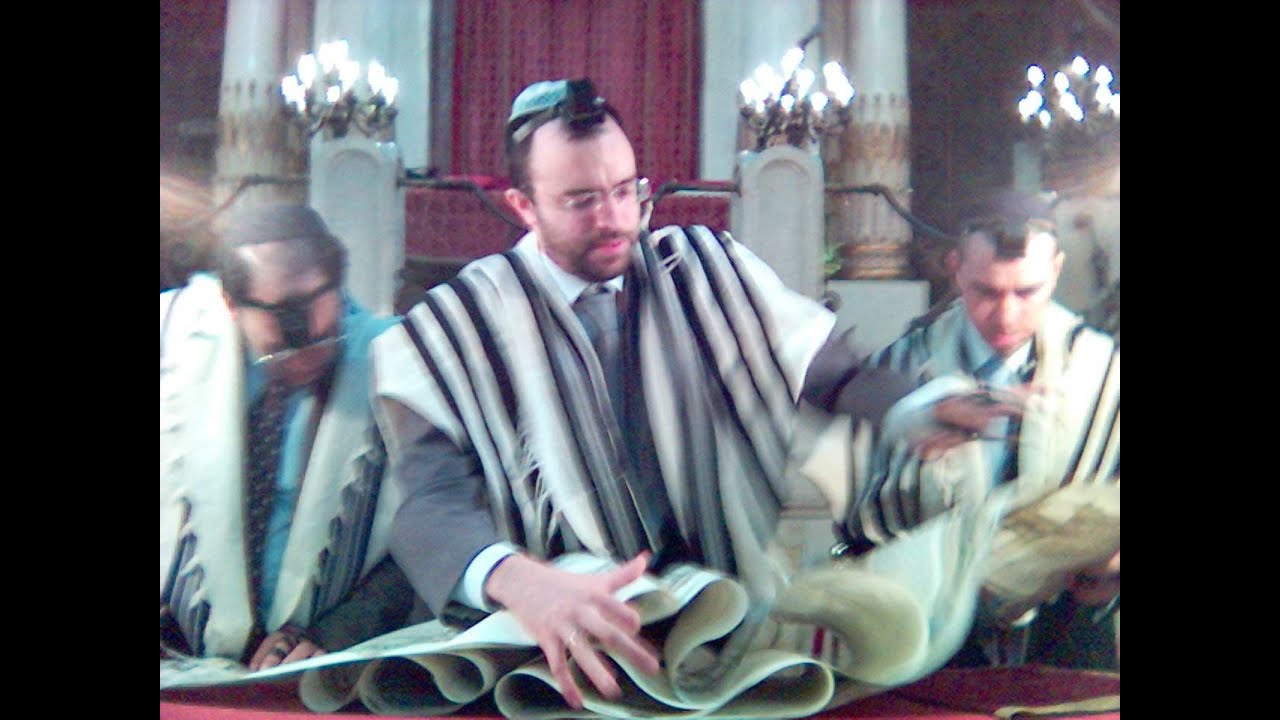
One of the customs of Purim is to read or sing the whole Book of Esther, which is called “the whole megillah (megillat – scroll)”.   Now you know where that phrase comes from. There are several “megillah books”, but Esther is probably the most associated with the word.

During the singing of the whole megillah, when the name of the evil Hamman is pronounced, the people often shout and make noise with noisemakers to blot out his name, a kind of damnatio memoriae.  There are some interesting Youtube videos of the singing of Esther that have this blotting out of “Hamman”.   For example, HERE, at synagogue in Tampa, they really get into it.  Check out about 1:30.

By the way, don’t be puzzled by the seemingly cheerful raucous music that introduce some of these Megillah Esther videos.  Purim is a time of serious partying.   There is a lot of dressing up in costumes and feasting.

Here is a singing of Esther from the Synagogue in Rome (Hebrew with an Italian accent).  Chapter 3 starts at 12:35 or so and right after is a mention of the hated Hamman.

YouTube thumbnailYouTube icon

It is probable that when the Lord went up to Jerusalem for a “feast of the Jews” in John 5, and when he healed a man at the Pool of Bethesda, it was Purim.

BTW… you might review the dialogue of the Lord with the man who was for so long by that pool.  Given that this pool was outside the walls, where no one dwelt, and the man in theory couldn’t get around on his own, and therefore had to be brought there daily, the Lord’s question: “Do you want to be healed?” takes on a new quality.


Posted in Look! Up in the sky!, SESSIUNCULA | Tagged
1 Comment

LENTCAzT 2025 – 09: Thursday 1st Week of Lent – Not again.

Today I narrowly escaped doing exactly what I did last year, that is, talk only about the amazing Roman Station church, which is San Lorenzo in Panisperna.

Instead, I’ve turned again to Fr. Troadec about the faith of the Canaanite woman. I don’t recall ever having read this one for these podcasts.

HERE

Posted in LENTCAzT, PODCAzT | Tagged , , ,
1 Comment